Synthetic Underlayment vs Felt | Wannamaker
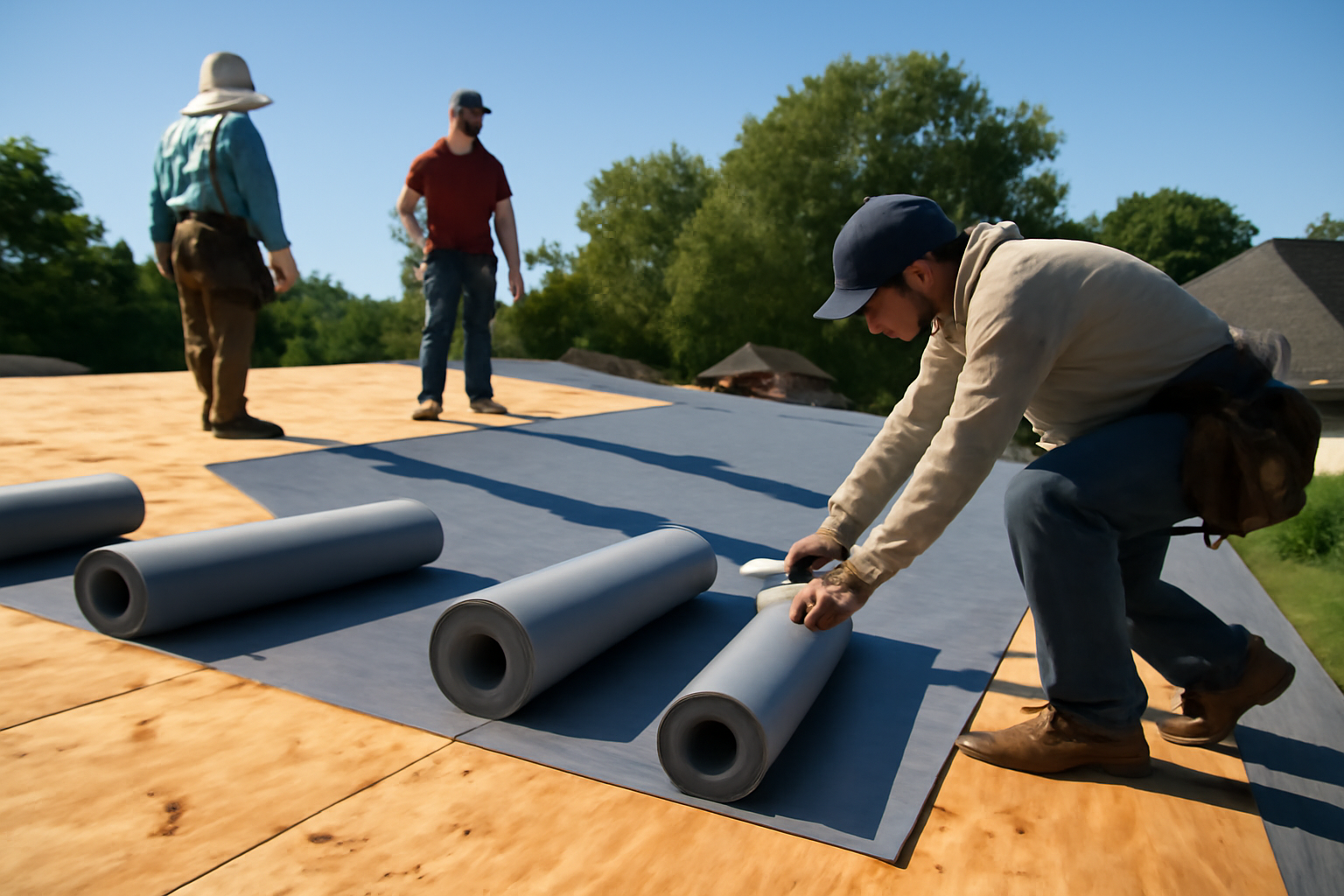
Your roofing proposal probably has a line item that says something like "synthetic underlayment" or "#15 felt." Most homeowners skip right past it. That's a mistake. Underlayment is the last line of defense between your roof decking and the weather — and in San Antonio, where summer surface temperatures on a roof can exceed 160°F, the material you choose here actually matters more than most contractors let on.
What Underlayment Actually Does
Underlayment is a water-resistant (not waterproof) sheet material installed directly on your roof decking before the shingles go on. It serves three purposes:
- Secondary water barrier. If wind-driven rain gets under a shingle, the underlayment keeps it off the wood decking. This is critical during the severe storms that roll through Bexar County every spring.
- Temporary weather protection. Between the day your old roof comes off and the day the new shingles are fully installed, underlayment is the only thing protecting your home. On larger roof replacement projects, the decking may sit overnight with just underlayment covering it.
- Code compliance. The International Residential Code — which San Antonio follows — requires underlayment beneath asphalt shingles. You can't legally skip it.
15-Lb Felt: The Old Standard
Traditional roofing felt (sometimes called tar paper) is an organic or fiberglass mat saturated with asphalt. The "15-lb" designation originally meant 15 pounds per 100 square feet, though modern felt papers rarely hit that weight anymore. Here's what you need to know:
- Cost. 15-lb felt typically runs $4–$8 per roofing square (100 sq ft) for the material alone. It's the cheapest underlayment option available.
- Performance in heat. This is felt's biggest weakness in our market. In direct Texas sun, felt can dry out, become brittle, and wrinkle. If it's exposed for more than a day or two in July, it starts degrading. We've torn off roofs in Stone Oak and Helotes where the original felt was cracked and crumbling after just 8–10 years — well before the shingles above it had failed.
- Tear resistance. Low. Felt rips easily during installation, especially in windy conditions. A crew working on a breezy spring day will burn through extra material patching tears.
- Moisture absorption. Felt absorbs water, then wrinkles as it dries. Those wrinkles can telegraph through thinner shingles, creating a wavy appearance on the finished roof.
Felt still meets code. It still works. But it's the minimum, and "minimum" is a word that should make you uncomfortable when it's between your family and a thunderstorm.
Synthetic Underlayment: What Changed
Synthetic underlayment is made from woven or spun polypropylene or polyethylene. It showed up in the U.S. market in the early 2000s and has become the default for quality-focused contractors. Common brands in the San Antonio market include GAF FeltBuster, Owens Corning ProArmor, and CertainTeed RoofRunner.
- Cost. Synthetic runs $8–$18 per square for material, depending on the product tier. For a typical 2,000 sq ft San Antonio home (roughly 22–26 squares with waste), that's an additional $100–$250 over felt for the whole roof. Not a budget-breaker on a project that already costs thousands.
- Heat tolerance. Synthetic doesn't absorb moisture and doesn't degrade in UV exposure nearly as fast as felt. Most products are rated for 3–6 months of direct UV exposure before shingle installation. That matters if your project gets delayed — and in this market, material delays happen.
- Tear strength. Dramatically higher than felt. Our crews can walk on synthetic underlayment on steep pitches with far less risk of puncturing it. This translates directly to fewer callbacks and fewer hidden leak paths.
- Weight and coverage. A single roll of synthetic covers roughly 10 squares and weighs about 25 lbs. A roll of 15-lb felt covers 4 squares and weighs nearly 60 lbs. That means fewer rolls hauled up the ladder and faster installation — labor savings that partially offset the material cost difference.
- Lay-flat performance. Synthetic doesn't wrinkle like felt. The finished roof surface looks cleaner, especially with asphalt shingle systems where the underlayment's texture can show through thinner profiles.
When Felt Still Makes Sense
We'll be honest — there are a couple of narrow scenarios where felt is defensible:
- Under certain tile systems. Some tile roofing manufacturers specify a heavier 30-lb or 40-lb felt (or a specialized tile underlayment) because tile installations need some breathability. Always follow the tile manufacturer's specs.
- Extreme budget constraints. If you're doing a bare-minimum repair on a rental property and every dollar counts, felt meets code. But on your primary residence, the $100–$250 upgrade to synthetic is one of the highest-value line items on the whole proposal.
What About Self-Adhered (Peel-and-Stick) Underlayment?
You'll sometimes hear about self-adhered or "ice and water shield" underlayment. This is a rubberized asphalt membrane that sticks directly to the decking. It's genuinely waterproof — not just water-resistant. In San Antonio, it's typically used in specific areas rather than full-deck coverage:
- Valleys. Where two roof planes meet and water concentrates.
- Eaves and rakes. The edges most vulnerable to wind-driven rain.
- Around penetrations. Pipes, vents, skylights — anywhere flashing meets decking.
Full-deck peel-and-stick adds $30–$50+ per square, which puts it at $600–$1,300+ for a typical home. We use it selectively in high-risk areas and on metal roofing and low-slope applications, but full-deck coverage is overkill for most standard-pitch shingle roofs in our area.
Our Recommendation for San Antonio Homeowners
We install synthetic underlayment as our standard on every shingle and metal roof. Not because it's the most expensive option, but because it performs dramatically better in our climate for a marginal cost increase. When you look at the total roof replacement cost, the underlayment upgrade is typically less than 2% of the project total. That's a small number for a material that will be protecting your decking for the next 20–30 years.
If a contractor's proposal lists 15-lb felt, ask why. There should be a specific reason. If the answer is "that's what we always use" — that's not a reason. That's inertia.
Not Sure What's Under Your Shingles?
If your roof is older than 10 years and you're wondering what condition the underlayment is in, we can check during a free roof inspection. We'll tell you what we find — no sales pitch required. If it's fine, we'll say so. If it's not, you'll have real information to plan with.
The Bottom Line
Underlayment isn't glamorous. Nobody drives past your house and admires it. But it's one of those quiet decisions that separates a roof that lasts from a roof that develops problems five years too early. In a market like San Antonio — with extreme heat, hail seasons, and heavy summer downpours — synthetic underlayment isn't an upgrade. It's the baseline that your roof deserves.