Ridge Cap Failure: How to Spot & Fix It | Wannamaker
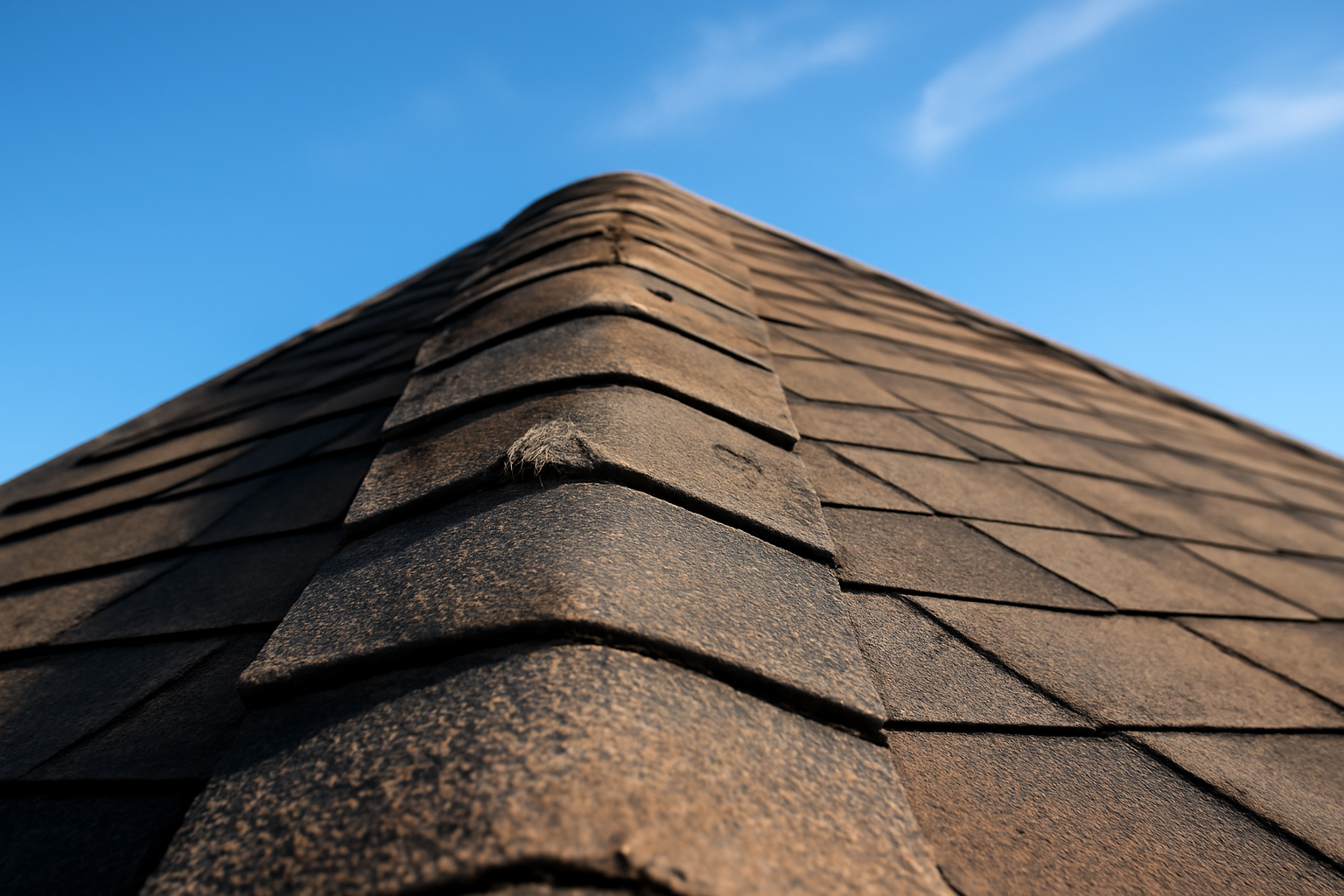
If you've ever noticed a leak near the top center of your ceiling — especially after a hard San Antonio thunderstorm — there's a good chance your ridge cap is to blame. The ridge cap is the row of shaped shingles (or metal flashing) that covers the peak where two roof slopes meet. It's one of the most exposed parts of any roof, catching the worst of every hailstorm, UV cycle, and wind gust. And when it fails, water doesn't trickle — it pours straight into the attic deck.
What Exactly Is a Ridge Cap?
On an asphalt shingle roof, the ridge cap is a series of individual shingles folded over the ridge and nailed down, overlapping each other like fish scales. On a metal roofing system, it's typically a formed metal cap with sealant or foam closures underneath. On tile roofing, it's a row of specially shaped ridge tiles set in mortar or adhesive.
Regardless of material, the ridge cap has one critical job: seal the gap at the peak so water, wind-driven rain, and debris can't enter. Because of its position, it also takes more thermal expansion, more wind uplift, and more direct UV than almost any other component on your roof.
Why Ridge Caps Fail in San Antonio
San Antonio's climate is especially hard on ridge caps. Here's why:
- Extreme thermal cycling. Summer roof surface temperatures regularly exceed 150°F, then drop 40–50 degrees overnight. This constant expansion and contraction loosens nails and cracks sealant strips faster than in milder climates.
- Hail impacts. The ridge line is the highest point on your roof and often takes the most direct hail hits. Even a moderate hailstorm can fracture ridge cap shingles or dislodge the sealant underneath. If you've already dealt with hail damage repair, ask your contractor specifically about the ridge.
- Wind uplift. Wind accelerates as it crosses the peak of a roof — a basic aerodynamic principle. Ridge caps face higher sustained wind loads than field shingles. In the Hill Country, where homes in Boerne and Helotes sit on exposed hilltops, this effect is even more pronounced.
- Poor original installation. Ridge caps are often one of the last things installed on a new roof, and rushed crews sometimes skip hand-sealing or use too few nails. We see this constantly during roof inspections on homes that are only five to eight years old.
- UV degradation. The ridge gets maximum sun exposure from both slopes. Granule loss happens faster here, which accelerates the breakdown of the asphalt underneath.
How to Spot Ridge Cap Failure From the Ground
You don't need to climb your roof to catch early warning signs. Grab binoculars and look for these from the street or yard:
Visible Lifting or Curling
Ridge cap shingles that are lifting away from the ridge board are the most obvious sign. Even a quarter-inch gap is enough to let wind-driven rain underneath. On a clear day, you may see a shadow line along the ridge where the caps have pulled up.
Missing Pieces
After a storm, check your yard and gutters for small, roughly square shingle pieces — ridge cap shingles are typically about 12" × 12" when folded. Finding one in the yard means at least one section of your ridge is exposed.
Granule Piles in Gutters
Some granule loss is normal, but heavy concentrations of granules at downspout exits — especially dark-colored granules matching your ridge — suggest accelerated wear at the peak.
Cracking or Splitting
With binoculars, look for visible cracks running across individual ridge cap shingles. Thermal cycling and hail impacts cause these, and once cracked, the shingle loses its water-shedding ability.
Interior Clues
If you have attic access, look at the underside of the ridge board on a bright day. Pinpoints of light mean the cap has failed. Water stains running down rafters from the ridge — rather than from a lower penetration — are another strong indicator.
How Ridge Cap Repair Works
The good news: if the rest of your roof is in decent shape, ridge cap failure is usually a roof repair — not a full replacement. Here's what a proper fix looks like:
- Remove the damaged caps. Old ridge cap shingles are pulled off and the ridge vent or board is inspected for rot or damage.
- Inspect the underlayment. The synthetic underlayment at the ridge should be intact. If it's torn or missing, it gets replaced before new caps go on.
- Install new ridge cap shingles. Manufacturer-specific ridge cap shingles (not just three-tab shingles bent over — a common shortcut) are installed with the correct nail pattern and hand-sealed with roofing cement.
- Address the ridge vent. If your home has a ridge vent for attic ventilation, the vent itself is checked for damage or blockage and replaced if needed.
A typical ridge cap repair on a standard San Antonio single-story home runs anywhere from $300 to $800, depending on roof pitch, accessibility, and how much of the ridge needs attention. Compare that to the cost of interior water damage repairs — drywall, insulation, even mold remediation — and it's one of the best-value repairs you can make.
When It's More Than Just the Ridge Cap
Sometimes ridge cap failure is an early symptom of a bigger problem. If the field shingles near the ridge also show heavy granule loss, widespread cracking, or nail pops, you may be looking at a roof that's aging out entirely. In that case, it's worth understanding your full roof replacement cost before sinking money into patchwork repairs.
If the damage was caused by a recent hailstorm or wind event, your homeowner's insurance may cover the repair — or even a full replacement if the adjuster documents enough widespread damage. We help homeowners navigate the insurance claim process regularly and can meet with your adjuster on-site.
Prevention: Making Your Ridge Cap Last
A few steps can extend the life of your ridge cap significantly:
- Use manufacturer-made ridge cap shingles. They're thicker, pre-scored for a clean fold, and designed to resist cracking. Cutting field shingles to use as ridge caps is a cost-saving move that leads to premature failure.
- Hand-seal every piece. The adhesive strip on ridge cap shingles often doesn't activate properly at the ridge because of the fold angle. A dab of roofing cement under each leading edge locks them down.
- Use the right nail length. Ridge caps sit on top of more layers than field shingles, so they need longer nails to penetrate into the decking. Short nails are a common cause of blow-offs.
- Schedule periodic inspections. An annual check — or one after any significant storm — catches problems before they become leaks.
Not sure about your ridge cap?
We'll check your ridge line, vent, flashing, and field shingles — all at no cost. Schedule a free roof inspection and we'll give you an honest assessment of what needs attention now and what can wait. No pressure, no obligations — just a clear picture of where your roof stands.
Ridge cap failure is one of those problems that's easy to overlook and expensive to ignore. A 30-minute repair today can prevent thousands in water damage tomorrow. If you've noticed any of the signs above — or if it's been more than a year since anyone looked at your roof — it's worth getting a professional set of eyes on it.