Drip Edge: What It Does and Why It Matters | Wannamaker
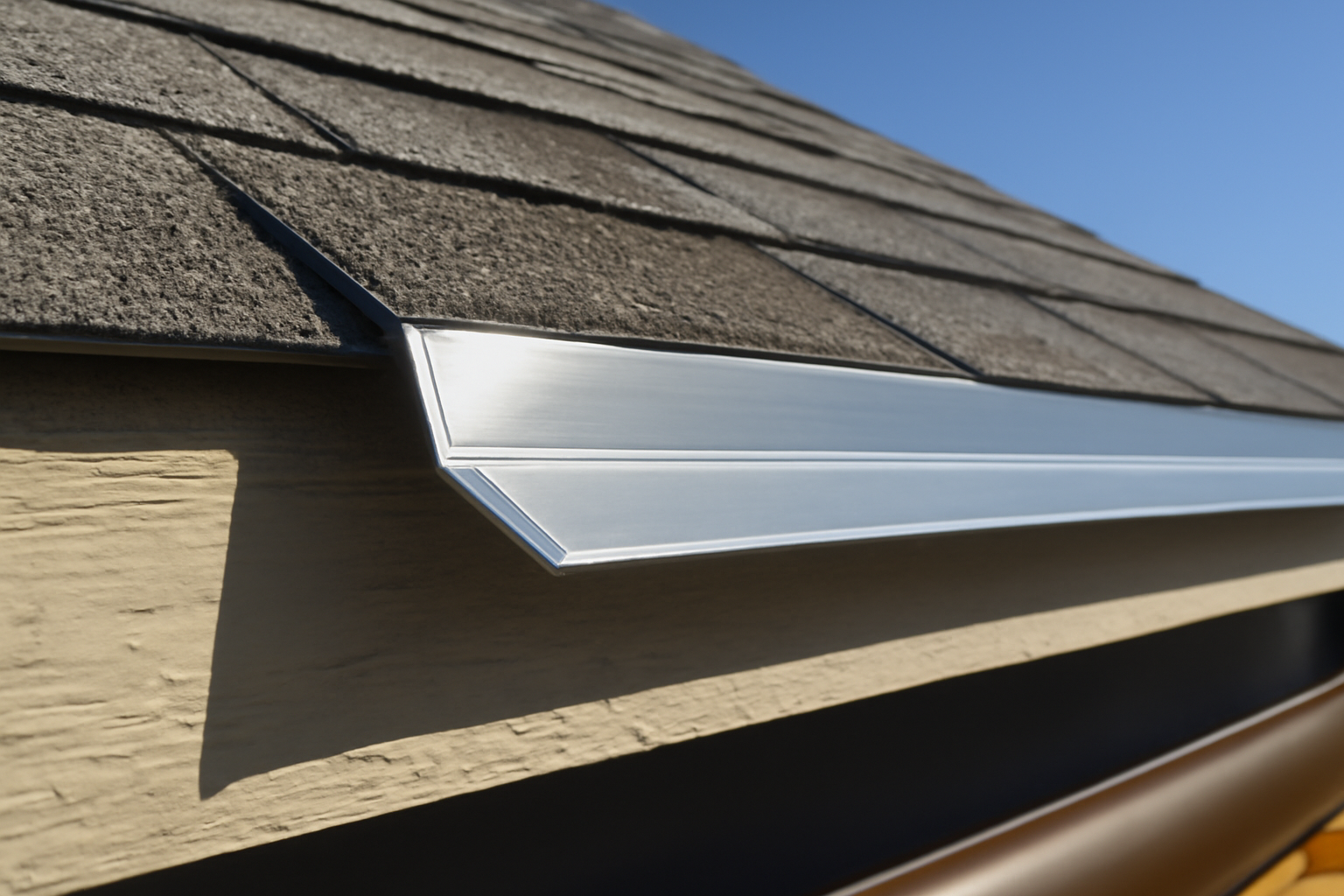
Drip edge is a bent piece of metal that costs roughly $1–$2 per linear foot installed—less than 1% of most roof budgets. And yet, when it's missing or installed wrong, it's the single most common reason we find rotted fascia, water-stained soffits, and premature deck failure on San Antonio homes. If you've ever wondered what that thin strip of metal along your roofline actually does, this article breaks it down in plain terms.
What Drip Edge Actually Is
Drip edge is an L-shaped (or T-shaped) metal flashing installed along the eaves and rakes of a roof. It's typically made from galvanized steel, aluminum, or occasionally copper. The flashing sits under the first course of shingles and extends slightly past the edge of the roof deck, creating a small overhang that directs rainwater away from the fascia board and into the gutter.
There are three common profiles you'll encounter:
- Type C (L-shaped). The most basic profile. Works fine on homes with gutters and a standard fascia setup.
- Type D (T-shaped or "D-metal"). Has a lower flange that kicks water further away from the fascia. This is what we install on the vast majority of San Antonio homes—it performs better in heavy rain events.
- Type F (gutter apron). Extended profile designed to bridge gaps between the deck edge and a gutter that sits lower than the eave. Occasionally needed on older homes where gutters have settled.
What Drip Edge Does (and What Happens Without It)
Water is lazy—it follows the path of least resistance. Without drip edge, rainwater running off your shingles wraps around the edge of the roof deck via surface tension and wicks back into the fascia, soffit, and even the wall sheathing behind your gutters. In San Antonio's climate, where we can dump 3–5 inches of rain in a single thunderstorm, that water volume adds up fast.
Here's what drip edge prevents:
- Fascia rot. The #1 problem we see. Exposed wood fascia in our humidity rots within a few years without drip edge protection.
- Deck edge deterioration. OSB and plywood roof decking swell and delaminate when water repeatedly wicks into the cut edge. This turns a $2 fix into a $50+ per-sheet deck replacement.
- Pest entry. The gap between the shingle edge and the fascia is a highway for wasps, squirrels, and roof rats. Drip edge closes that gap.
- Wind-driven rain intrusion. During the storms we get from May through October, wind pushes rain upward under shingles at the eave. Drip edge paired with ice-and-water shield at the eave line forms a reliable secondary barrier.
- Foundation erosion. If you don't have gutters—and some Hill Country homes don't—drip edge at least throws water a couple of inches away from the wall plane rather than letting it stream down the siding.
San Antonio Building Code and Drip Edge
The City of San Antonio follows the International Residential Code (IRC), which has required drip edge on asphalt shingle roofs since the 2012 code cycle (Section R905.2.8.5). That means every permitted roof replacement in Bexar County should include drip edge at both eaves and rakes. Period.
We still see roofs installed without it—usually by unlicensed crews or contractors cutting corners on insurance restoration work. If your roof was replaced in the last decade and you can't see a metal edge when you look up at the eave line, that's a red flag worth investigating with a free roof inspection.
Installation Details That Matter
Drip edge installation takes maybe 30 extra minutes on a typical San Antonio home. But the sequencing matters more than most people realize:
- At the eave. Drip edge goes on first, directly on the bare deck, then underlayment laps over it. This lets any water that gets under the underlayment still exit over the drip edge.
- At the rake. Underlayment goes on first, then drip edge laps over it. This prevents wind-driven rain from getting under the metal at the gable end.
- Overlap joints. Pieces should overlap at least 2 inches in the direction of water flow. We nail every 8–10 inches with roofing nails.
- Corner transitions. Where the eave drip edge meets the rake drip edge, the rake piece should lap over the eave piece so water sheds downhill, not into the joint.
Getting these details backward is surprisingly common. We've pulled off drip edge that was installed over the underlayment at the eave—which defeats half its purpose.
Does Drip Edge Matter on Metal, Tile, and Flat Roofs?
Drip edge is most critical on shingle roofs, but it plays a role on other systems too:
- Metal roofing. Standing seam metal and exposed-fastener panels use their own eave trim profiles that function as drip edge. A separate drip edge piece isn't always needed but the principle is the same—metal must overhang the fascia.
- Tile roofing. Tile roofing systems in the Stone Oak and Alamo Heights areas typically use a raised fascia or bird-stop detail at the eave. Drip edge is still installed under the underlayment to protect the deck edge.
- Flat roofing. Flat roofing systems use edge metal (gravel stop or coping) rather than traditional drip edge, but the concept is identical: terminate the membrane and direct water off the edge cleanly.
What Drip Edge Costs in San Antonio
For a typical 1,800–2,200 sq ft San Antonio home, you're looking at roughly 150–200 linear feet of drip edge. Material cost runs $0.50–$1.50 per foot depending on gauge and finish. Installed, expect to pay $150–$400 total as part of a roof replacement cost. If a contractor is charging you significantly more than that—or worse, listing it as an add-on instead of a standard inclusion—ask questions.
On insurance claims after hail damage repair, drip edge is a line item that adjusters routinely include. If your adjuster's estimate doesn't mention drip edge, your contractor should supplement for it. It's code-required; there's no legitimate reason to skip it.
Not Sure If Your Roof Has Drip Edge?
Look up at your eave from ground level. You should see a thin strip of metal between the shingle edge and the gutter or fascia. If all you see is raw wood or a shingle hanging over nothing, your roof may be missing this critical component. Schedule a free inspection with Wannamaker Roofing and we'll check drip edge, flashing, ventilation, and overall roof condition—no cost, no pressure.
The Bottom Line
Drip edge is boring. It's cheap. And it's absolutely non-negotiable on a properly installed roof in San Antonio. Any contractor who treats it as optional is either uninformed or cutting corners—neither of which you want on your house. When you're evaluating bids for a roof replacement or repair, don't just compare shingle brands and warranty lengths. Ask about the details that actually keep water out: drip edge, underlayment sequencing, flashing methods, and ventilation. That's where the difference between a 10-year roof and a 25-year roof lives.