Starter Strip: Why Cheap Roofers Skip It | Wannamaker
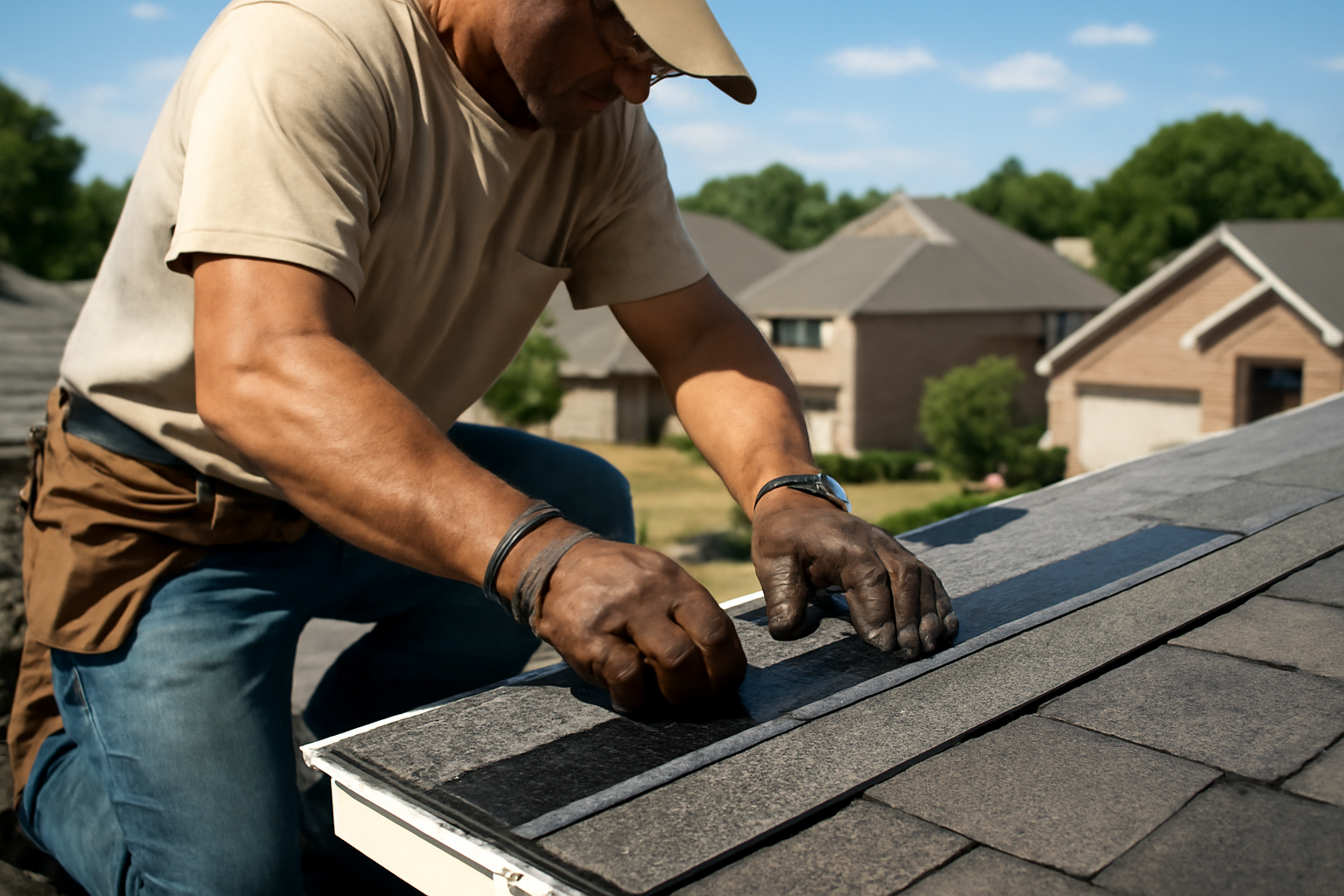
A full roof replacement uses dozens of different materials — underlayment, flashing, ridge caps, pipe boots, drip edge, and the shingles themselves. But there's one component that gets skipped more than any other: starter strip. It's a narrow row of shingles installed along the eaves and rakes before the first course goes down. It costs roughly $150–$250 in material for a typical San Antonio home. And when a cheap installer leaves it out, it can turn a $60 wind gust into a $5,000 repair.
What Starter Strip Actually Does
Every shingle has a factory-applied adhesive strip (called a sealant strip or tar line) on its underside. When the sun heats the roof, this strip bonds each shingle to the one below it, creating a wind-resistant seal. The problem? The very first row of shingles at the eave has nothing below it to bond to. That's where starter strip comes in.
Starter strip shingles are specifically designed to sit underneath the first course. They have their own adhesive strip positioned so it bonds to the bottom edge of the first full shingle. Without starter strip, the bottom edge of your first course is essentially floating — held down only by nails and gravity. In a city where straight-line winds from summer thunderstorms regularly hit 60–70 mph, that's a recipe for peeling.
Starter strip also covers the gaps between the tabs on your first course. Without it, water can flow directly through those gaps to the decking. The starter acts as a continuous waterproof layer right at the most vulnerable spot on the roof — the eave, where water volume is highest because the entire roof plane drains to that edge.
Why Budget Installers Skip It
Let's be honest about the economics. A crew that's getting paid per square (100 sq ft) or per job has every incentive to move fast. Starter strip adds an extra pass along every eave and rake edge of the roof. On a hip roof with four eaves and eight rakes, that's real labor time — maybe 30–45 minutes for a two-person crew.
Some installers "fake" a starter strip by flipping a regular shingle upside down or cutting the tabs off a three-tab shingle and using the remnant. This was standard practice 20+ years ago, but modern manufacturer specs call for purpose-built starter strip for a reason: the adhesive placement on a flipped shingle doesn't line up correctly. The seal is weaker, and the warranty can be voided.
Here's what corners get cut in practice:
- Complete omission. No starter at eaves or rakes. The first course is nailed directly to the deck with nothing beneath it. This is the worst-case scenario and more common than you'd think.
- Eaves only, rakes skipped. The installer puts starter at the bottom edge but ignores the gable ends. Rakes are just as vulnerable to wind uplift because wind curls around the roof edge.
- Cut three-tab substitution. Uses leftover three-tab shingles cut in half. Adhesive alignment is wrong, and the pieces are often too narrow to provide proper coverage.
- Wrong brand pairing. Using one manufacturer's starter with another's shingles. This doesn't always cause problems, but it can void the manufacturer's system warranty — the enhanced coverage that protects against both material defects and labor.
The Real Cost of Skipping Starter Strip
We've pulled shingles off roofs in Stone Oak, Helotes, and Schertz that were installed without starter strip. Here's what typically happens within the first few years:
- Wind blow-offs at the eave. The first two or three courses peel back during a storm. Because those shingles were never sealed to a starter layer, wind gets underneath and lifts them like pages of a book.
- Water intrusion at the drip edge. Without the continuous coverage that starter provides, water wicks through the gaps between shingle tabs and reaches the decking. Over time, this causes rot in the fascia and sheathing.
- Voided manufacturer warranty. Every major shingle manufacturer — GAF, Owens Corning, CertainTeed, Atlas — requires starter strip for their system warranty. Skip it, and you lose the enhanced labor coverage that comes with certified installation.
- Insurance claim denial. If your adjuster determines the storm damage was caused or worsened by improper installation, they can reduce or deny the claim. Missing starter strip is one of the easiest installation defects for an adjuster to spot.
How to Check Your Own Roof
You don't need to climb a ladder to get a rough idea. From ground level, look at the bottom edge of your roof at the eave. You should see a uniform, straight line where the shingles overhang the drip edge by about ½ to ¾ inch. If the bottom edge looks ragged, uneven, or you can see exposed nail heads, there's a good chance starter strip was skipped or installed incorrectly.
For a definitive answer, you need someone on the roof who can lift the edge of the first course and confirm there's a starter layer beneath it with properly aligned adhesive. That's exactly what we check during a free roof inspection.
What Proper Starter Installation Looks Like
When we install asphalt shingle roofs, starter strip goes on every eave and every rake, no exceptions. Here's the correct process:
- Match the manufacturer. If we're installing GAF Timberline HDZ, we use GAF Pro-Start starter strip. Same principle for Owens Corning or CertainTeed systems. This ensures the adhesive chemistry is compatible and the warranty stays intact.
- Overhang the drip edge. Starter strip should extend past the drip edge by ¼ to ¾ inch — enough to direct water into the gutter, not behind it.
- Offset the joints. Starter strip seams should never line up with the seams of the first course above. We offset by at least 6 inches to prevent a continuous path for water.
- Nail placement matters. Nails go in the correct zone — typically 3–4 inches from the bottom edge — so the first course's adhesive strip can bond properly to the starter surface.
This applies whether we're working on a straightforward ranch-style home or a complex multi-hip roof in Alamo Heights. The material is the same. The process is the same. There are no shortcuts that don't eventually cost the homeowner more.
Starter Strip and Other Roof Types
Starter strip is primarily an asphalt shingle concern. Metal roofing uses eave trim and closure strips instead. Tile roofing has its own edge-closure system with bird stops and eave riser tiles. But for the roughly 80% of San Antonio homes with composition shingles, starter strip is non-negotiable.
The Bottom Line
A $200 material that takes less than an hour to install protects your first courses from wind uplift, prevents water from reaching your decking, and keeps your manufacturer warranty valid. There is no legitimate reason to skip it. If a roofer's bid seems suspiciously low, ask them directly: "Will you install manufacturer-matched starter strip on all eaves and rakes?" Their answer — or their hesitation — tells you a lot about what other corners they'll cut.
Not Sure If Your Roof Has Starter Strip?
If your roof was installed by a budget crew or a storm-chaser, there's a real chance starter strip was skipped. We'll check it during a free inspection and give you a straight answer about your roof's condition — no sales pitch required. If your roof needs a full roof replacement, we'll show you exactly what goes into a proper install, starter strip included.