Preparing Your Roof for Hail Season | Wannamaker
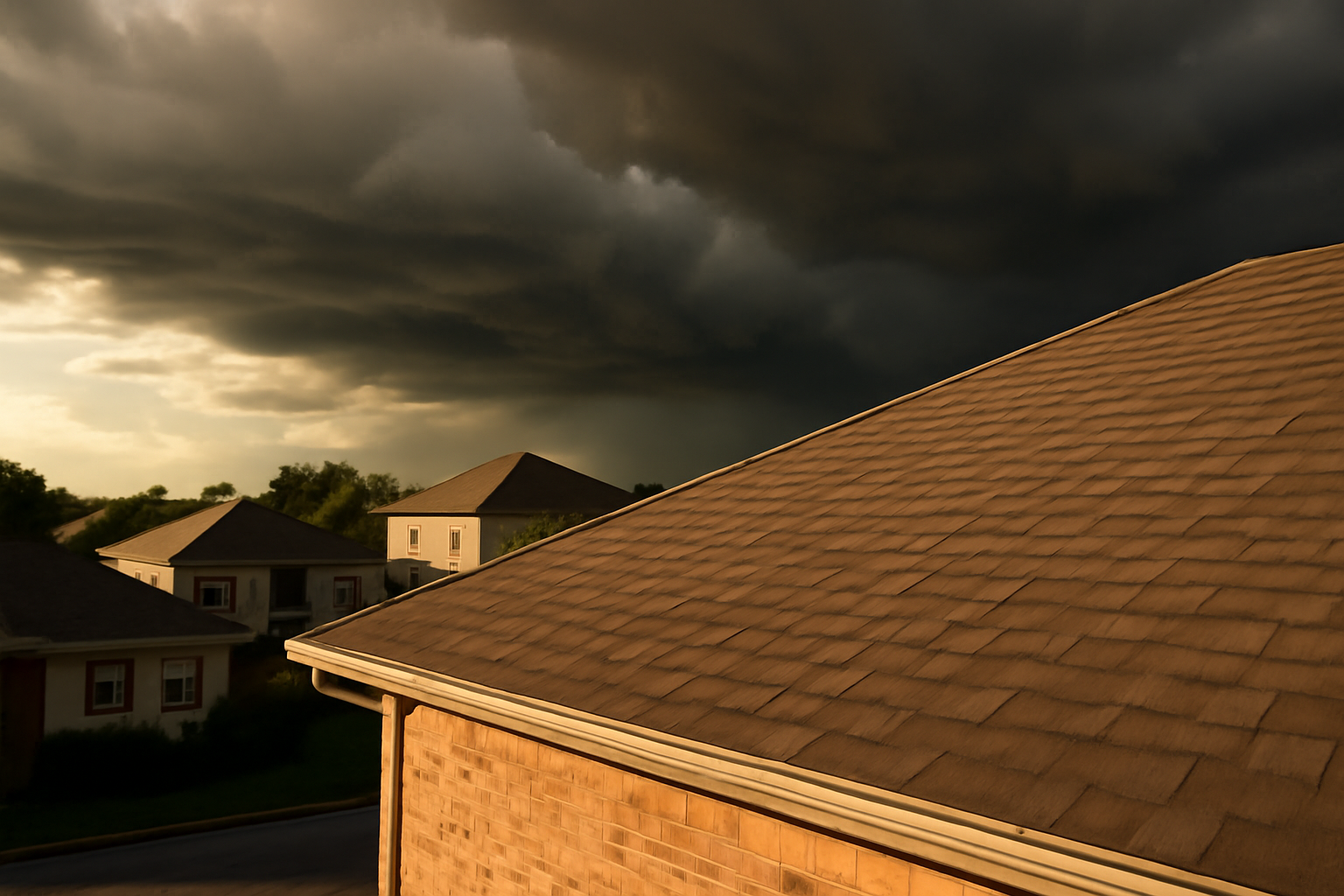
Every spring, San Antonio homeowners get a crash course in hail damage — often after it's too late. The storms that sweep through Bexar County and the Hill Country between March and July can shred an unprepared roof in minutes. But the homeowners who actually come through hail season without a financial headache aren't lucky — they're prepared. Here's the exact timeline and checklist we give our own customers to make sure their roof is ready before the sirens start.
When Is Hail Season in San Antonio?
The National Weather Service consistently ranks the corridor from San Antonio through Austin and into North Texas as one of the most hail-prone regions in the country. Locally, the window runs roughly from early March through late July, with the highest concentration of damaging storms in April, May, and June. That said, we've seen significant hail events as early as February and as late as October — so "season" is really more of a bell curve than a hard start and stop.
What makes San Antonio's hail particularly destructive is the combination of warm, moist Gulf air colliding with dry air masses off the Edwards Plateau. Communities like Stone Oak, Helotes, and Boerne on the northwest side often catch the worst of it because storms tend to intensify as they ride up the terrain.
Month-by-Month Hail Prep Checklist
January–February: Review and Plan
- Review your homeowner's insurance policy. Check your deductible (many San Antonio policies now carry a separate wind/hail deductible of 1–2% of your home's insured value), confirm your coverage limits, and note any exclusions. Carriers like USAA, State Farm, and Allstate have all tightened hail provisions in Texas over the past few years — don't assume your policy is the same as last year.
- Schedule a free roof inspection. Getting a professional on your roof before storm season establishes a baseline. If hail hits in April and you have photos from February showing your roof was in good shape, your insurance claim becomes dramatically easier to process.
- Document your roof's current condition. Even smartphone photos from the ground are better than nothing. Photograph each slope, your gutters, any existing damage, and your roof's age label if accessible.
March: Handle Deferred Maintenance
- Fix existing problems now. Loose or missing shingles, cracked flashing, worn pipe boots — any pre-existing damage will get worse with hail. Worse, your insurance adjuster may attribute hail damage to "prior wear" if the roof was already compromised. A quick roof repair now prevents a denied claim later.
- Clean gutters and downspouts. Clogged gutters during a heavy storm create water backup under your drip edge. Live oaks drop leaves through March in San Antonio — don't clean them once and call it done.
- Trim overhanging branches. Limbs within 6 feet of your roof become projectiles in high wind. Hackberry and pecan trees, both common here, are particularly prone to breakage.
April–May: Peak Vigilance
- Monitor weather alerts actively. The NWS San Antonio office issues warnings through wireless emergency alerts, but we recommend the RadarScope or MyRadar apps for real-time tracking. Hail cores are visible on radar — you can often see them coming 15–30 minutes out.
- Protect vehicles and outdoor assets. The biggest out-of-pocket expense for many homeowners after a hailstorm isn't the roof — it's the cars parked in the driveway. If you have garage space, use it. If not, consider a carport or hail blanket.
- Know what to look for after a storm. Hail damage on asphalt shingle roofs shows up as dark circular marks where granules have been knocked loose. On metal roofing, you'll see dents. On tile roofing, look for cracks and chips. Don't climb on a wet roof — call a professional.
June–July: Post-Storm Response Window
- Don't wait to file a claim. Most Texas homeowner's policies require you to report damage "promptly." Waiting months can give your carrier grounds to reduce or deny the claim. After any significant hail event, get an inspection within two weeks.
- Be cautious with storm chasers. San Antonio floods with out-of-state roofing crews after every major hail event. They knock doors, offer "free" inspections, and promise to "handle everything" with your insurance company. Many are unlicensed in Texas, carry no local liability coverage, and will be gone before your warranty is worth the paper it's printed on.
- Get a second opinion on adjuster estimates. Insurance adjusters are not roofers. Their scope of damage often misses items like damaged underlayment, compromised ridge caps, or soft metal flashing hits. A local roofer experienced with hail damage repair can supplement the claim with proper documentation.
Roof Materials That Handle Hail Better
If you're considering a roof replacement before hail season, material choice matters. Impact-resistant (IR) shingles rated Class 3 or Class 4 under UL 2218 testing can withstand significantly larger hailstones than standard three-tab shingles. Many Texas insurers offer premium discounts of 10–35% for Class 4 IR shingles — sometimes enough to offset the higher material cost within a few years.
Standing seam metal is another strong option for hail-prone areas. While it can dent, it rarely loses structural integrity from hail impacts the way composition shingles do. The roof replacement cost is higher upfront, but the longevity and insurance savings often make the math work — especially in neighborhoods like Alamo Heights and New Braunfels where hail events seem to hit every couple of years.
The One Thing Most Homeowners Skip
Documenting your roof's condition before damage occurs. We can't stress this enough. The single biggest factor in a smooth insurance claim isn't the severity of the hail — it's whether you can prove the damage is new. A pre-storm inspection report with dated photos turns a contested claim into a straightforward one. It costs you nothing but an hour of your time, and it can save you thousands.
Get Ahead of Hail Season
Wannamaker Roofing offers free pre-storm roof inspections across San Antonio, Boerne, New Braunfels, and the surrounding Hill Country. We'll document your roof's current condition, flag any maintenance issues, and give you a written report you can keep on file for insurance purposes. No sales pitch required — just honest information so you're ready when the storms come. Call us at (210) 305-5890 or schedule online.
Quick Reference: Your Hail Prep Timeline
- January–February: Insurance review, schedule inspection, baseline photos.
- March: Repairs, gutter cleaning, tree trimming.
- April–May: Active weather monitoring, vehicle protection, post-storm checks.
- June–July: Prompt claim filing, avoid storm chasers, get professional damage assessments.
- Year-round: Keep your inspection report and photos accessible — cloud storage works great.
Hail season in San Antonio is predictable enough to prepare for and unpredictable enough to respect. The homeowners who take a few hours in January and February to get their roof, their paperwork, and their plan in order are the ones who sleep through thunderstorm warnings instead of lying awake wondering what the morning will reveal.