Ridge Vent vs Gable Vent vs Turbine Vent | Wannamaker
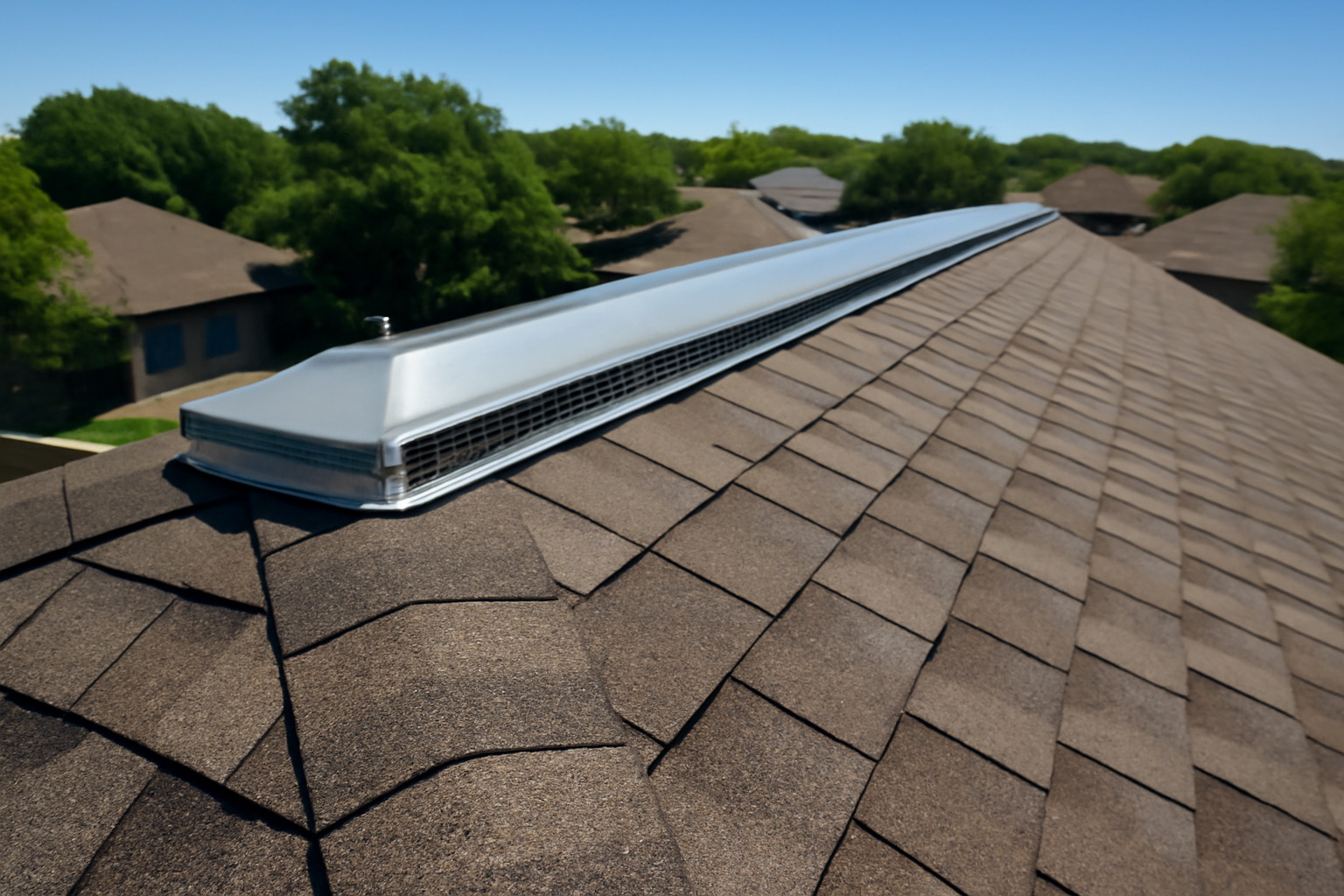
Your attic temperature in July can hit 150°F or higher in San Antonio. That heat doesn't just make your house uncomfortable — it bakes your shingles from underneath, warps decking, and can cut years off a roof's lifespan. The fix is proper ventilation. But walk into any roofing conversation and you'll hear three names tossed around: ridge vents, gable vents, and turbine vents. Each one has real advantages and real drawbacks, and the best choice depends on your roof design, budget, and how seriously you take long-term performance.
Why Attic Ventilation Matters More in South Texas
Before comparing vent types, you need to understand the job they're doing. Attic ventilation works on a simple principle: hot air rises and needs somewhere to escape (exhaust), while cooler air needs a way in (intake, usually through soffit vents). When this cycle works, your attic stays closer to outdoor ambient temperature instead of becoming a superheated oven.
In San Antonio and surrounding areas like Boerne, Helotes, and Stone Oak, we get 100+ degree days for weeks at a stretch. A poorly ventilated attic accelerates three problems:
- Premature shingle degradation. Excessive attic heat cooks asphalt shingles from below, drying out the oils that keep them flexible. This is the number one warranty-voiding issue we see.
- Higher energy bills. Your HVAC works harder when your attic is radiating heat downward through the ceiling insulation.
- Moisture damage. Even in our dry climate, temperature differentials cause condensation that rots decking and framing over time.
The building code standard is 1 square foot of net free ventilation area per 150 square feet of attic floor (or 1:300 if you have a proper balanced system with vapor barriers). Most homes need both intake and exhaust — no single vent type works alone.
Ridge Vents: The Gold Standard for Most Roofs
A ridge vent runs the entire length of the roof peak. The ridge cap shingles lay over a low-profile mesh or baffle system that allows hot air to escape along the entire ridgeline while keeping rain and critters out.
- How it works. Hot air naturally rises to the highest point in the attic (the ridge). The vent creates a continuous opening that lets that air escape evenly. Fresh air is pulled in through soffit vents at the eaves, creating a smooth convection loop.
- Pros. No moving parts, virtually invisible from the ground, provides the most uniform airflow across the entire attic, and doesn't create localized weak spots. Works 24/7 with no power.
- Cons. Only works well if you have adequate soffit intake vents. Also less effective on hip roofs with short ridgelines. Costs more upfront than point-source vents.
- San Antonio pricing. Typically $400–$800 installed for an average home during a roof replacement. Retrofitting onto an existing roof costs more — usually $800–$1,500 — because the roofer has to cut the ridge opening and reshingle the cap.
Ridge vents are what we install on the vast majority of standard gable and hip-gable roofs. They're the closest thing to a "set it and forget it" solution that actually works well in our heat.
Gable Vents: Old School, Still Around
Gable vents are the louvered openings you see on the triangular wall sections at each end of a gable roof. They've been standard on homes built from the 1950s through the 1990s, and many San Antonio homes — especially in neighborhoods like Alamo Heights and Leon Valley — still rely on them.
- How it works. Cross-breeze ventilation. Wind blows into one gable vent and out the other, moving air through the attic horizontally.
- Pros. Cheap to install ($50–$150 per vent), easy to retrofit, no roof penetrations required, and simple to maintain.
- Cons. Depends entirely on wind direction and speed — on still, 105°F days (the exact days you need ventilation most), gable vents do almost nothing. They also create "short-circuiting" if combined with ridge vents, where air flows between the gable and ridge without actually ventilating the lower attic space.
- San Antonio pricing. $50–$150 per vent for materials plus installation. Most homes have two.
Here's the contrarian take: gable vents aren't bad — they're just incomplete. If your home has gable vents and good soffit intake, you're probably fine for a mild climate. But San Antonio isn't mild. We consistently recommend upgrading to ridge ventilation when clients are already doing a roof replacement.
Turbine Vents (Whirlybirds): Mechanical but Passive
Turbine vents are those spinning aluminum domes you see on roofs all over Texas. They use wind power to spin internal vanes, which actively draws hot air out of the attic. No electricity needed — just a breeze.
- How it works. Wind hits the turbine's external vanes, spinning the unit. The spinning action creates a vacuum effect that pulls air from the attic. Even light breezes (5-7 mph) get them moving.
- Pros. Moves significantly more air than a static vent of the same size. No electricity costs. Relatively affordable. Familiar to local roofers, so installation quality is consistent.
- Cons. Moving parts wear out. Bearings fail after 10-15 years and the unit starts squeaking (that rhythmic roof noise your neighbor ignores). Each turbine only ventilates a limited area — most homes need 2-4 units. They're visible and some HOAs object. And like gable vents, they underperform on dead-calm days.
- San Antonio pricing. $75–$200 per unit installed. Budget $300–$800 total for a typical home needing 2-4 turbines.
Turbines are a solid middle-ground option, especially for homes where a ridge vent isn't practical — like complex hip roofs or metal roofing systems with short ridge runs. Just plan on replacing them every 10-15 years.
The Mixing Problem: Don't Combine Exhaust Types
This is the mistake we see most often. A homeowner adds a ridge vent during a reroof but leaves their old gable vents open, or adds turbines alongside an existing ridge vent. This creates short-circuiting — air takes the path of least resistance between the two exhaust points instead of traveling up from the soffits through the attic.
The result: the lower portions of your attic get zero airflow while the upper section near the vents gets all of it. You end up with hot spots that damage decking and shingles unevenly.
Pick one exhaust type and commit to it. If you're installing ridge vents, seal or cover the gable vents. If you're keeping turbines, don't add a ridge vent. The only pairing that always works is exhaust vents (any type) plus soffit intake vents.
Which Vent Type Should You Choose?
For most San Antonio homes with a standard gable or gable-hip roof and adequate soffit vents, ridge vents are the best long-term investment. They're invisible, have no moving parts, and provide the most uniform ventilation on the hottest, stillest days when you need it most.
Choose turbine vents if your roof geometry limits ridge length — complex hip roofs, flat roofing transitions, or metal roof systems where ridge vent integration is complicated.
Keep gable vents only if budget is extremely tight and you're not doing a reroof. They're better than nothing, but they're the weakest performer in our climate.
Not sure what ventilation your attic has — or needs?
We check ventilation type, soffit intake, and attic temperature as part of every free roof inspection. If your vents are short-circuiting or your attic is cooking your shingles, we'll tell you — and we'll show you exactly what it would cost to fix. No pressure, no sales pitch. Just data you can act on.
Quick Comparison Table
Here's the side-by-side summary:
- Ridge Vent. Best overall performance, no moving parts, 25+ year lifespan, $400–$1,500 installed, invisible from ground. Requires adequate soffit intake.
- Gable Vent. Lowest cost, no roof penetrations, wind-dependent, limited effectiveness on calm hot days, $100–$300 total. Best as supplemental or budget option.
- Turbine Vent. Good air movement in wind, no electricity, 10–15 year lifespan before bearing failure, $300–$800 total. Good for complex roof geometries.
Whatever vent system you choose, make sure your soffit intake is clear and unblocked. We find insulation stuffed against soffit baffles on roughly half the attic inspections we do. The best exhaust vent in the world can't help if there's no intake air to move.