Ice & Water Shield on San Antonio Roofs | Wannamaker
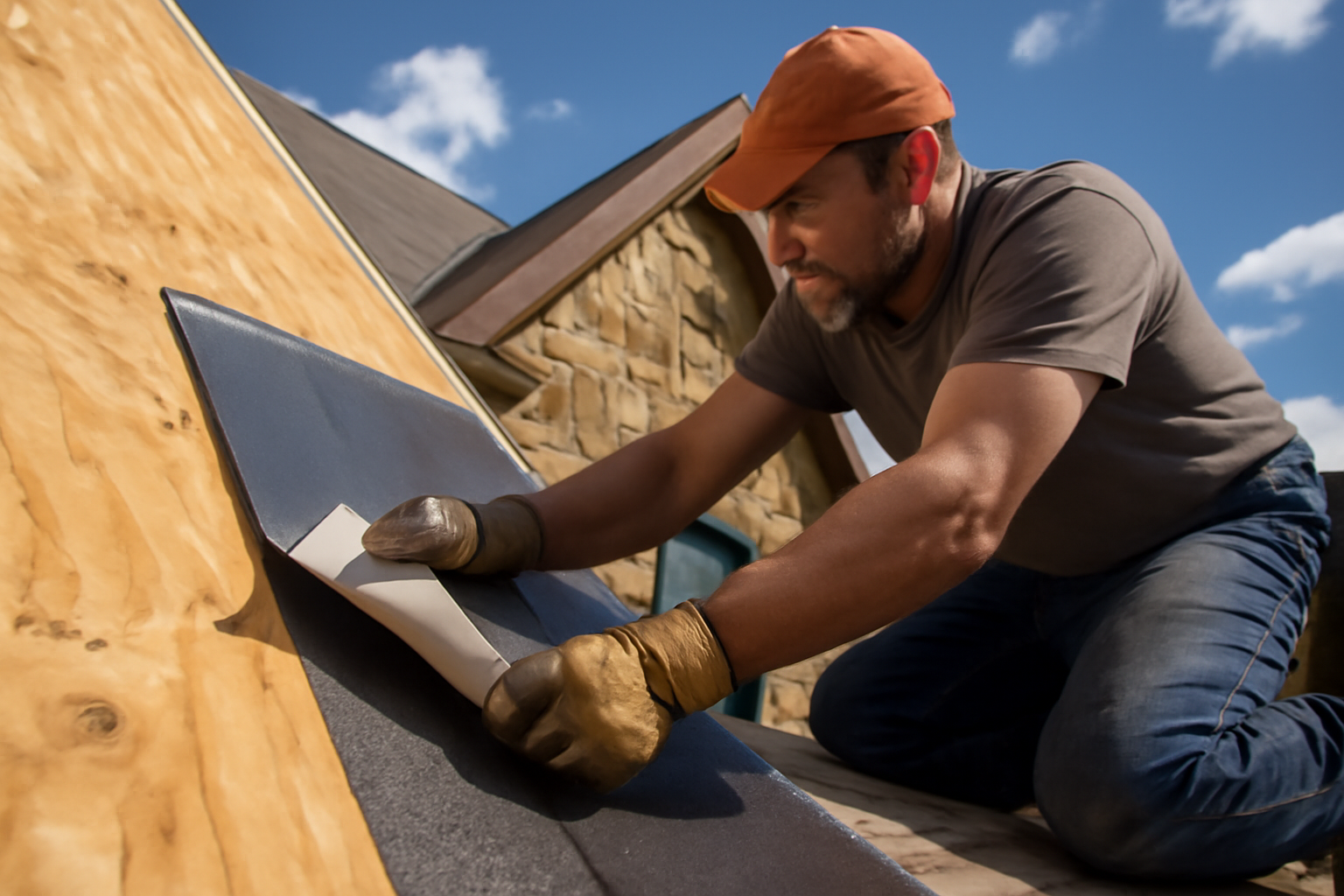
If you mention ice-and-water shield to most San Antonio homeowners, you'll get a blank stare — or a reasonable question: "Why would I need that? It doesn't ice up here." Fair point. But the product's name is misleading. Self-adhering underlayment (the generic term) isn't just about ice dams. It's about sealing nail penetrations, resisting wind-driven rain, and protecting the most vulnerable intersections on your roof. In a city where hail, 60-mph gusts, and sideways rain are annual events, placement matters more than most contractors let on.
What Ice-and-Water Shield Actually Is
Ice-and-water shield is a self-adhering, rubberized asphalt membrane — typically 36 inches wide — that sticks directly to your roof deck. Unlike synthetic felt underlayment, which is mechanically fastened (stapled or nailed), ice-and-water shield forms a waterproof seal around every nail that passes through it. When a roofing nail punctures it, the rubberized asphalt "self-heals" around the shank, creating a gasket effect. That's the entire reason it exists: it turns a nail hole from a potential leak path into a sealed penetration.
Common brands you'll see on San Antonio job sites include GAF WeatherWatch, Owens Corning WeatherLock, and CertainTeed WinterGuard. They all work on the same principle. Price-wise, expect material cost of roughly $0.75–$1.25 per square foot — significantly more than synthetic underlayment at $0.15–$0.30 per square foot. That price gap is exactly why placement strategy matters: wrapping your entire deck in ice-and-water shield would be expensive and, in most cases, unnecessary.
Where It Belongs on a San Antonio Roof
Texas building code (IRC Section R905.1.2 as adopted locally) requires ice-and-water shield in specific locations even in our climate zone. But code is a floor, not a ceiling. Here's where we install it — and why — on every roof replacement we do:
- Valleys. Every open or closed-cut valley gets ice-and-water shield running the full length, extending at least 18 inches from the centerline to each side. Valleys funnel enormous volumes of water, and wind can push that water laterally under shingles. This is the single most important placement on any San Antonio roof.
- Eaves (first 3 feet). Even without ice dams, the eave edge takes the most wind-driven rain abuse. A strip of self-adhering membrane from the drip edge up at least 24–36 inches protects against blow-back and splash-up from gutters.
- Around penetrations. Plumbing vents, HVAC curbs, satellite dish mounts, and anything else that punches through the deck gets a collar of ice-and-water shield before the flashing goes on. This is where we find the most leaks on roof repair calls — old felt deteriorated around a pipe jack, and the nail holes opened up.
- Sidewalls and headwalls. Where a roof plane meets a vertical wall — common on two-story homes in Stone Oak and Alamo Heights — step flashing sits on top of ice-and-water shield. Without it, any step flashing failure sends water straight into the wall cavity.
- Skylights. The upstream side of any skylight curb is a dam waiting to happen during a heavy downpour. Full ice-and-water shield around all four sides of the curb is non-negotiable.
- Low-slope transitions. If your home has a porch roof at 2:12 pitch that ties into a steeper main roof, that entire low-slope section should get full coverage. Flat roofing and low-slope sections are inherently more vulnerable to ponding and lateral water movement.
Where It's Wasted Money
Some contractors upsell full-deck ice-and-water shield as a premium upgrade. On a 2,500-square-foot roof, that can add $1,500–$3,000 to the job. Is it worth it? Usually not. Here's why:
Self-adhering membrane on a full deck in a San Antonio summer creates a vapor-closed assembly. Our attic temperatures can hit 150°F+, and moisture that gets into the roof system — from interior humidity, bathroom vents, or minor condensation — has no drying path to the exterior. In northern climates with cold decks, this is managed differently. In South Texas, trapping moisture against your decking can actually accelerate rot over a 20-year shingle lifespan. Strategic placement at vulnerable points, combined with synthetic underlayment on the field of the roof, gives you the best balance of protection and breathability.
The exception: if you're installing metal roofing — particularly standing seam — the underlayment strategy changes because metal has different condensation characteristics and fastener patterns. We'll sometimes run high-temperature ice-and-water shield on more of the deck under metal, but it's a case-by-case decision based on ventilation design.
What We Actually See on Tear-Offs
After tearing off hundreds of roofs across San Antonio, Boerne, and the surrounding Hill Country, here's the reality: most roofs installed before 2015 have zero ice-and-water shield anywhere. Valleys were done with 30-lb felt — sometimes just a single layer. Pipe jacks were set directly on felt that had already cracked and curled. The decking underneath tells the story: water stains, soft spots, and occasionally full plywood replacement needed in valleys and at penetrations.
Even roofs installed more recently sometimes cut corners. We've pulled off three-year-old roofs after storm damage and found no ice-and-water shield in the valleys — just synthetic felt. That technically meets minimum code in some interpretations, but it's not how a roof should be built if you want it to last through San Antonio's storm seasons without a callback.
How This Affects Your Insurance Claim
If you're filing an insurance claim after hail or wind damage, your adjuster will typically approve ice-and-water shield in valleys and at penetrations as part of the replacement scope — it's considered code-compliant installation. If your contractor isn't including it in the insurance estimate, you're leaving coverage on the table. We line-item it on every supplement because it belongs there.
Want to see what's under your shingles?
If your roof is 10+ years old or has been through a major hail event, the underlayment situation is worth checking — especially in valleys and around penetrations. We offer a free roof inspection that includes documenting the current underlayment condition where visible. No pressure, no gimmicks — just an honest look at what's protecting your deck.
The Bottom Line on Placement
Ice-and-water shield isn't a luxury product, and it isn't just for cold climates. It's a targeted defense system for the spots on your roof that are most likely to fail. In San Antonio's climate — with its hail, wind-driven rain, and extreme heat — strategic placement at valleys, eaves, penetrations, sidewalls, and low-slope transitions is the right call. Full-deck coverage usually isn't. The difference between a roof that leaks at year eight and one that's still bone-dry at year twenty often comes down to what's underneath the shingles, not just the shingles themselves.
Ask your contractor where they plan to install ice-and-water shield before the job starts. If the answer is "we don't use it" or "everywhere" without explanation, keep asking questions. The right answer is specific, and it should match the geometry of your particular roof.