Concrete Tile vs Clay Tile Durability | Wannamaker
If you're shopping for a tile roof in San Antonio, you've probably heard "concrete and clay are basically the same thing." That's what a lot of contractors say because it makes the conversation shorter. But the two materials age differently, fail differently, and cost differently — and in a climate that regularly dishes out 100°F summers, hail, and high winds like the gusts we saw hit the Guadalupe Mountains region in late April 2025, those differences add up fast. Here's an honest breakdown of concrete tile vs. clay tile durability from what we actually see on local roofs.
What Each Tile Is Actually Made Of
This sounds basic, but it matters for everything that follows.
- Clay tile. Kiln-fired natural clay, typically at 1,800–2,200°F. The color goes all the way through the material. Clay tiles have been used for thousands of years, and the manufacturing process hasn't changed dramatically.
- Concrete tile. Portland cement, sand, water, and iron oxide pigments molded under high pressure. The color is either mixed into the batch or applied as a surface slurry coat. Concrete tile became popular in the U.S. in the 1960s and 70s as a cheaper alternative to clay.
That difference in composition — fired mineral vs. cured cement — drives almost every performance gap between the two.
Lifespan: Clay Wins, But It's Not That Simple
Clay tile roofs in good condition can last 75–100+ years. Concrete tile typically delivers 40–60 years. Those are the numbers you'll see everywhere, and they're generally accurate — but they assume proper installation and underlayment replacement along the way.
Here's the catch: the tile isn't usually what fails first. In San Antonio's heat, the underlayment beneath the tiles degrades faster than the tiles themselves. Whether you choose clay or concrete, you'll likely need underlayment replacement at the 20–30 year mark. That means pulling all the tiles, replacing the felt or synthetic underlayment, and reinstalling. With clay, the tiles survive this process easily. With concrete, you'll lose more tiles to breakage during the re-roof — concrete gets more brittle with age.
How San Antonio Weather Affects Each Material
UV and Heat Resistance
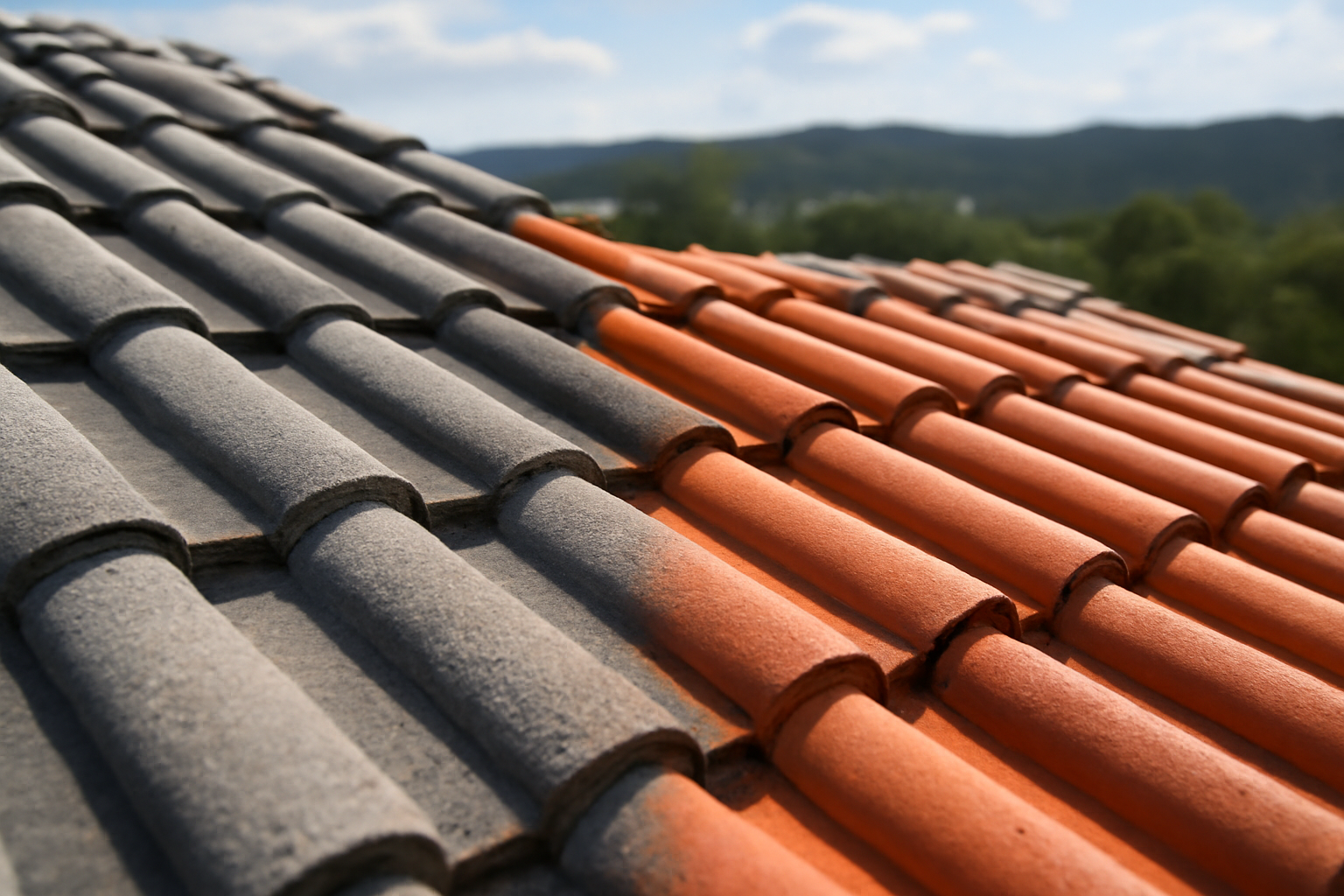
San Antonio averages over 220 sunny days per year, and roof surface temperatures easily reach 150–170°F in summer. Clay handles this beautifully — the fired material doesn't degrade under UV exposure, and the through-body color doesn't fade. Concrete tile, on the other hand, absorbs more moisture and its surface color coat breaks down over time. After 10–15 years, most concrete tile roofs in the San Antonio area show noticeable fading and surface erosion. The tiles aren't failing structurally yet, but they look significantly worse than clay of the same age.
Hail Performance
Neither material is hail-proof. But clay tile generally handles moderate hail (up to about 1.5 inches) better than concrete because of its denser, harder surface. Concrete tile cracks and chips more readily. After a significant hail event — and San Antonio gets them — concrete tile roofs often need more individual tile replacements than clay. If your roof has taken storm hits, a free roof inspection can identify cracked tiles before leaks develop.
Wind Uplift
Concrete tiles are heavier than clay — typically 9–12 pounds per square foot installed vs. 6–10 for clay. That extra weight helps in wind resistance, but proper attachment matters far more than weight. A well-installed clay tile roof with modern nose clips and adhesive can handle 125+ mph winds. A poorly fastened concrete tile roof will lose tiles in a 60 mph gust. Installation quality beats material choice every time here. With storm damage events becoming a regular concern across the Hill Country and Bexar County, attachment method should be part of any tile roofing conversation.
Cost Comparison for San Antonio Homes
This is where concrete tile earns its market share. Here's what we typically see in the San Antonio metro:
- Concrete tile installed. Typically $12–$18 per square foot, depending on profile (flat, S-tile, barrel).
- Clay tile installed. Typically $18–$30+ per square foot. Imported or handmade clay tiles push higher.
On a 2,500 square foot roof, that's roughly $30,000–$45,000 for concrete vs. $45,000–$75,000+ for clay. The gap is significant. For a fuller picture of what a new roof costs in this market, see our roof replacement cost guide.
But consider lifetime cost. If your concrete tile roof needs color restoration at year 15 ($3,000–$6,000), more frequent tile replacements, and loses more tiles during underlayment replacement at year 25, the total cost of ownership starts to narrow. Clay's higher upfront cost buys you a genuinely lower-maintenance roof over 50+ years.
Weight and Structural Requirements
Both tile types are heavy compared to asphalt shingle or metal roofing. Most San Antonio homes built after the 1990s with tile-ready framing can handle either material. Older homes or homes originally built for composition shingles may need structural reinforcement — that's an engineering question, not a guess. We always verify load capacity before recommending tile roofing on a home that didn't originally have it.
The Repair and Matching Problem
Here's something most homeowners don't think about until it's too late: matching replacement tiles.
Concrete tile profiles and colors change frequently. If you need to replace 30 tiles after a hail event 12 years from now, your exact tile may be discontinued. You'll end up with close-but-not-quite matches, or you'll need to pull tiles from a less visible section to patch the visible one.
Clay tile profiles are more standardized and have been consistent for decades. A barrel clay tile from 2005 is essentially identical to one made today. Finding replacements is easier, and color matching is a non-issue because clay doesn't fade. This is a real, practical advantage that shows up in roof repair situations constantly.
So Which Should You Choose?
There's no universal answer, but here's how we'd frame it:
- Choose clay if: You're staying in the home long-term, you want the lowest lifetime cost, color consistency matters to you, or you're in a neighborhood like Alamo Heights, Olmos Park, or Stone Oak where curb appeal directly affects resale value.
- Choose concrete if: Upfront budget is the primary constraint, you're building a rental or investment property, or you prefer a flat tile profile (concrete offers more flat/slate-look options at lower cost).
- Consider alternatives if: Your home can't handle the weight of either, or your budget is under $15/sq ft. A high-quality architectural shingle or standing seam metal roof may be more practical.
Not Sure Which Tile Is Right for Your Roof?
We inspect tile roofs across San Antonio, from Alamo Heights to Boerne and everywhere in between. Schedule a free inspection and we'll assess your current roof structure, show you tile samples in person, and give you honest pricing for both options — no pressure, no games.
The bottom line: clay tile is the more durable material by a meaningful margin. Concrete tile is the more affordable one. Neither is a bad choice if it's installed correctly on a roof that can support it. The worst choice is picking based on a sales pitch instead of the actual conditions your roof will face for the next 40–75 years in the San Antonio sun.