Winter Roof Maintenance Schedule | Wannamaker
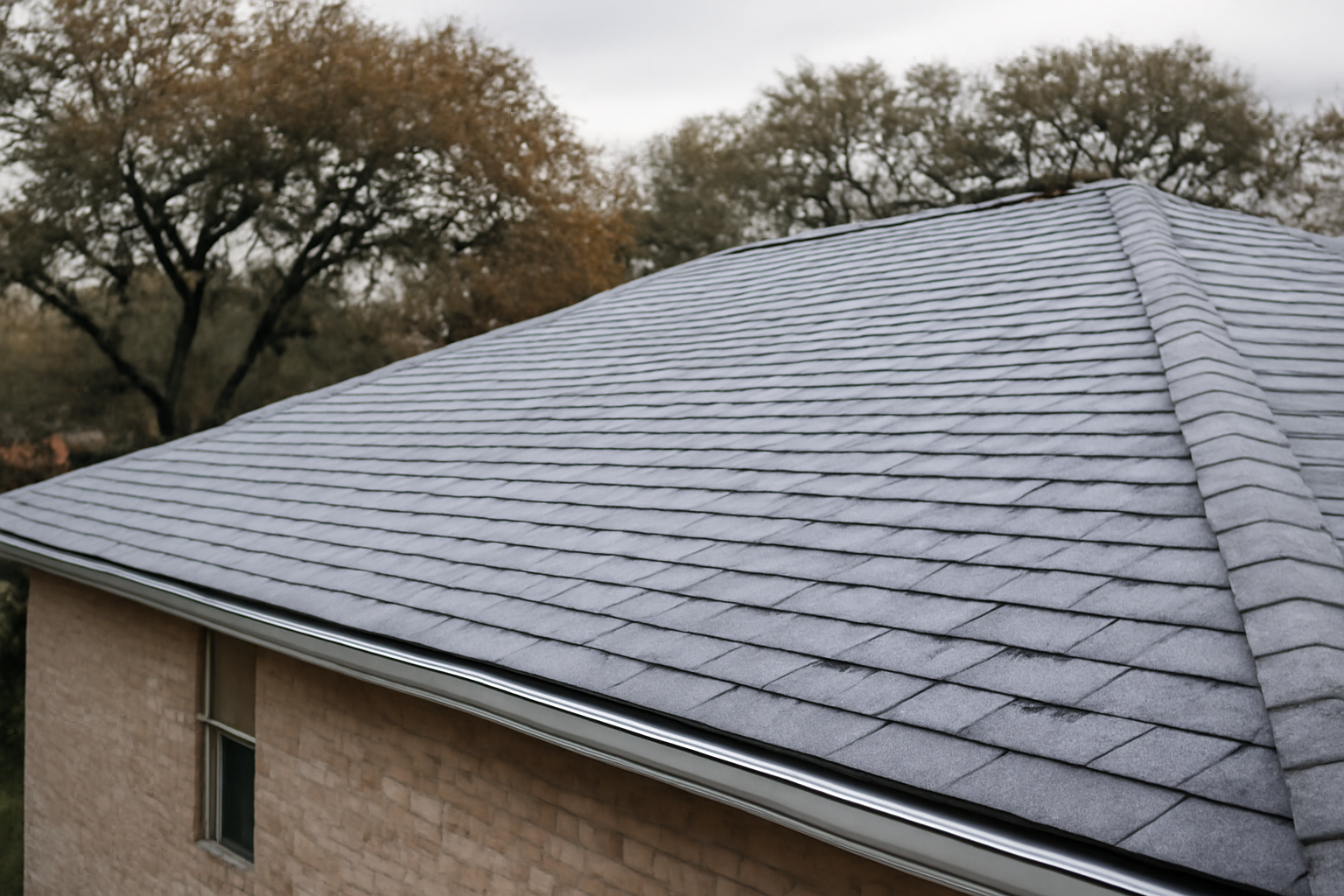
San Antonio's winters are mild compared to the rest of the country — average lows in the upper 30s, occasional dips into the 20s, and maybe one or two genuine freeze events per season. That mildness tricks a lot of homeowners into thinking their roof doesn't need winter attention. It does. The 2021 Winter Storm Uri proved that. So did the ice event in January 2024. The truth is, our climate's unpredictability is exactly what makes preventive maintenance valuable. Here's the month-by-month schedule we walk our own customers through every year.
November: The Setup Month
November is when you do the heavy lifting. Temperatures are comfortable enough to work on a roof safely, and you still have time before the first hard freeze — which typically hits San Antonio somewhere between mid-December and late January.
November Checklist
- Clean gutters and downspouts completely. Live oaks drop leaves through February, but pecans and other deciduous trees dump most of their load in November. Clogged gutters during a freeze event mean ice dams, and ice dams mean water backing up under your shingles.
- Trim branches within 6 feet of the roof. Ice-loaded branches snap. We see this every winter in neighborhoods like Alamo Heights and Terrell Hills where mature tree canopies overhang older roofs.
- Schedule a professional roof inspection. A free roof inspection in November gives you time to address problems before winter weather arrives. We look for cracked or missing shingles, deteriorated flashing, and sealant failures around pipe boots and vents.
- Check attic ventilation and insulation. Poor attic ventilation causes condensation when cold air meets warm, moist air from inside the house. Over time, that condensation rots decking. In a single freeze event, it can cause enough moisture to drip through ceiling penetrations.
- Inspect caulking and sealants around roof penetrations. Pipe boots, satellite dish mounts, vent caps — anything that punctures the roof surface. Sealants get brittle after a few San Antonio summers. Replace anything that's cracked.
December: Address What You Found
December is your repair window. If the November inspection turned up issues — missing shingles, degraded flashing, a soft spot on a flat roofing system — this is the month to fix them. Roofers are generally less booked in December than during spring storm season, so scheduling is easier and you won't be competing with every homeowner on your block for a crew.
December Checklist
- Complete any repairs identified in November. Don't push these to January. A minor roof repair now — a cracked pipe boot, a few lifted shingles — costs a fraction of the water damage repair you'll face if a freeze event exposes that vulnerability.
- Re-check gutters after the first big leaf drop. If you cleaned gutters in early November, they may already be clogged again. Live oaks in particular shed steadily through December.
- Test your attic for drafts. On a cold December morning, go into your attic and look for daylight around vents, soffits, or the ridge. Daylight means air infiltration, which means moisture pathways.
- Verify your homeowner's insurance is current. If a winter storm does cause damage, you want your policy active and your deductible understood before you need to file an insurance claim. Most San Antonio policies carry wind and hail deductibles between 1% and 2% of the home's insured value.
January–February: Monitor and Respond
This is peak freeze risk in the San Antonio metro. The National Weather Service's Austin/San Antonio office typically issues freeze warnings a few times each winter, with the coldest events landing between mid-January and mid-February. Your roof should already be prepped. Now you're in monitoring mode.
January–February Checklist
- Before a freeze: confirm gutters are clear. One more pass. Ice buildup in a clogged gutter creates weight and expansion stress on your fascia boards. We see cracked fascia every February in Stone Oak, Helotes, and Boerne — areas that sit slightly higher and run a few degrees colder than downtown.
- During a freeze: do not go on the roof. Icy shingles are dangerously slippery, and walking on frozen asphalt shingles can crack them. If you suspect damage, wait for the thaw.
- After a freeze: inspect from the ground. Use binoculars to scan for displaced shingles, sagging gutters, or debris impact. Inside, check ceilings and attic spaces for water stains or dripping. If you see anything concerning, call for a professional assessment rather than climbing up yourself.
- Watch for ice dam indicators. Icicles forming along the eaves look picturesque but signal that heat is escaping through your roof, melting snow or ice that refreezes at the cold eave edge. This is an insulation and ventilation problem, and it needs to be addressed before next winter.
March: The Post-Winter Audit
By March, San Antonio is warming up and severe weather season is approaching. This is your transition month — close out winter and prepare for spring storms.
March Checklist
- Do a full post-winter walkthrough. Ground-level visual inspection of every roof plane. Look for granule loss in gutters (a sign your shingles took a beating), cracked or curled shingles, and any flashing that pulled away during thermal expansion and contraction cycles.
- Clean gutters one final time. Live oaks finally finish dropping in late February to early March. Clear them out so your drainage system is ready for spring rain.
- Document everything. Take photos of your roof's current condition. If spring hail hits — and in San Antonio, it often does — those photos become your baseline for any hail damage repair claim. Insurance adjusters take pre-storm documentation seriously.
Why This Schedule Matters More Than You Think
Most roof failures we see aren't caused by a single catastrophic event. They're caused by small problems that sat unaddressed for one or two seasons. A cracked pipe boot seal in November becomes a ceiling stain in January. A clogged gutter in December becomes a rotted fascia board in February. The repair that would have cost $200 in November costs $2,000 by March.
The other thing worth noting: roofing contractors get slammed starting in April when hail season kicks off. If your roof needs a roof replacement, getting it done in winter means shorter wait times, faster scheduling, and crews that aren't juggling 30 other jobs. We're not slow in winter, but we're more available than we are in May.
Don't Wait for a Leak to Tell You Something's Wrong
Wannamaker Roofing offers free roof inspections for homeowners across San Antonio, Stone Oak, Boerne, Helotes, and the surrounding Hill Country. We'll document your roof's current condition, flag anything that needs attention, and give you an honest recommendation — even if that recommendation is "you're fine, do nothing." Schedule yours before the next freeze.
Winter maintenance isn't glamorous. Nobody posts about cleaning their gutters on social media. But the homeowners who follow a schedule like this are the ones who aren't calling us in a panic at 7 a.m. on a freezing Saturday morning. Be that homeowner.