What a Roof Decking Inspection Finds | Wannamaker
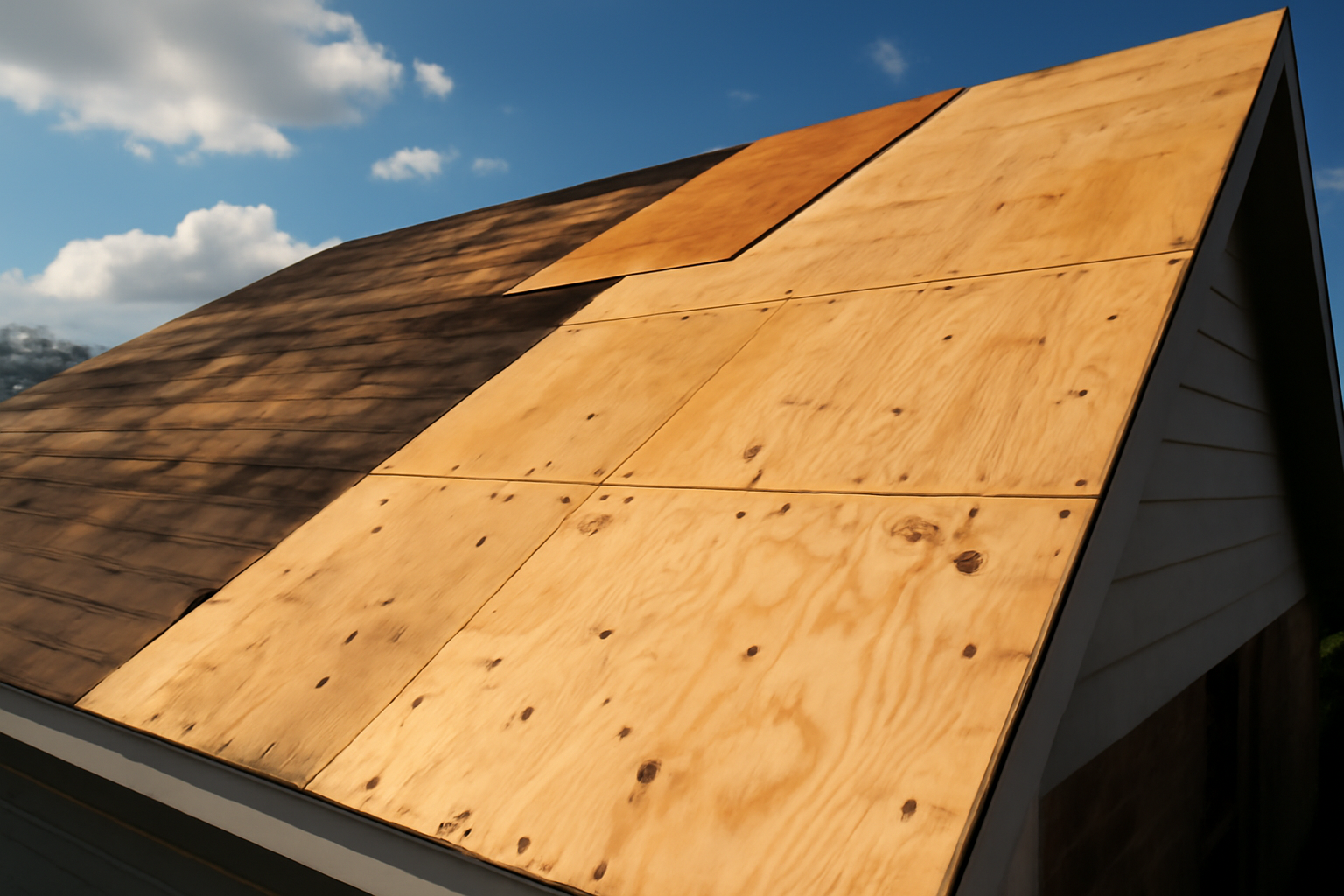
Most homeowners never think about roof decking until a roofer tears off the old shingles and finds something ugly underneath. The decking — those sheets of plywood or OSB nailed to your rafters — is the structural foundation your entire roofing system sits on. If it's compromised, no amount of premium shingles or fancy underlayment will save you. Here's exactly what a thorough decking inspection uncovers, why it matters, and what it means for your wallet.
What Is Roof Decking, Exactly?
Roof decking (also called sheathing) is the flat surface attached to your roof's structural framing. In San Antonio and the surrounding Hill Country, you'll typically see one of three materials:
- Plywood (CDX). Layered wood sheets, usually 1/2" or 5/8" thick. Common in homes built from the 1970s onward. Holds up well when kept dry.
- OSB (Oriented Strand Board). Engineered wood made from compressed strands and resin. Cheaper than plywood and very common in production homes from the 1990s forward. More vulnerable to moisture damage once its edges are exposed.
- 1x skip sheathing (plank decking). Individual boards spaced apart, found on older San Antonio homes — especially those originally built for wood shakes or tile roofing. If you're switching to asphalt shingles, this usually needs to be overlaid with plywood or OSB to meet code.
The Six Things We Look For
When we perform a roof inspection that includes decking evaluation — either from the attic side or during a tear-off — here's the checklist:
1. Moisture Damage and Rot
This is the big one. Water intrusion from failed flashing, missing shingles, or ice-dam equivalents (yes, even in Texas — driven rain under shingles acts similarly) saturates wood over time. Rot weakens the deck to the point where it can't hold nails or support weight. We check for soft spots by pressing firmly on the surface. If a screwdriver pushes through without much resistance, that section is getting replaced.
In San Antonio, the most common rot locations are around plumbing vents, along valleys, and near any previous roof repair patches that weren't sealed correctly.
2. OSB Delamination
OSB is particularly susceptible to edge swelling and delamination when moisture gets in. The strands separate, the board loses its structural integrity, and nails pull out easily. We see this often in neighborhoods like Stone Oak and Schertz where production builders used OSB extensively in the 1990s and 2000s. A delaminated sheet might look fine from the surface but crumble when you step on it.
3. Sagging Between Rafters
Stand in your yard and look at your roofline from the street. See any waviness? That's often sagging decking. It can happen because the original builder used decking that was too thin for the rafter spacing, or because the wood has weakened over decades of Texas heat cycling. A sagging deck creates low spots that pool water, accelerating further damage. During a tear-off, we measure the rafter spacing and confirm the decking thickness meets current building code — which in San Antonio requires a minimum of 7/16" for 24" on-center rafters.
4. Mold and Fungal Growth
Our humid subtropical climate is a playground for mold. From the attic side, black or green discoloration on the underside of the decking is a red flag. Mold doesn't always mean the wood is structurally compromised, but it signals a ventilation or moisture problem that needs to be solved before new roofing goes on. We address this alongside ventilation corrections during a roof replacement.
5. Nail Pattern and Fastener Issues
Decking should be nailed in a specific pattern — typically 6 inches on-center along the edges and 12 inches in the field. Overdriven, missing, or rusted nails compromise the deck's ability to stay attached in high winds. After the storms that roll through San Antonio each spring, we frequently find decking that partially lifted because it was under-nailed from the start. This is also a common finding during storm damage assessments.
6. Code Compliance Gaps
Building codes evolve. A deck that was fine in 1985 may not meet current standards. Common issues include undersized panels, missing H-clips (the small metal spacers between panel edges), and decking that doesn't extend properly over supports. If you're getting a full reroof with a City of San Antonio permit — which you should be — the inspector will check these items. We'd rather catch them during tear-off than have a failed inspection delay your project.
What Decking Replacement Actually Costs
Replacing decking adds to a roof replacement cost, and it's the variable most estimates struggle to predict accurately before tear-off. Replacing a few sheets is minor — typically $75–$150 per sheet installed, depending on access. But if 30–40% of the deck needs replacement, you're looking at a meaningful budget increase.
This is why we always include a decking allowance line item in our proposals and explain the per-sheet cost upfront. No surprises. If we tear off and the deck is solid, you don't pay for sheets we didn't replace. If we find more damage than expected, you already know the rate.
Can You Inspect Decking Without a Tear-Off?
Partially. From the attic, a trained eye can spot moisture stains, mold, daylight peeking through, and sagging. We can also identify soft spots by walking the roof carefully. But a full evaluation of every square foot only happens during tear-off. That's one reason we never recommend roofing over existing shingles — besides the added weight and warranty issues, you're literally hiding the most important structural component from view.
If you're in Alamo Heights, Helotes, or anywhere in the San Antonio metro, an attic-side assessment during a free roof inspection can give you a strong preliminary read on your decking condition.
Insurance and Decking Damage
Here's the part most contractors won't explain clearly: insurance policies generally cover decking damage caused by a covered peril (hail, wind, fallen tree), but they do not cover decking that rotted due to long-term neglect or deferred maintenance. If your decking failed because a storm ripped off shingles and water got in, your carrier should cover the replacement. If it failed because a slow leak went unaddressed for years, that's on you. Understanding this distinction matters when filing an insurance claim.
Wondering about your decking condition?
We include an attic-side decking evaluation with every inspection — no cost, no obligation. If we see warning signs, we'll show you photos and explain exactly what's happening. Schedule your free roof inspection and get real answers before they become expensive surprises.
The Bottom Line
Your roof's decking is the silent partner in the whole system. Shingles protect it, underlayment backs them up, but when the deck fails, everything above it fails too. A proper decking inspection — whether from the attic during a routine check or during a full tear-off — catches rot, delamination, code issues, and structural weakness before they turn into ceiling stains or worse. Don't skip it, and don't let any contractor skip it either.