Roof Coatings vs Replacement for Flat Roo… | Wannamaker
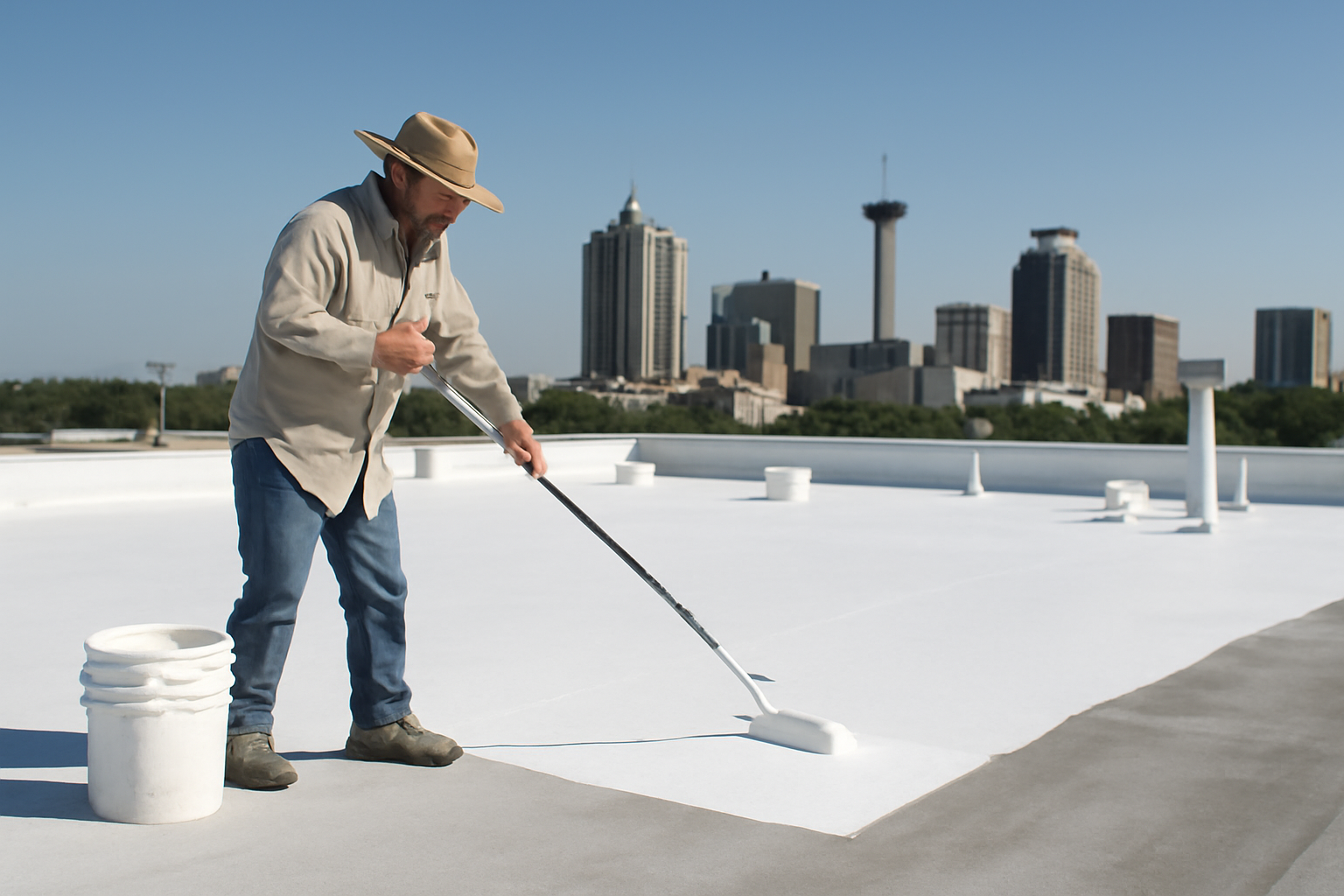
If you own a commercial building or a home with a flat roof in San Antonio, you've probably been pitched a roof coating at some point. The sales pitch sounds great: fraction of the cost, extends your roof's life by a decade, reflects heat, no tear-off required. And sometimes that pitch is accurate. But other times, a coating is just a band-aid on a roof that needs surgery. Here's how to tell the difference — and what each option actually costs in our market.
What Roof Coatings Actually Are (and Aren't)
A roof coating is a monolithic, fluid-applied membrane that bonds directly to your existing roof surface. It's not paint. Quality coatings are typically 20-30 mils thick (compared to 3-5 mils for paint) and are designed to waterproof, reflect UV radiation, and protect the underlying membrane from further degradation.
The most common types you'll encounter in the San Antonio market:
- Silicone coatings. Best for ponding water situations. They don't break down sitting in water and offer excellent UV resistance. The go-to for most flat roofs in our area.
- Acrylic coatings. More affordable, good reflectivity, but they struggle with ponding water. Better suited for roofs with proper drainage and slopes of at least 1/4" per foot.
- Polyurethane coatings. Tougher against foot traffic and impact. Often used on roofs with heavy HVAC equipment or frequent maintenance access.
- Elastomeric coatings. A broad category that includes some acrylics and urethanes. The term gets thrown around loosely — always ask for the specific chemistry.
What coatings are not: a structural fix. They won't solve rotten decking, crushed insulation, or a roof system that's fundamentally failed. They're a maintenance strategy for roofs that still have structural integrity.
When a Coating Makes Sense
A roof coating is a legitimate option — sometimes the best option — when these conditions are met:
- The existing membrane is intact. Minor cracks, surface weathering, and small repairs are fine. Large splits, blistering across more than 25% of the surface, or widespread seam failures mean the membrane has served its time.
- The insulation is dry. This is the deal-breaker most coating salespeople gloss over. If moisture has saturated the insulation beneath your membrane, a coating traps that moisture in place. The insulation loses its R-value, and you're essentially sealing rot into your building. A core cut or infrared scan can verify this.
- Drainage is functional. Ponding water (standing more than 48 hours after rain) accelerates coating failure for everything except silicone. If your drains are clogged or your slope has settled, address drainage first.
- You need 10-15 more years, not 25+. Coatings can extend a roof's useful life significantly, but they're not a permanent solution. If you're planning to hold the building long-term, you may just be delaying the inevitable.
When Replacement Is the Only Real Answer
Full flat roofing replacement — including tear-off, new insulation, and a new membrane system — is warranted when:
- Wet insulation is confirmed. There's no coating that fixes this. The saturated layers have to come out.
- The deck itself is compromised. Sagging, soft spots, or visible wood rot on plywood decks mean structural work is needed before any waterproofing goes down.
- Multiple membrane layers already exist. San Antonio building code (following IBC) typically limits you to two roof systems before a full tear-off is required. If you already have two layers, adding a coating on top may not pass inspection.
- Energy efficiency is a priority. A new system with modern polyiso insulation and a reflective membrane will dramatically outperform a coating over old, compressed insulation — especially through our July and August heat.
- You've had repeated leaks in the same areas. Chronic leaking usually means the system has failed systemically, not just at the surface level.
Cost Comparison: San Antonio Flat Roof Pricing
Here's what you can realistically expect in the San Antonio and surrounding Hill Country market for a typical commercial roofing project:
- Silicone roof coating (with repairs). Typically $2.50-$4.50 per square foot, depending on the prep work needed and number of coats. A 5,000 sq ft commercial roof might run $12,500-$22,500 installed.
- Full TPO or PVC replacement. Typically $6.00-$12.00 per square foot including tear-off, new insulation, and membrane. That same 5,000 sq ft roof: $30,000-$60,000.
- Modified bitumen replacement. Slightly less than TPO/PVC, typically $5.50-$10.00 per square foot. Popular for smaller commercial and residential flat sections.
So a coating is roughly 30-50% of the cost of a full replacement. That's significant. But here's the math people miss: if a coating lasts 12 years and a replacement lasts 25-30 years, the cost-per-year can be surprisingly close. Run the numbers for your specific situation before assuming the cheaper option is the better value.
The San Antonio Heat Factor
Our climate makes reflective coatings especially attractive. A white silicone coating can reduce roof surface temperatures by 50-60°F compared to a dark EPDM or aged modified bitumen membrane. For buildings without great insulation — and that describes a lot of older San Antonio commercial stock — that translates to real energy savings on cooling costs from April through October.
That said, a new TPO or PVC membrane is also white and reflective. So you get similar reflectivity benefits from replacement — plus new insulation on top of it. The energy argument alone doesn't settle the coating vs. replacement debate.
What About Insurance and Storm Damage?
If your flat roof was damaged by hail or wind — and we get plenty of both — an insurance claim may cover a full replacement at little out-of-pocket cost. In that scenario, a coating makes zero sense. Your carrier will pay for a new roof system; take it. We see building owners apply coatings to storm-damaged flat roofs without ever filing a claim, effectively paying for a downgrade when they could have gotten an upgrade for free.
If you've had a recent hail event, get a proper free roof inspection before making any decisions. The damage on flat roofs is harder to spot than on shingle roofs — you need someone who knows what to look for on membrane systems.
Our Honest Take
We install both coatings and full replacement systems. We don't have a financial incentive to push you toward the more expensive option — a coating project is faster, easier, and still profitable work. What we won't do is coat a roof that needs replacing. That's a disservice to the building owner, and it's the kind of shortcut that gives contractors a bad reputation.
The right answer depends on what's happening underneath the surface. Core cuts, moisture scans, and a thorough visual inspection tell the story. Skip that step, and you're gambling.
Not Sure Whether to Coat or Replace?
We'll inspect your flat roof, check for moisture intrusion, and give you an honest recommendation — no pressure either way. Schedule a free inspection and get clarity before you spend a dollar.