Pipe Boot Replacement: When & Why | Wannamaker
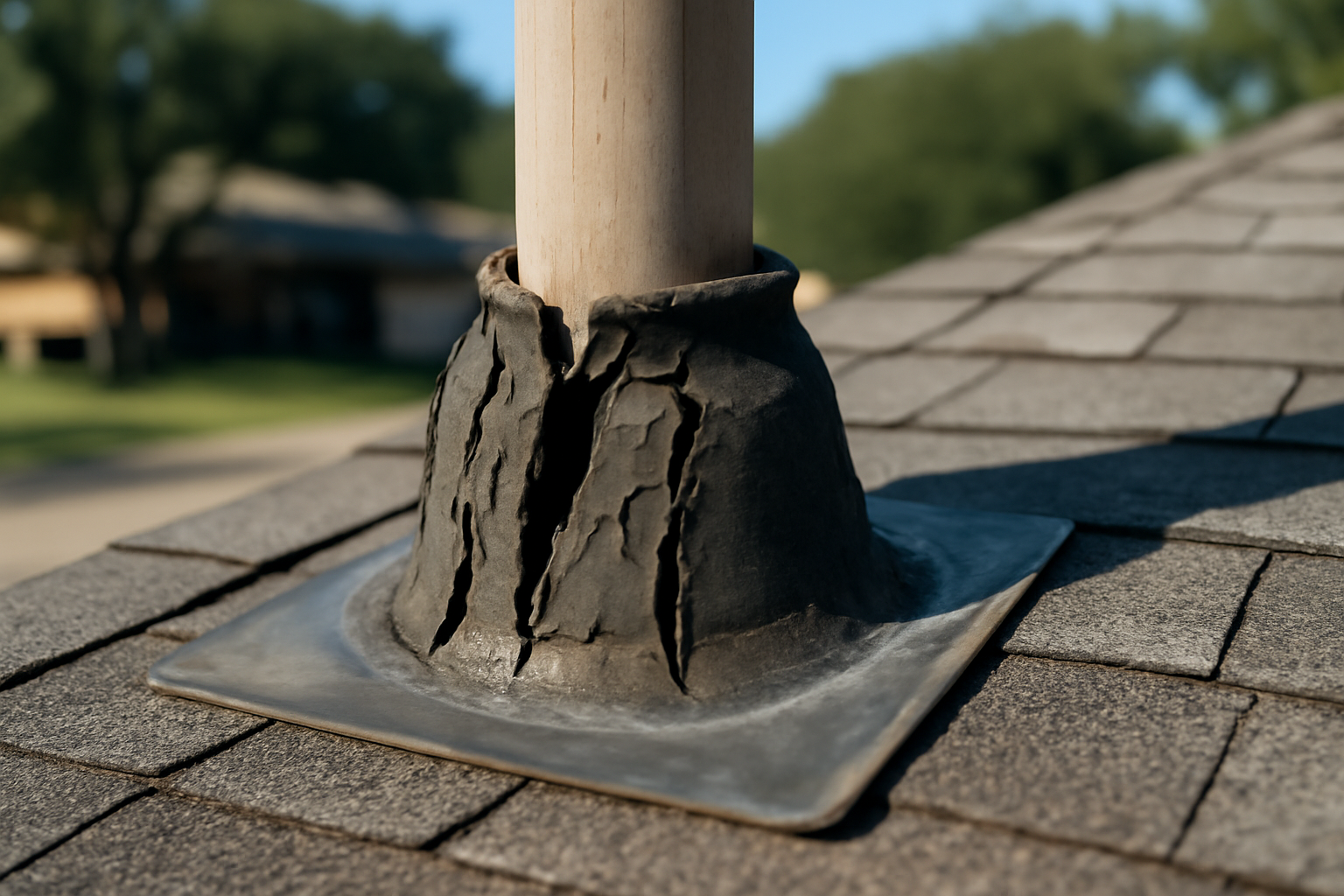
If you've ever had a mysterious ceiling stain that appeared out of nowhere — no storm, no missing shingles, no obvious damage — there's a strong chance the culprit was a failed pipe boot. These small rubber collars fit around the plumbing vent pipes that poke through your roof, and they're responsible for more service calls in San Antonio than hail damage, wind damage, and worn-out shingles combined. The frustrating part? They're cheap to replace proactively, but expensive to ignore.
What Exactly Is a Pipe Boot?
Every home with indoor plumbing has vent pipes that exit through the roof. These pipes allow sewer gases to escape and equalize pressure in your drain system. Where each pipe penetrates the roof surface, a pipe boot (also called a plumbing boot or vent pipe flashing) seals the gap between the pipe and the surrounding shingles.
A standard pipe boot has three components: a metal or plastic base flange that sits flat against the roof deck, a rubber or neoprene collar that hugs the pipe tightly, and the surrounding shingles that overlap the base. When all three work together, water runs right past the penetration. When any one of them fails — especially that rubber collar — you get a direct path for rainwater into your attic and eventually your ceilings, walls, and insulation.
Why Pipe Boots Fail in San Antonio
San Antonio's climate is uniquely brutal on rubber roofing components. Here's why pipe boots fail faster here than in milder regions:
- Extreme UV exposure. We average over 220 sunny days per year. UV radiation breaks down neoprene and rubber at the molecular level, causing it to dry out, crack, and eventually crumble. South-facing and west-facing pipe boots take the worst beating.
- Thermal cycling. Our summers push roof surface temperatures above 160°F during the day, then drop 50–70 degrees overnight. That constant expansion and contraction accelerates cracking around the collar seal.
- Hail impact. Even moderate hail can nick or split a rubber boot that's already sun-damaged. After a hailstorm, pipe boots are one of the first things we check during a free roof inspection.
- Age. Standard neoprene pipe boots have a functional life of roughly 8–12 years — well short of the 25–30 year lifespan of your asphalt shingles. That means every roof will likely need boot replacement at least once during its service life.
How to Spot a Failing Pipe Boot
You don't need to climb on your roof to catch early warning signs, though a ground-level view through binoculars helps. Here's what to look for:
- Visible cracking or splitting. If the rubber collar looks dry, brittle, or has visible cracks, it's either leaking already or about to.
- Collar separation. The rubber should hug the pipe snugly. If there's a visible gap between the collar and the pipe, water is getting in every time it rains.
- Rust stains. On metal-flange boots, orange rust streaks running down the shingles mean the base is corroding and may have holes.
- Interior water stains. Ceiling stains near bathrooms or in the center of the house (where vent stacks typically run) often trace back to pipe boots — not missing shingles.
- Musty smell in the attic. Slow pipe boot leaks can soak insulation for months before visible staining appears downstairs. If your attic smells damp, check around every penetration.
Repair vs. Replace: What Actually Works
Let's be blunt: caulking a cracked pipe boot is not a repair. It's a delay. We see this constantly — a previous contractor or handyman smeared a thick bead of roofing sealant over a cracked collar, and it held for maybe one season before the sealant itself cracked. Sealant doesn't bond well to degraded rubber, and it can't flex with temperature changes the way a proper boot does.
The right fix is a full pipe boot replacement. This involves carefully lifting the surrounding shingles, removing the old boot and flange, installing a new boot with proper overlap and sealant at the flange, and re-laying the shingles. Done correctly, the repair is watertight and lasts another decade-plus.
Upgraded Options Worth Considering
If you're tired of replacing rubber boots every 8–12 years, there are longer-lasting alternatives:
- Perma-Boot or similar retrofit covers. These hard plastic covers slip over the existing pipe and boot, creating a secondary weatherproof shell. They're UV-resistant and typically outlast the roof itself.
- All-metal pipe flashings. Common on metal roofing systems, these use a lead or aluminum collar instead of rubber. They're more expensive upfront but virtually eliminate UV degradation.
- EPDM (synthetic rubber) boots. Higher-grade than standard neoprene, EPDM handles UV and thermal cycling better. Not a lifetime solution, but they stretch the replacement interval to 15+ years in most cases.
What Does Pipe Boot Replacement Cost?
This is one of the most affordable roof repairs you can make. In the San Antonio market, a single pipe boot replacement typically runs $150–$350 depending on roof pitch, boot type, and accessibility. Most homes have 2–5 pipe penetrations, so replacing all of them during one service call usually falls in the $400–$1,200 range — a fraction of the cost of repairing water-damaged drywall, insulation, and framing from a leak that went unnoticed.
If your roof is older and you're already considering a full roof replacement, new boots are included in that scope of work. But if the shingles still have life left, proactive boot replacement is one of the smartest maintenance investments you can make. We cover this and other penetration checks as part of every roof inspection.
When to Act
Here's our honest recommendation: if your roof is 8 years old or older and you've never had the pipe boots inspected, get them looked at now — before the next heavy rain. San Antonio's spring and fall storm seasons don't give you much warning, and a $250 repair today prevents a $3,000+ ceiling and insulation repair later.
After any significant storm damage event, pipe boots should be part of the inspection checklist — not an afterthought. Adjusters and contractors who only look at shingle damage are missing one of the most common failure points on the roof.
Not sure about your pipe boots?
Wannamaker Roofing offers a thorough free roof inspection that includes every pipe boot, flashing, and penetration point on your roof — not just the shingles. We'll tell you exactly what needs attention now and what can wait. No pressure, no upselling, just an honest assessment from a local crew that's been doing this in San Antonio since 2012.