Gutter Pitch Problems That Damage Roofs | Wannamaker
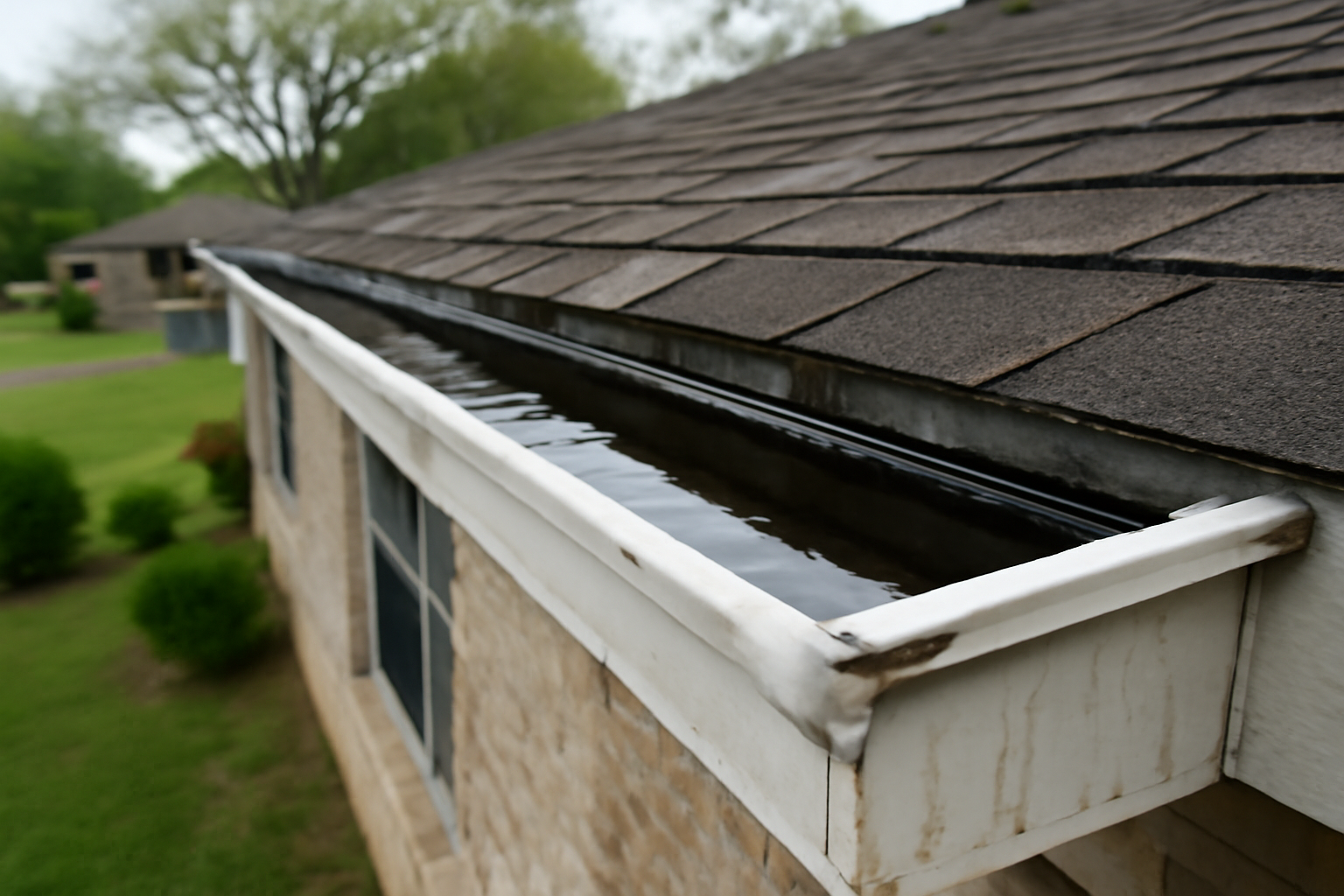
Most homeowners don't think about their gutters until water is pouring over the side during a thunderstorm. But here's the thing — gutters that look fine from the driveway can still be silently damaging your roof, fascia, and even your foundation. The culprit is almost always the same: bad pitch. And in San Antonio, where we get intense, fast-dumping rainstorms followed by weeks of heat, gutter pitch problems escalate faster than you'd expect.
What "Gutter Pitch" Actually Means
Gutter pitch (also called gutter slope) is the slight downward angle that directs water toward the downspouts. Industry standard is roughly 1/4 inch of drop per 10 feet of gutter run. That's barely visible to the naked eye, which is exactly why problems go unnoticed for years.
When that slope is off — too flat, reversed, or inconsistent — water sits in the trough instead of draining. And standing water in a gutter is where the damage chain starts.
How Bad Pitch Damages Your Roof
Gutters don't exist in isolation. They're mounted directly to your fascia boards, which are attached to your rafter tails, which support the edge of your roof deck. When gutter pitch fails, the damage migrates upward in a predictable sequence:
- Standing water adds weight. A 30-foot section of 5-inch gutter filled with water can hold over 100 pounds. Gutter spikes and hangers loosen. The gutter sags further, making the pitch problem worse — a self-reinforcing cycle.
- Water backs up behind the gutter. When water pools at a high point instead of draining, it overflows backward toward the fascia and can wick under the drip edge and starter shingles. This is how roof leaks start at the eave line without any visible shingle damage.
- Fascia boards rot. Constant moisture contact causes wood fascia to soften and decay. Once the fascia is compromised, the gutter has nothing solid to hold onto, and now you've got a gutter falling away from the house — plus exposed rafter tails.
- Ice dams form (yes, even here). San Antonio gets the occasional hard freeze. Standing gutter water freezes and expands, pushing up under shingles. The February 2021 freeze caused exactly this kind of damage across Stone Oak and Alamo Heights.
- Foundation erosion. Overflowing gutters dump concentrated water right at the foundation line. Over time, this causes soil settlement and slab movement — a whole separate problem that starts at the roof line.
What Causes Gutter Pitch to Fail
Gutters don't just randomly lose their slope. There are specific causes, and knowing them helps you prevent repeat problems:
Poor Original Installation
This is the most common cause we see in San Antonio. Many gutter installers work fast and eyeball the slope instead of using a level and measuring. The gutter looks straight — which is actually wrong, since it should have a slight, deliberate lean. If your gutters were installed level, they have zero pitch, and water will sit in the middle of every run.
Hanger and Spike Failure
Older homes in areas like Alamo Heights and Leon Valley often have spike-and-ferrule gutter systems. These spikes work loose over time, especially in our expansion-contraction climate. When one hanger drops, it creates a low spot that collects debris and water, which adds weight, which pulls the next hanger loose.
Debris Buildup and Weight
Live oaks drop leaves nearly year-round in San Antonio. Mountain cedar and pecan trees contribute their share too, especially in Boerne and Helotes. Wet leaf debris is surprisingly heavy. A clogged section acts like a dam, and the weight gradually bends the gutter and pulls it off-pitch.
Storm Damage and Settling
Hail, wind-blown branches, and ladder damage from contractors or holiday light installers all contribute. We also see pitch change after major storm damage events when gutters get knocked around but not properly re-hung.
How to Check Your Gutter Pitch
You can do a basic check yourself with a garden hose and a few minutes:
- The hose test. Run water into the gutter at the end farthest from the downspout. Watch whether it flows steadily toward the downspout or pools in the middle. If it pools, your pitch is off.
- Visual sag check. Stand at one end of the gutter and sight down its length. Visible dips or waves indicate hanger failure and pitch problems.
- Overflow stains. Look for vertical water stain lines on the fascia or siding. These tell you exactly where water is overflowing — and those spots correspond to pitch failures.
- Check after rain. Walk the perimeter of your house 30 minutes after a rain stops. Any gutter still holding visible water has a drainage problem.
If you spot any of these signs, it's worth having a professional look at the full eave assembly — not just the gutter itself. Water that's been backing up under the drip edge may have caused damage to the roof deck that isn't visible from below. A free roof inspection can catch this before it turns into a roof repair project.
Fixing Gutter Pitch the Right Way
Re-pitching gutters isn't complicated, but it does need to be done methodically. Here's what a proper fix looks like:
- Remove and re-hang, don't patch. Adjusting one hanger creates a new low spot elsewhere. The right approach is to snap a chalk line at the correct slope and re-set all hangers to that line.
- Inspect the fascia before reattaching. If the fascia is soft or punky, new hangers won't hold. Replace damaged fascia first — this is where gutter work and roof work overlap.
- Upgrade to hidden hangers. If your home still has spike-and-ferrule gutters, switching to screw-in hidden hangers every 24 inches provides dramatically better hold and longevity.
- Verify drip edge alignment. The drip edge should direct water into the gutter, not behind it. During any gutter re-pitch, this is the time to confirm the drip edge is properly positioned.
When Gutter Problems Mean Roof Problems
Here's the part most gutter companies won't tell you: if water has been backing up under your shingles for more than a season, you likely have damage beyond just the gutters. Wet roof decking delaminates. Starter shingles lose adhesion. Underlayment degrades. By the time you see a ceiling stain inside the house, the eave section may need partial replacement.
This is especially true after hail seasons. A hail damage repair estimate should always include an eave-line inspection. Compromised gutters plus compromised shingles is a combination that accelerates damage exponentially.
Not Sure If Your Gutters Are Causing Roof Damage?
Wannamaker Roofing inspects the full eave assembly — gutters, fascia, drip edge, decking, and shingles — not just what's visible from the ground. If you've noticed pooling water, overflow stains, or sagging gutters, schedule a free roof inspection and we'll tell you exactly what's going on and what (if anything) actually needs fixing.
Gutter pitch is one of those unglamorous details that separates a roof system that lasts from one that fails early. The fix is usually straightforward and affordable — as long as you catch it before the fascia rots and the deck starts delaminating. Pay attention to where the water goes. That's where the problems start.