Emergency Tarping: When It's Worth the Co… | Wannamaker
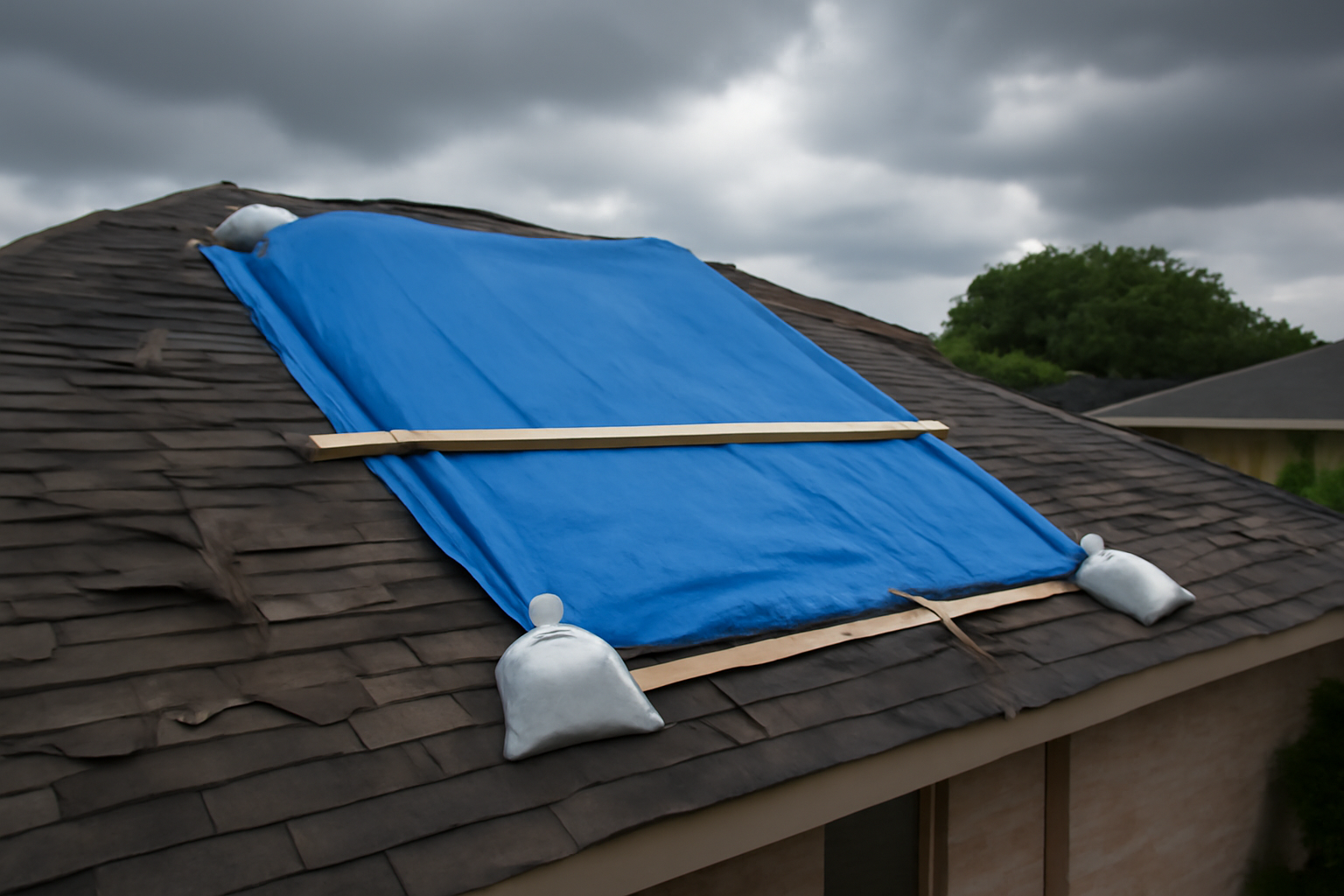
Your roof just took a hit. Maybe it was hail the size of golf balls, maybe a wind gust peeled back a section of shingles, maybe a tree limb decided your bedroom was its final resting place. You're staring at exposed decking, and your phone's weather app shows rain moving in tonight. Someone tells you emergency tarping costs $500 to $2,000. Your gut reaction: Is that really necessary? Let's break down when emergency tarping is worth every penny, when you can skip it, and how it fits into your insurance claim.
What Emergency Tarping Actually Does
Emergency tarping is exactly what it sounds like — securing a heavy-duty polyethylene tarp over the damaged section of your roof to prevent water from entering your home. A proper tarp job isn't someone throwing a blue sheet over the hole and hoping for the best. It involves measuring the exposed area, extending the tarp well past the damage on all sides, securing it with wood battens screwed into the decking or fastened to the structure, and sometimes using sandbags or additional anchoring for high-wind situations.
The goal is simple: stop the bleeding. A tarp won't fix your roof. It buys you time — usually 30 to 90 days — to get a proper roof repair or full roof replacement scheduled without your home sustaining additional water damage every time it rains.
When Tarping Is Absolutely Worth It
There are situations where skipping the tarp is like skipping the tourniquet. The math is straightforward: if water intrusion will cause more damage than the tarp costs, you tarp.
- Exposed decking or open holes. If you can see daylight from your attic, or if sheathing is cracked and missing, water will pour directly into your home. One rainstorm can soak insulation, saturate drywall, warp framing, and start mold growth within 48 hours. A $1,000 tarp can prevent $15,000+ in interior damage.
- Missing large sections of shingles. When wind peels off a 10×10 foot section or larger, the underlayment alone won't protect you through multiple rain events — especially with San Antonio's sudden downpours.
- Active leaking into living spaces. If water is already coming through your ceiling, the damage clock is ticking. Every hour without protection compounds the problem.
- Tree or debris penetration. A branch through the roof creates an irregular opening that's nearly impossible to seal with anything less than a properly secured tarp.
- You're filing an insurance claim. This is the big one most people miss. Your homeowner's policy requires you to mitigate further damage. If you skip tarping and a subsequent rainstorm causes interior damage, your carrier can — and often will — deny coverage for that secondary damage. They'll argue you failed your duty to protect the property.
When You Can Probably Skip It
Not every roof hit needs a tarp. If you have a few missing shingles but the underlayment is intact and undamaged, you're likely fine for a short period. If the damage is on a steep slope with good drainage and no rain is forecast for a week, you may have time to get a contractor out for a permanent fix without the intermediate step. Minor ridge cap damage or a few cracked shingles from a hailstorm usually don't warrant emergency tarping — they warrant a prompt free roof inspection and repair scheduling.
The key question: Is the roof's water barrier compromised? If yes, tarp. If no, schedule a repair quickly and monitor.
What Emergency Tarping Costs in San Antonio
Expect to pay between $300 and $2,000 depending on the size of the damaged area, roof pitch, accessibility, and whether the call is after hours. A small tarp job on a single-story home with walkable pitch might run $300-$600. A large section on a two-story steep roof at 2 AM during an active storm? That's the higher end. Most residential tarp jobs in the San Antonio metro fall in the $500-$1,200 range.
Here's what matters: most homeowner's insurance policies cover emergency tarping as part of your claim. It typically falls under "temporary repairs" or "damage mitigation" in your policy. Keep the receipt. Take photos before and after. This cost usually gets reimbursed when your insurance claim is processed.
Storm Season Context: Why This Matters Right Now
We're in the thick of severe weather season across Central and South Texas. High wind warnings have been active across parts of the region — the Guadalupe Mountains area just saw significant wind advisories in mid-May 2026, and when those weather systems push east and south, San Antonio, New Braunfels, Boerne, and the surrounding Hill Country communities often catch the tail end with damaging straight-line winds and hail. After every major storm event, we see a surge of homeowners who waited too long and turned a $8,000 hail damage repair into a $25,000 problem because of secondary water damage.
If you're in Stone Oak, Helotes, New Braunfels, or anywhere in the San Antonio metro and you've got visible roof damage after a storm, don't wait to see what happens when the next front rolls through.
How to Handle the First 24 Hours After Storm Damage
Here's the sequence that protects both your home and your claim:
- 1. Document everything. Photos and video from the ground. If you can safely photograph from inside the attic, do that too. Timestamp matters — your phone does this automatically.
- 2. Call a licensed roofer — not a storm chaser. You want someone local, licensed in Texas, and able to provide emergency tarping if needed. Ask if they handle storm damage and insurance documentation.
- 3. Call your insurance company. File the claim. Mention you're having emergency mitigation done. They expect this.
- 4. Save every receipt. Tarping, any temporary interior protection (moving furniture, water extraction), all of it. These are reimbursable expenses under most policies from carriers like USAA, State Farm, Allstate, and others common in the San Antonio market.
- 5. Don't sign anything with a door-knocker. Storm chasers flood San Antonio after every major weather event. They'll offer free tarps in exchange for signing over your insurance claim rights. This almost always ends badly for the homeowner.
The Bottom Line on Emergency Tarping
Emergency tarping isn't a luxury — it's triage. When your roof's water barrier is breached and rain is coming, the cost of not tarping almost always exceeds the cost of tarping. Factor in that insurance typically reimburses it, and the real question isn't whether you can afford to tarp. It's whether you can afford not to.
Storm Damage? Don't Wait.
Wannamaker Roofing provides emergency tarping and full storm damage restoration across San Antonio and the surrounding Hill Country. We document everything for your insurance claim, and we've been doing this since 2012. Schedule a free roof inspection or call us directly if you need emergency service — day or night.