Reroofing Your Business Without Shutting… | Wannamaker
You've been putting off that roof replacement because you can't afford to shut your doors. Maybe you run a dental practice near Stone Oak, a restaurant off 1604, or a retail shop in Alamo Heights. The roof is leaking, the insulation is shot, and you know you're on borrowed time — but closing for a week feels worse than the leak itself. Here's the thing: you almost certainly don't have to close at all.
The "We Have to Close" Myth
This misconception kills more commercial roofs than hail does. Business owners delay necessary work for years because they assume reroofing means a full shutdown. By the time they act, a $30,000 reroof has turned into a $60,000 problem with water-damaged decking, ruined inventory, and mold remediation costs.
The reality is that experienced commercial roofing contractors plan around your business — not the other way around. We've reroofed restaurants during lunch service, medical offices between patient appointments, and warehouses running three shifts. It takes planning, but it's entirely normal.
How Phased Roofing Works
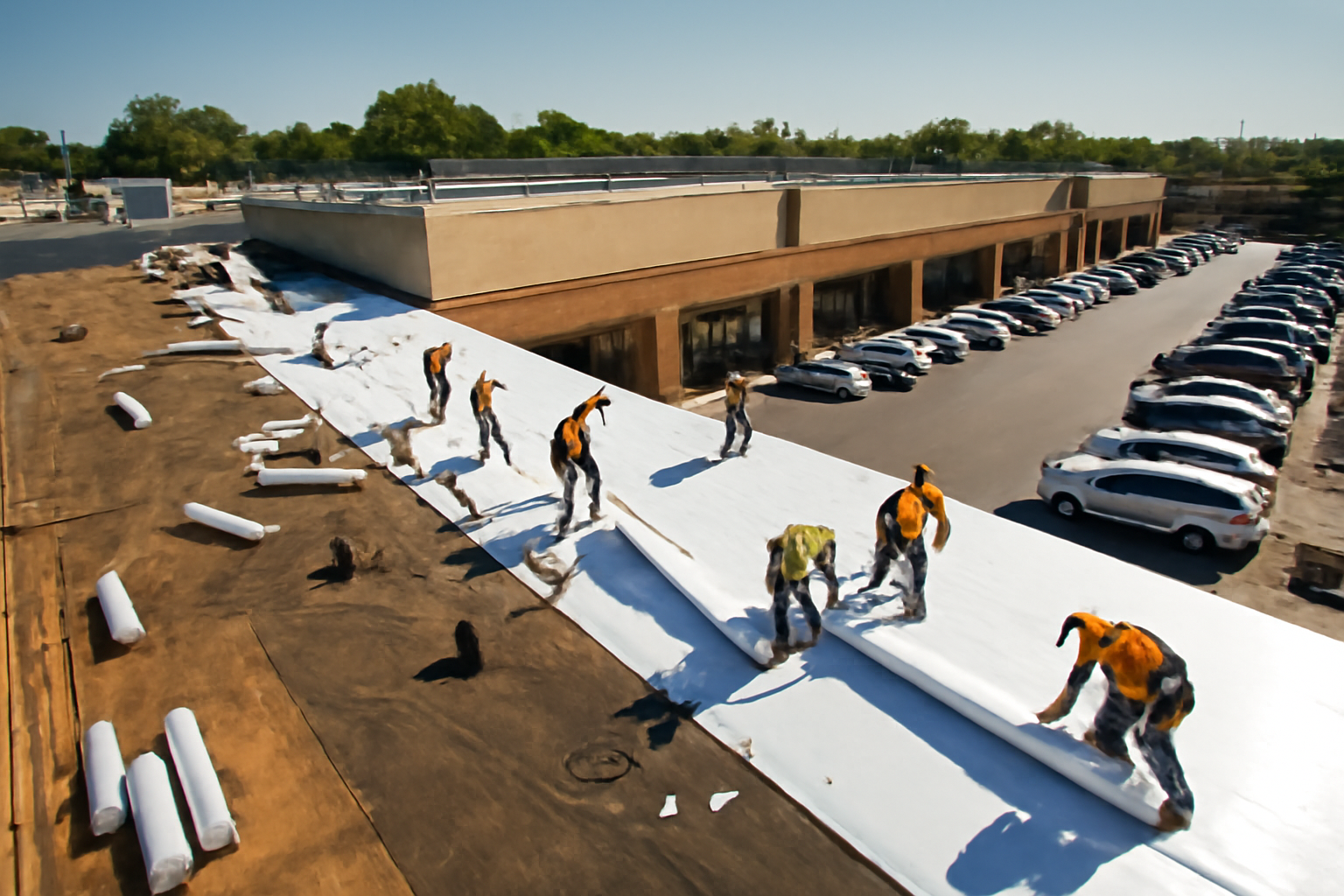
The key concept is phased installation. Instead of tearing off the entire roof at once and leaving your building exposed, we divide the roof into sections and complete each one before moving to the next. At no point is your entire building without weather protection.
Here's a Typical Phased Schedule
- Pre-construction walkthrough. We map your roof into zones based on drainage, structural sections, and what's happening directly below each area. A zone above your server room gets different timing than a zone above a storage closet.
- Zone-by-zone tear-off and install. Each zone gets stripped, inspected, repaired if needed, and re-covered before we move to the next. We use temporary waterproofing membranes at transition points between completed and active zones.
- Off-hours heavy work. The loudest tasks — tear-off, decking replacement, equipment hoisting — get scheduled early morning, after hours, or on weekends depending on your operation. A restaurant that's busiest at dinner gets morning tear-off. An office that's empty by 6 PM gets evening work.
- Daily weatherproofing. At the end of every work day, the active zone gets sealed with temporary waterproofing. San Antonio's pop-up thunderstorms don't wait for your contractor to finish, and neither should your protection.
Noise, Dust, and Customer Experience
Let's be honest: roofing isn't quiet. Tear-off creates vibration, nail guns are loud, and foot traffic on a commercial roof is audible inside the building. But there's a massive difference between "construction noise all day every day for two weeks" and "a few hours of noise on Tuesday morning while we handle the section above the break room."
Smart scheduling handles most noise concerns. For the rest, we coordinate with your team. Need silence during a 2 PM client presentation? We pause. Morning rush at your café runs until 10 AM? We start at 10:15. This isn't complicated — it just requires a contractor who actually communicates.
Dust and debris are managed with ground-level containment. We keep dumpsters positioned away from customer entrances, use chutes to control debris flow, and clean the work area daily. Your parking lot shouldn't look like a construction site when your customers arrive.
What About Safety and Liability?
This is where choosing a licensed, insured contractor matters more than ever. When you're reroofing a building with people inside and customers walking below, the stakes are higher than a vacant warehouse job. You need:
- General liability coverage. Minimum $1 million, though many commercial property owners and landlords require $2 million. Your contractor should provide a certificate of insurance naming you as additionally insured before work starts.
- Workers' compensation. Non-negotiable. If a roofer is injured on your commercial property and the contractor doesn't carry workers' comp, guess who gets the lawsuit.
- OSHA-compliant fall protection. Guardrails, warning lines, and safety monitors — especially critical on occupied buildings where the public is present below.
Common Commercial Roof Systems in San Antonio
The type of roof system affects how easily a phased approach works. Most commercial buildings in the San Antonio metro use one of these:
- TPO and PVC single-ply membranes. The most common choice for flat roofing on commercial buildings. These install quickly in sections, making phased work straightforward. Heat-welded seams create watertight transitions between new and temporary zones.
- Modified bitumen. Torch-applied or self-adhered, this system works well in phases but requires more careful fire safety planning on occupied buildings.
- Standing seam metal. Common on Hill Country commercial buildings in Boerne and New Braunfels. Metal roofing panels install quickly but generate more noise during installation — scheduling around business hours matters even more here.
Insurance Claims and Commercial Roofs
If your commercial reroof is driven by storm damage, your business interruption coverage may actually reimburse lost revenue during construction. But here's the catch — if your contractor can demonstrate a phased approach that keeps you open, the carrier may deny business interruption claims. That's not a bad thing. Staying open and earning revenue beats filing claims and waiting for reimbursement every time.
We work with carriers like USAA, State Farm, Allstate, and the regional Texas carriers regularly on commercial insurance claims. The documentation requirements are more complex than residential claims, but the process is the same: inspect, document, supplement when the scope grows, and get the roof replaced properly.
When You Actually Should Close
We'd be dishonest if we said every business can stay open during every reroofing project. There are exceptions:
- Severe structural damage. If the decking is rotted through or the structure needs steel reinforcement, occupancy may not be safe during repairs.
- Hazardous material removal. Older buildings with asbestos-containing roofing materials require specialized abatement that often means temporary closure.
- Extremely small footprints. A 1,200-square-foot building with one room doesn't leave much room for phasing. These jobs are fast enough that a single-day closure usually handles it.
For the vast majority of San Antonio commercial buildings — strip malls, offices, restaurants, churches, warehouses — phased installation keeps your doors open and your revenue flowing.
Need a commercial roof replaced without the shutdown?
Wannamaker Roofing has handled phased commercial reroofing projects across San Antonio, from Stone Oak medical offices to downtown retail spaces. We'll walk your roof, map the phases, and build a schedule around your business — not ours. Start with a free roof inspection and get a phased plan before your next leak becomes your next insurance claim.