Commercial Roof Asset Management | Wannamaker
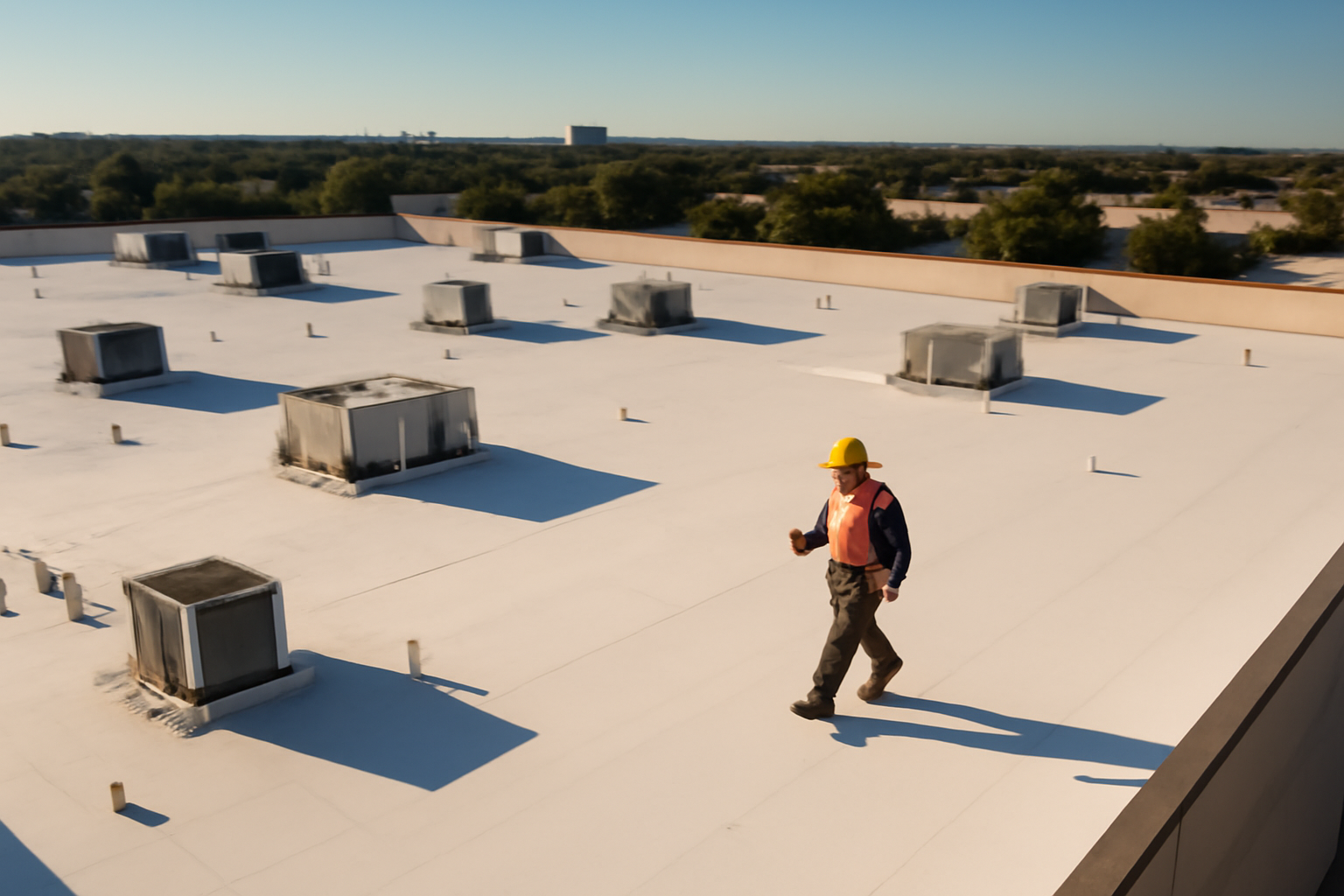
Here's a pattern we see constantly with commercial property owners and facility managers in San Antonio: the roof gets zero attention until water is dripping onto inventory, servers, or tenants' heads. Then it's an emergency, the budget isn't there, and someone's scrambling to justify a $150,000 capital expense that could have been a $4,000 repair three years ago. That's not bad luck — it's the absence of a plan. Commercial roof asset management isn't a buzzword. It's the difference between controlling your costs and letting your roof control them for you.
What Commercial Roof Asset Management Actually Means
Strip away the corporate jargon and roof asset management comes down to three things: knowing exactly what you have, knowing when it will fail, and budgeting accordingly. That's it. But most building owners skip all three. They rely on the original install date, assume the warranty covers everything, and hope for the best.
A proper asset management approach treats your roof the way a fleet manager treats vehicles — with documented condition assessments, lifecycle projections, maintenance schedules, and replacement timelines tied to actual budget cycles. For a single building, this might seem like overkill. For a portfolio of properties across San Antonio, New Braunfels, and Boerne, it's the only way to avoid surprise capital expenditures.
Step 1: Get a Real Baseline Condition Assessment
You can't manage what you haven't measured. A baseline roof inspection for commercial properties goes well beyond what a residential walk-through covers. We're documenting:
- Membrane or surface condition. Checking for blistering, ponding water, seam separation, UV degradation, and punctures across the entire roof field — not just the visible trouble spots.
- Flashing and penetration details. Every HVAC curb, pipe boot, scupper, and parapet wall junction gets evaluated. These transition points account for the majority of commercial roof leaks.
- Insulation and substrate integrity. Infrared scans or core samples can reveal saturated insulation that's invisible from the surface but destroying your R-value and accelerating deterioration.
- Drainage performance. San Antonio's flash-heavy rain events expose drainage failures fast. We check slope, drain placement, scupper sizing, and whether previous repairs have altered water flow patterns.
- Documentation of previous repairs. Patch-on-patch-on-patch tells a story. We need to know how many times the same areas have been addressed and whether root causes were actually resolved.
This assessment produces a condition score — typically on a 1-to-10 or percentage-based scale — that becomes the foundation for everything else. Without it, you're budgeting blind.
Step 2: Build a Lifecycle Cost Model
Once you know the current condition, you can project forward. A TPO or EPDM flat roofing system in San Antonio typically lasts 15-25 years depending on installation quality, UV exposure, and maintenance history. A metal roofing system can push 30-50 years with proper coating maintenance. The point isn't the theoretical lifespan — it's the remaining useful life of your specific roof.
A lifecycle cost model maps out three scenarios:
- Maintain and extend. Annual maintenance costs plus periodic repairs to push the roof to the end of its serviceable life. This works when the roof scores well on the condition assessment and has significant life remaining.
- Restore and recoat. A mid-life intervention — typically a silicone or acrylic roof coating system — that resets the clock by 10-15 years at roughly 30-50% of full replacement cost. This is the sweet spot most owners miss entirely.
- Full replacement. When the substrate is compromised, insulation is saturated, or the system has exceeded its useful life, roof replacement becomes the only responsible option.
Each scenario gets a total cost projection spread across the planning horizon — usually 5, 10, or 20 years. Now you're comparing real numbers, not guessing.
Step 3: Align Roof Budgets to Your Capital Planning Cycle
This is where asset management pays for itself. Most commercial property budgets operate on annual or biennial cycles. A roof replacement that hits in an off-cycle year creates chaos — emergency board approvals, deferred maintenance on other systems, or worse, a loan that wasn't planned for.
When you know your roof's remaining life and the cost of each intervention option, you can slot expenses into the right budget year before they become emergencies. A $3,500 annual maintenance contract in years 1-5, a $35,000 restoration in year 6, and a planned replacement in year 18 is infinitely better than a surprise $180,000 bill in year 12 because nobody was watching.
Don't Forget Storm Damage Variables
San Antonio sits squarely in hail alley. Any commercial roof budget that ignores storm damage probability is incomplete. We recommend building a contingency line into your annual roof budget — typically 10-15% of the projected maintenance cost — specifically for post-storm inspections and repairs. When a significant hail event hits, having that line item already approved means faster response and less out-of-pocket before insurance reimbursement kicks in.
Step 4: Schedule Proactive Maintenance — and Actually Do It
The number one reason commercial roofs fail prematurely isn't material defects or bad installation. It's deferred maintenance. A semi-annual maintenance program — ideally timed for spring (pre-storm season) and fall (pre-winter) — catches small issues before they become structural problems. We're talking about clearing drains, re-sealing flashings, addressing ponding, and documenting changes from the previous inspection.
For multi-location portfolios, maintenance schedules should be centralized so nothing falls through the cracks when a facility manager changes or a property changes hands.
The ROI Is Real — and Measurable
Building owners who implement even a basic roof asset management program typically extend roof life by 25-40% compared to a reactive approach. On a 20,000-square-foot commercial roofing system, that can translate to deferring a six-figure replacement by 5-8 years. The math isn't complicated: spend a little consistently, or spend a lot unpredictably.
There's also an insurance angle. Documented maintenance history strengthens insurance claim outcomes. Adjusters look more favorably on claims when the owner can demonstrate a pattern of proactive care rather than years of neglect followed by a claim after the first storm.
Start with a Free Commercial Roof Assessment
If you manage commercial properties in the San Antonio area and don't have a current condition assessment on file, that's the first step. Wannamaker Roofing provides detailed commercial roof evaluations with condition scoring, photo documentation, and lifecycle recommendations — no obligation. Schedule your free inspection and get a clear picture of where your roof stands and what it will cost to keep it performing.
Stop Treating Your Roof Like an Afterthought
Your roof protects every other asset inside your building — the HVAC system, the electrical, the inventory, the people. Treating it as a line item you'll deal with "when we have to" is the most expensive strategy available. A structured asset management approach doesn't require fancy software or a dedicated staff member. It requires a current condition assessment, a realistic lifecycle model, and a contractor who'll tell you the truth about what your roof needs now versus what can wait. That's what we do.