Wind Damage Roof Documentation Tips | Wannamaker
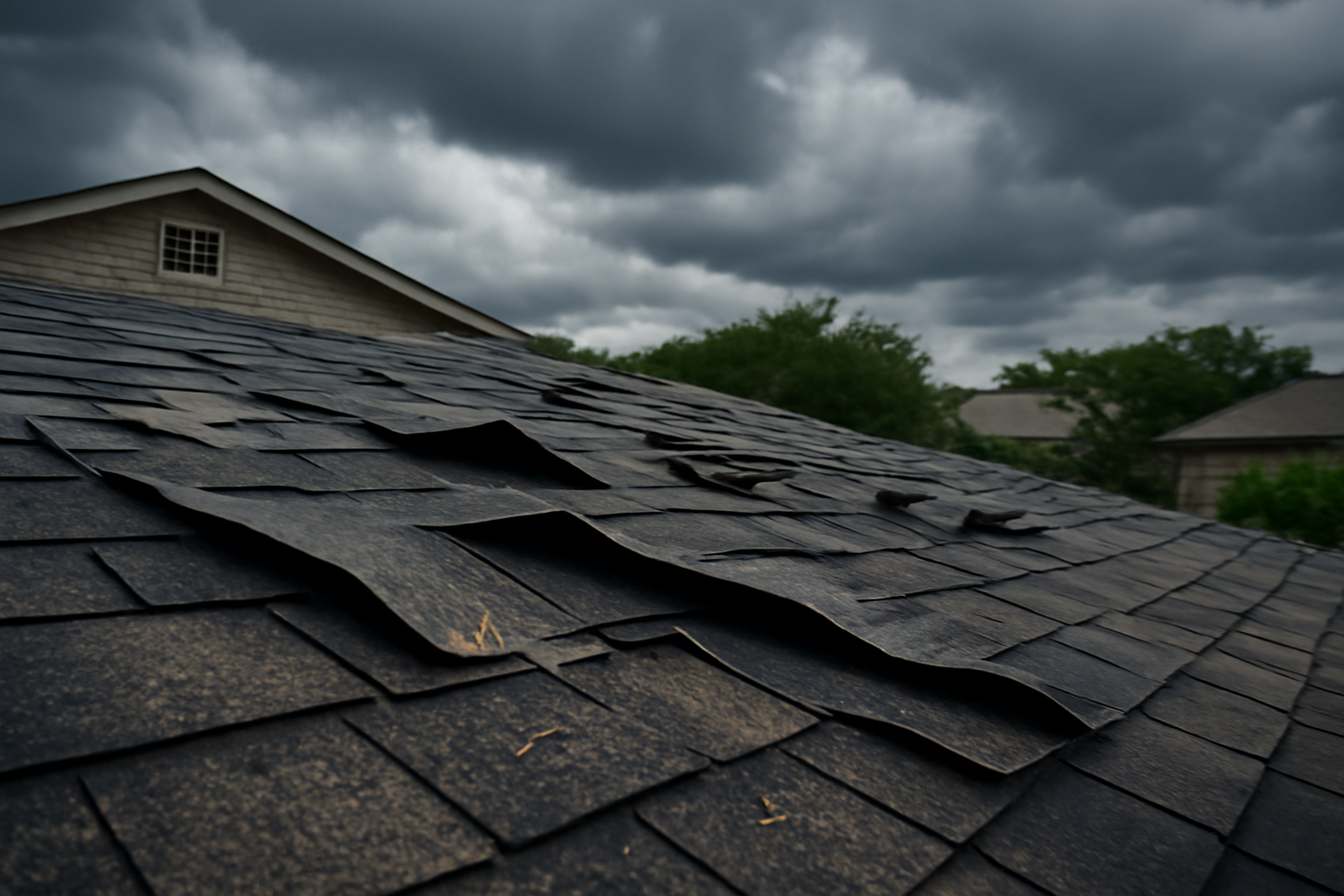
When San Antonio homeowners think about storm damage, hail usually tops the list. But wind — the kind we've been seeing with the severe storms rolling through Bexar, Comal, and Bandera counties this July — can peel shingles, lift flashing, and compromise your roof's integrity without leaving a single dent. The problem? Wind damage is harder to spot, harder to photograph, and harder to get your insurance carrier to take seriously. If you don't document it right, your claim goes nowhere.
Why Wind Damage Gets Overlooked
Hail leaves obvious evidence: dented gutters, pockmarked shingles, cracked tile. An adjuster walks up, sees the marks, and checks a box. Wind damage is subtler. A shingle tab lifts, creases, and lays back down — but the seal is broken. Water now has a path underneath. Flashing pulls away from a wall by a quarter inch. A ridge cap shifts just enough to let moisture into the decking.
From the ground, none of this looks like much. From the adjuster's clipboard, it can look like "normal wear and tear" — which is exactly how carriers like USAA, State Farm, and Allstate deny wind claims in the San Antonio market. The burden of proof falls on you, and that's where documentation becomes everything.
The 48-Hour Window That Matters
After a wind event, you have a narrow window to capture evidence before conditions change. Rain follows wind in Central Texas — we've seen that play out repeatedly this month with flash flood warnings across Bexar, Bandera, Medina, and Uvalde counties. Once water infiltrates through wind-loosened materials, the damage pattern shifts. What started as a wind claim can look like a maintenance failure if you wait too long.
Here's what to do in the first 48 hours:
- Photograph from the ground first. Walk the full perimeter. Capture any displaced shingles, debris in the yard, shifted gutters, or visible gaps along the roofline. Use your phone's timestamp — adjusters check metadata.
- Don't get on the roof yourself. A wet or damaged roof after a storm is dangerous. Instead, schedule a free roof inspection with a licensed contractor who can safely document conditions up close.
- Document interior signs immediately. Water stains on ceilings, damp attic insulation, or light visible through the decking all support a wind damage claim. Photograph these with context shots showing the room location.
- Save weather reports. Pull the NWS storm reports for your zip code. Wind speed data from a confirmed event is the backbone of your claim. If the NWS recorded sustained winds above 58 mph or issued severe thunderstorm warnings for your area, that's documented evidence of damaging winds.
What Wind Damage Actually Looks Like on a Roof
When we perform roof inspections after wind events across neighborhoods in Stone Oak, Helotes, and Boerne, here's what we're looking for — and what you should ask your inspector about:
- Lifted or creased shingle tabs. Wind gets under the leading edge and bends the shingle backward. Even if it settles back, the adhesive strip is compromised. These shingles will fail in the next storm.
- Missing shingles in patterns. Wind damage typically affects slopes facing the prevailing wind direction. Random missing shingles across all slopes is more likely age-related. Concentrated loss on one or two slopes points to wind.
- Displaced ridge caps. The ridge is the most wind-exposed part of any roof. Caps that have shifted, lifted, or lost their seal are a dead giveaway.
- Pulled flashing. Step flashing along walls, chimney flashing, and drip edge along eaves can all separate during high winds. These gaps are small but create significant water entry points.
- Soffit and fascia damage. Wind-driven rain can push into soffits, and strong gusts can detach fascia boards. This damage is often visible from the ground and easy to photograph.
The Difference Between Wind and Hail on Your Claim
This distinction matters because insurance adjusters treat them differently. Hail damage repair claims typically involve impact marks that are easy to measure and categorize. Wind claims rely more on pattern analysis, weather correlation, and professional documentation. That's why having a contractor's report — not just photos — is critical for wind-only claims.
Building a Claim Your Carrier Can't Easily Deny
A strong wind damage claim has three legs:
- Weather verification. NWS storm reports, local wind speed data, and severe weather alerts for your specific area and date.
- Professional inspection report. A licensed roofer's documented findings with photos, measurements, and a written assessment tying the damage to the weather event. This carries far more weight than homeowner photos alone.
- Timely filing. Most Texas homeowner policies require you to report damage "promptly." Waiting months weakens your position. File the claim within days of the storm, not weeks.
If your carrier pushes back — and with wind-only claims, they often do — having all three elements in place gives you leverage. We work with homeowners through the insurance claim process regularly, and the claims that succeed almost always come down to documentation quality.
When Wind Damage Means a Full Replacement
Not every wind event requires a full roof replacement. Sometimes a targeted roof repair — replacing affected shingles, resealing flashing, securing ridge caps — is the right call. But if wind has compromised adhesion across large sections, or if the roof was already near end-of-life and the storm pushed it past the tipping point, replacement becomes the more honest recommendation.
We see this frequently with roofs that are 15-20 years old. The shingle adhesive has already weakened with age, and a strong wind event breaks those remaining bonds across entire slopes. Patching individual shingles on a roof that's systemically compromised doesn't solve the problem — it just delays the next leak.
Storm hit your area? Don't wait for the next one.
Wind damage gets worse with every subsequent storm. If you've experienced high winds in the San Antonio or Hill Country area recently, schedule a free roof inspection with Wannamaker Roofing. We'll document everything, provide a professional report, and help you navigate your insurance claim if damage is found. No pressure, no obligation — just an honest assessment from a local contractor who's been doing this since 2012.
The Bottom Line
Wind damage doesn't announce itself the way hail does. It's quiet, progressive, and easy to dismiss until water starts showing up inside your home. The homeowners who come out ahead are the ones who document early, document thoroughly, and bring a professional into the process before filing their claim — not after it's been denied. If the recent storms across Bexar, Comal, Bandera, or Medina counties touched your neighborhood, now is the time to act.