Tear-Off vs Roof-Over: Why Layering Fails | Wannamaker
Every few weeks, a homeowner asks us the same question: "Can you just put new shingles on top of the old ones?" The short answer is yes — building code technically allows up to two layers of asphalt shingles in most Texas jurisdictions. The better answer is that "allowed" and "smart" are two very different words. In San Antonio's climate, layering shingles almost always costs you more in the long run. Here's a breakdown of what happens when you skip the tear-off, and why we recommend against it in the vast majority of cases.
What's a Roof-Over, Exactly?
A roof-over (also called a "re-roof" or "overlay") means nailing a new layer of shingles directly on top of your existing shingles. There's no removal of the old material, no inspection of the decking underneath, and no replacement of underlayment or ice-and-water shield. The crew essentially treats your old roof as a base layer and installs new shingles over it.
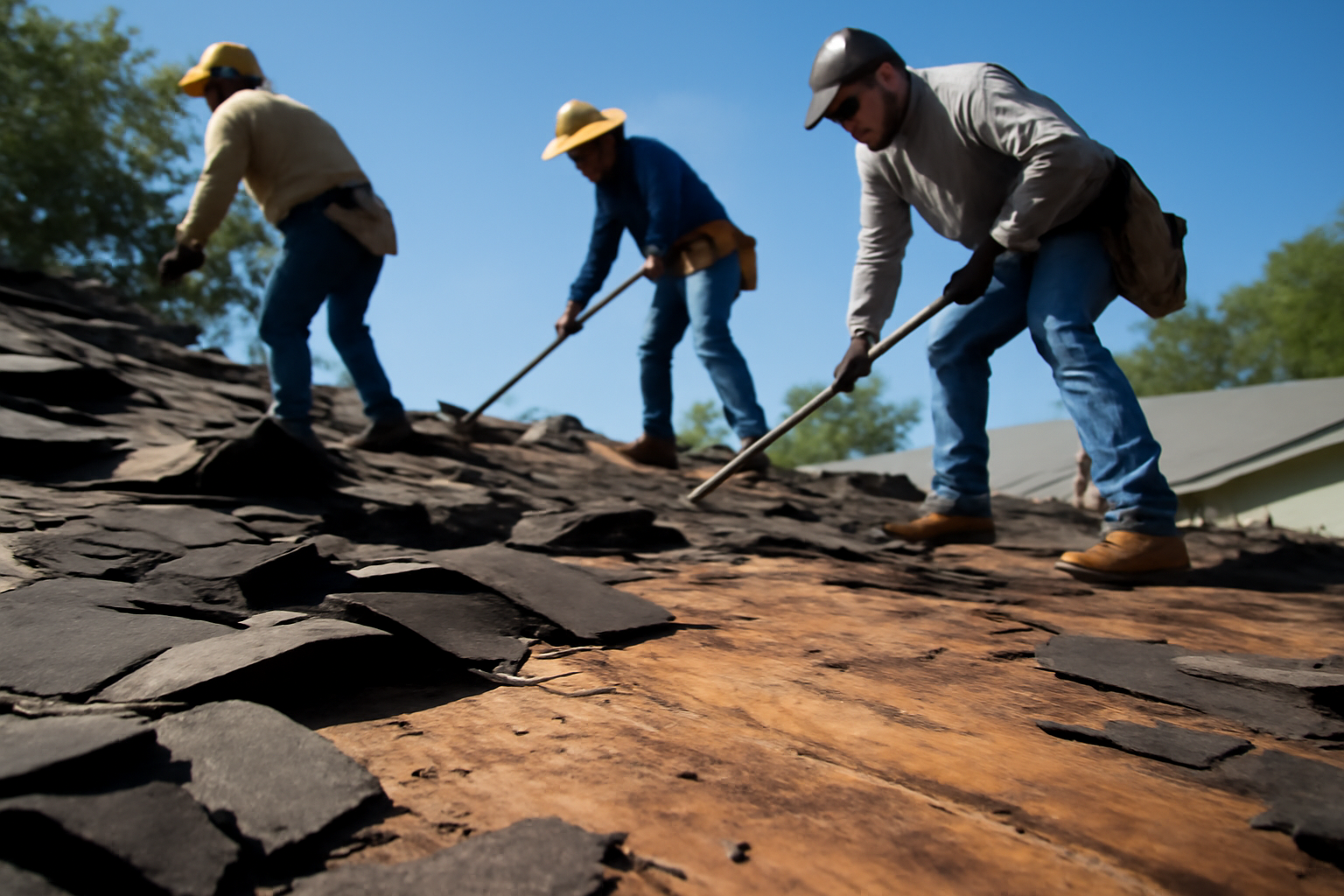
A full tear-off, by contrast, strips every existing shingle, underlayment, and fastener down to bare decking. This gives the crew — and you — a clear look at the wood underneath. Damaged decking gets replaced, new underlayment goes down, and the new shingle system is installed on a clean, inspected surface.
Why Layering Fails in San Antonio's Climate
The physics are straightforward, but they matter more here than in cooler parts of the country.
1. Trapped Heat Accelerates Shingle Aging
San Antonio routinely hits 100°F+ in summer. Roof surface temperatures can exceed 160°F on a dark asphalt shingle roof. When you stack two layers, the bottom layer acts as an insulator — trapping heat against the new shingles from below while the sun bakes them from above. The result is accelerated granule loss, faster oxidation, and premature curling. A shingle rated for 25-30 years on a clean deck may only last 15-20 years as a second layer in our climate.
2. Hidden Damage Stays Hidden
This is the big one. When we do a roof replacement with a full tear-off, we find problems on roughly half the roofs we strip: rotted decking around plumbing boots, soft spots near valleys, water stains that never showed up in the attic. If you've had hail damage repair needs in the past, there may be compromised decking you don't know about.
A roof-over buries all of this. You're installing a new roof on a foundation you haven't inspected. That's a gamble, and it's not one we're comfortable encouraging.
3. Added Weight Stresses the Structure
A typical asphalt shingle roof weighs around 2-3 pounds per square foot. Double that and you're adding significant load to trusses and rafters that were engineered for one layer. Most San Antonio homes built since the 1990s have engineered trusses with precise load ratings. Two layers of shingles plus underlayment can push you close to — or past — the design limits, especially if you factor in a person walking on the roof during maintenance or the weight of pooled rainwater during a heavy storm.
4. Uneven Surfaces Create Installation Problems
Old shingles warp, curl, and buckle. When you nail new shingles over that uneven surface, they don't lie flat. That means gaps where wind-driven rain can penetrate, ridges that telegraph through and look terrible from the street, and nail pops caused by fasteners that didn't seat properly because they hit old nails underneath. The finished product looks worse and performs worse.
5. Warranty and Insurance Complications
Most major shingle manufacturers — GAF, Owens Corning, CertainTeed — offer their best warranties only on systems installed over a single layer with proper underlayment on clean decking. Overlay installations typically qualify only for a reduced, material-only warranty. That means if something fails, you're covering the labor yourself.
Insurance carriers in Bexar County and surrounding areas can also be particular. If you file a insurance claim for storm damage on a two-layer roof, some adjusters will depreciate the payout more aggressively or flag the layered installation as a pre-existing condition. It's one more variable working against you.
When a Roof-Over Might Make Sense
We're not absolutists. There are narrow situations where a roof-over can be reasonable:
- Rental or flip properties. If you're selling within a year or two and the existing decking is confirmed sound (via attic inspection), an overlay can be a defensible short-term decision. Just know you're passing the problem to the next owner.
- Budget emergencies. If a tear-off is genuinely unaffordable right now and the existing single layer is in decent shape, an overlay buys time. But "buys time" means 5-10 years, not 25.
- Very small, simple roofs. A detached garage or small outbuilding with a simple gable and no penetrations has fewer places for hidden damage. The risk is lower.
In all other cases — and especially on your primary home — a full tear-off is the right call.
What a Proper Tear-Off Looks Like
Here's what should happen when a crew tears off your roof the right way:
- Complete removal. Every shingle, every piece of underlayment, and every old nail or staple gets pulled. The deck should be swept clean.
- Decking inspection and repair. Soft, delaminated, or water-stained OSB or plywood gets cut out and replaced. We typically find at least a few sheets that need attention.
- New underlayment. Synthetic underlayment goes down over the entire deck. In valleys and around penetrations, ice-and-water shield provides extra protection.
- Proper flashing. Step flashing at walls, kick-out flashing at transitions, new pipe boot flashings — all of this gets installed fresh. Old flashing left in place is a future leak.
- Clean, flat shingle installation. New shingles on a clean deck lie flat, seal properly, and look the way the manufacturer intended.
The Real Cost Difference
A tear-off typically adds $1,000-$3,000 to a roof replacement cost compared to an overlay, depending on the size of the roof and the number of layers being removed. On a 2,000-square-foot San Antonio home, that's roughly 8-15% more. For that extra cost, you get a verified deck, a full manufacturer warranty, better insurance standing, and a roof system that will last its full rated lifespan in our heat.
We've seen homeowners spend $8,000 on a roof-over, then spend another $12,000 five years later when the hidden rot underneath finally caused interior leaks. That's not saving money. That's paying twice.
Not sure what's under your current shingles?
We'll inspect your roof for free — from the surface and from the attic — and give you an honest assessment of whether your decking is sound or whether a tear-off is the right move. No pressure, no obligation. Schedule your free roof inspection here.
Bottom Line
A roof-over is legal. It's fast. It's cheaper upfront. And in San Antonio's 100-degree summers, it's almost always a bad investment. The shingles age faster, the hidden damage stays hidden, the warranty coverage shrinks, and you end up replacing the whole thing sooner than you should have to. If you're going to spend thousands of dollars on a new roof, spend the extra 10-15% to do it right. Your roof — and your wallet ten years from now — will thank you.