Found a Leak During a Storm? Your First H… | Wannamaker
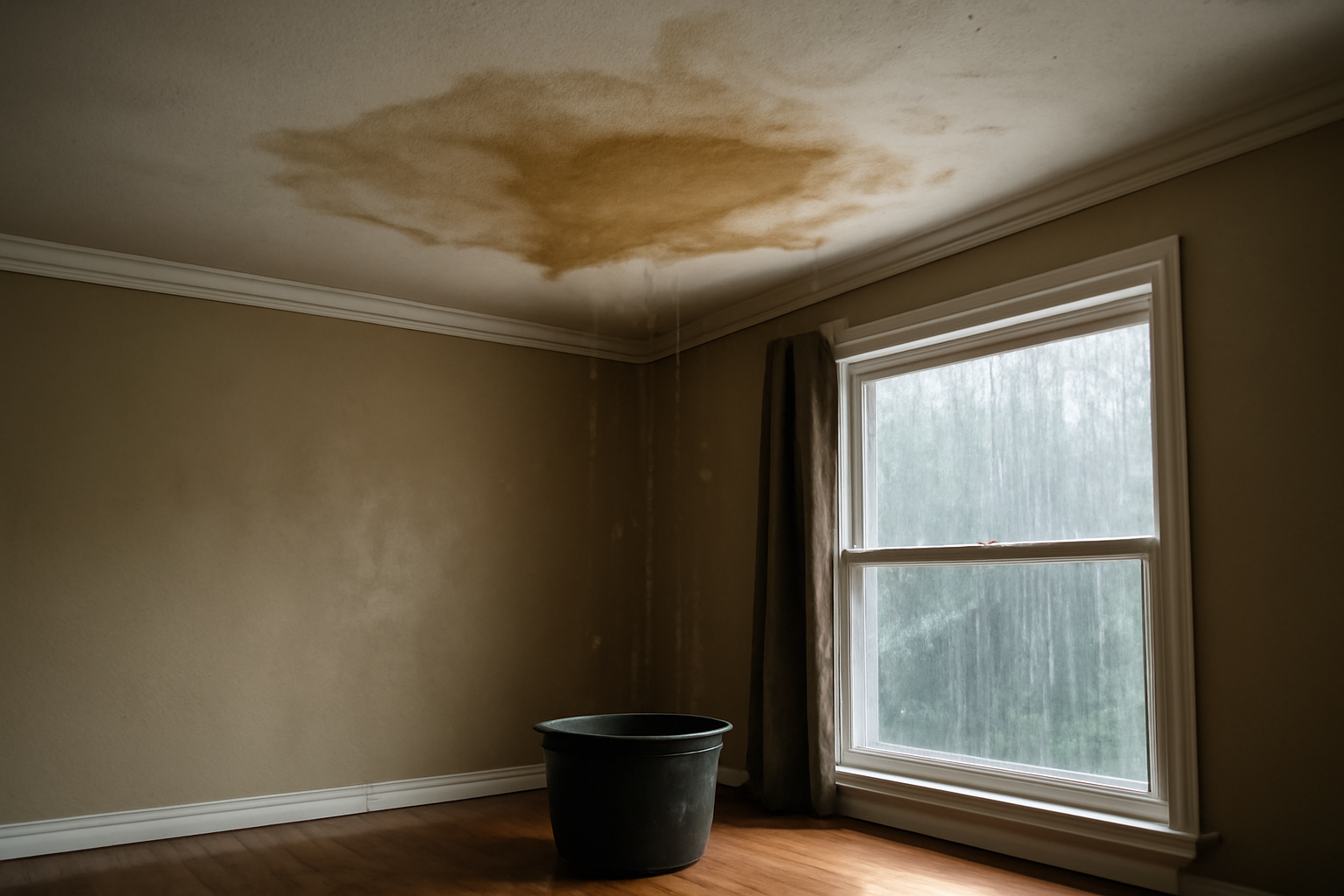
You hear it before you see it — a drip hitting the floor, a dark stain blooming on the ceiling, water tracing a line down the wall. It's mid-storm, the wind is howling, and your roof just told you something is very wrong. With severe thunderstorms and flash flood warnings hitting the Hill Country and areas west of San Antonio — Medina, Frio, Kerr, and Gillespie counties saw tornado and flash flood warnings just this week — this scenario is playing out in homes right now. What you do in the next 60 minutes will determine how much damage your home takes and whether your insurance company covers the bill.
Minutes 0–10: Stop the Water from Spreading
Your first job is containment, not repair. Don't climb on the roof. Don't try to patch anything from outside. The storm is still active, and a wet roof in high winds is one of the most dangerous places you can be.
Here's what to do right now:
- Place buckets or containers under every drip point. If water is sheeting across the ceiling, place a large tarp or plastic sheeting on the floor beneath it to protect flooring and furniture.
- Move valuables and electronics away from the leak path. Water follows gravity, but it also follows wiring runs, ductwork, and ceiling joists. It may show up far from the actual entry point.
- If the ceiling is bulging, puncture it carefully. Use a screwdriver or nail to poke a small hole at the lowest point of the bulge and let the water drain into a bucket. This sounds counterintuitive, but a controlled drain prevents the entire ceiling from collapsing under the weight of pooled water.
- Turn off electricity to affected rooms. If water is anywhere near light fixtures, outlets, or your breaker panel, kill power to those circuits. Water and live wiring is a life-threatening combination.
Minutes 10–25: Document Everything
This is where most people fail their future selves. You're stressed, you're mopping, and the last thing you want to do is pull out your phone. Do it anyway. The documentation you gather right now is the single most valuable thing you can do for your insurance claim.
- Take video first, then photos. Video captures the active leak — water dripping, the sound of the storm, the spread of damage. Photos capture detail. You need both. Walk slowly through every affected room.
- Narrate the video. Say the date, time, and describe what you're seeing. "July 15th, 10:42 PM, water coming through the ceiling in the master bedroom. Storm started about an hour ago." Adjusters love timestamped, narrated documentation.
- Photograph damaged belongings. Waterlogged carpet, ruined drywall, soaked furniture — all of it. If you have to throw something away later, having proof it existed matters.
- Don't clean up yet. Your instinct is to mop and wipe and make it look normal. Resist. Contain the water, but leave the evidence visible until you've documented it thoroughly.
If you've had hail damage repair before or filed a previous claim, note that too. Carriers like USAA, State Farm, and Allstate — all major players in the San Antonio market — track claim history, and understanding your history helps us advocate for you.
Minutes 25–45: Temporary Mitigation
Once the storm passes or winds drop below dangerous levels, you can take steps to limit further damage. Texas insurance policies actually require "reasonable mitigation" — meaning you're expected to take steps to prevent additional damage. If you don't, the carrier can reduce your payout.
- Tarp from the inside if you can access the attic. If you can safely get into your attic, drape plastic sheeting over the area where water is entering. Secure it with staples or weights. This is safer and more effective than climbing on a wet roof in the dark.
- Only go on the roof if conditions are completely safe. Daylight, dry surface, low wind. For most people during or right after a storm, this means don't go on the roof at all. Call a professional instead.
- Save every receipt. If you buy tarps, buckets, a shop vac, or any supplies to mitigate damage, those costs are typically reimbursable through your claim.
A Note on "Emergency Tarp" Scams
After every major storm in San Antonio, door-knockers show up offering emergency tarping for $500–$1,500 and pressuring you to sign contracts on the spot. Be careful. A legitimate storm damage contractor won't demand payment before insurance has been contacted, and they won't require you to sign an Assignment of Benefits (AOB) form that hands over your claim rights. If someone knocks on your door during or right after a storm, get their license number and verify it with the Texas Department of Licensing and Regulation before signing anything.
Minutes 45–60: Make the Right Calls
Now you're in control. The water is contained, the damage is documented, and temporary measures are in place. Time to get the process moving.
- Call your insurance company. File the claim now, even if it's midnight. Most carriers have 24/7 claim lines. Report the date, time, and type of storm. Don't speculate on the cause — just describe what happened and what you see.
- Call a local roofing contractor. You want someone who can do a free roof inspection once conditions are safe, document the exterior damage, and meet with your adjuster. A good contractor works alongside your insurance process, not around it.
- Don't authorize permanent repairs yet. Temporary mitigation is fine and expected. But full roof repair or roof replacement should wait until the adjuster has inspected and the scope of work is agreed upon.
What Happens After the First Hour
The next 48 hours matter too. Your adjuster will schedule an inspection — typically within 3–7 days for San Antonio area claims, though major storm events can push that to 2–3 weeks. During that window, don't make permanent repairs, don't throw away damaged materials, and don't let anyone pressure you into signing a contract.
The roof replacement cost in San Antonio typically ranges from $8,000 to $25,000+ depending on roof size, material, and complexity. A legitimate claim should cover the necessary work minus your deductible. Having thorough documentation from that first hour makes the difference between a smooth approval and a fight.
Dealing with a Leak Right Now?
Contain the water, document the damage, and call us. Wannamaker Roofing provides free storm damage inspections across San Antonio, Stone Oak, Boerne, New Braunfels, and surrounding areas. We'll assess the damage, help you navigate the insurance claim process, and make sure nothing gets missed. Call us at (210) 305-5765 — we answer storm calls around the clock.
The Mistake That Costs the Most
The biggest mistake we see isn't failing to tarp or forgetting to call the insurance company. It's waiting. Homeowners in San Antonio, Helotes, and across the Hill Country will sometimes put a bucket under a drip, wait for the storm to pass, see that the ceiling dries out, and assume the problem resolved itself. It didn't. The water went somewhere — into your decking, into your insulation, into your wall cavities. Mold starts growing within 24–48 hours in our humidity. A leak that would have been a $2,000 repair becomes a $15,000 problem because someone waited three months.
The first hour matters. But so does the first day, the first week, and the decision to actually follow through. Take the steps above, get a professional on your roof as soon as it's safe, and don't let a manageable problem turn into a disaster.