HVAC Curbs & Penetration Flashing | Wannamaker
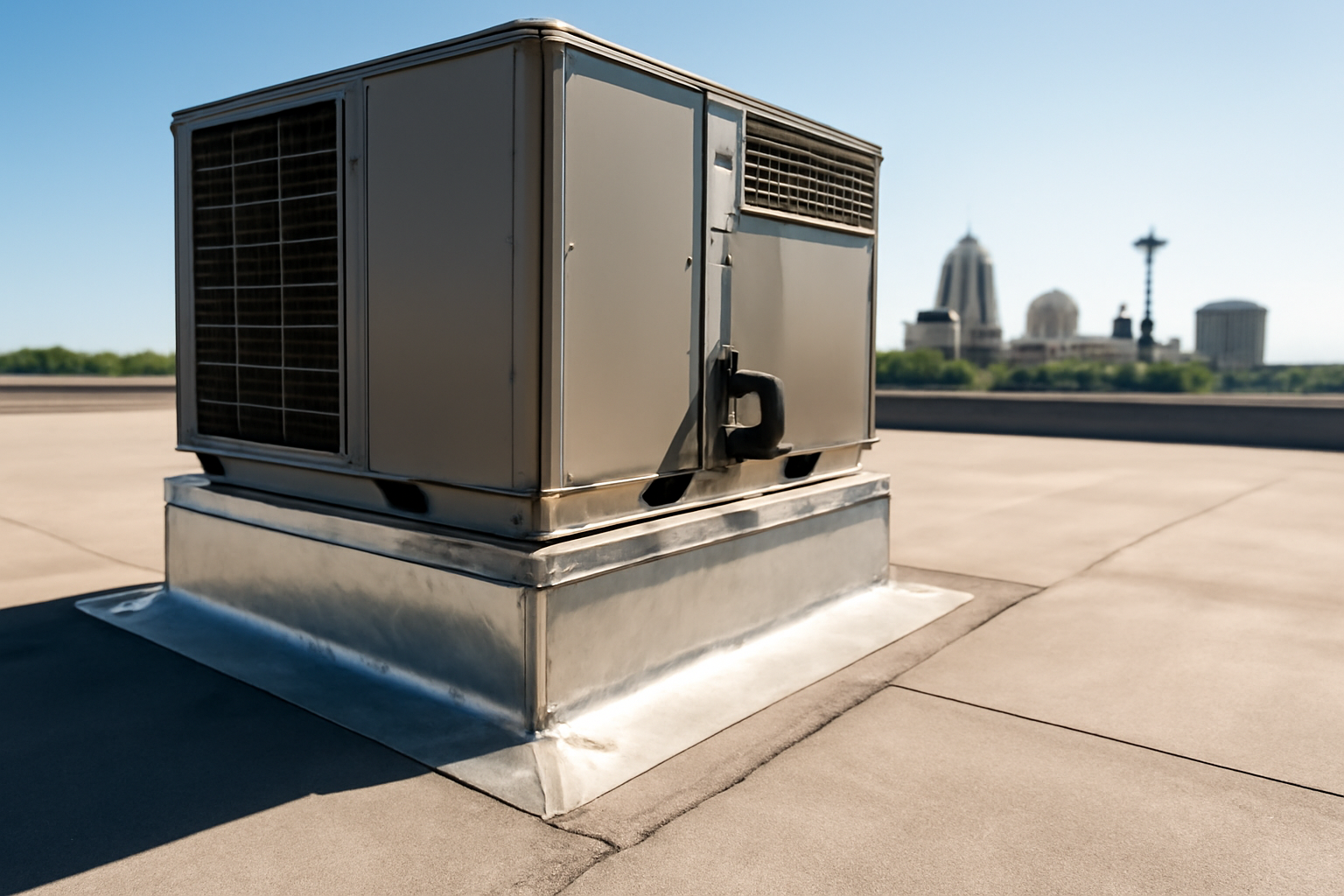
If you own a commercial building or a home with a flat roof in San Antonio, here's a stat that should keep you up at night: the vast majority of flat roof leaks originate at penetrations — not at seams, not from membrane age, but right where something cuts through the roof surface. HVAC units, plumbing stacks, conduit masts, exhaust fans, and gas lines all create openings that rely entirely on proper flashing and curb work to keep water out. When those details fail, the leak usually shows up inside your building ten feet from the actual problem, making diagnosis a nightmare.
What Is an HVAC Curb and Why Does It Matter?
An HVAC curb is a raised metal frame — typically 8 to 14 inches tall — that sits between a rooftop air conditioning or heating unit and the roof deck. It serves three critical functions:
- Elevation. Lifting the unit above the roof membrane prevents standing water from pooling against the equipment and seeping underneath. San Antonio's intense summer thunderstorms can dump two inches in an hour — water needs somewhere to go that isn't under your RTU.
- Structural support. A properly built curb distributes the weight of a rooftop unit across the deck rather than concentrating it on a few square inches. Commercial units can weigh 400 to 2,000+ pounds.
- Flashing transition. The curb provides a vertical surface where the roof membrane can terminate cleanly, creating a watertight seal between the horizontal roof plane and the equipment above.
When an HVAC contractor installs a new unit on an existing curb — or worse, builds a curb without coordinating with the roofing contractor — the flashing details often get compromised. We see this constantly on commercial roofing jobs across San Antonio: an HVAC crew bolts down a unit, slathers some caulk around the base, and calls it done. Six months later, the building owner has a water stain on the ceiling tiles.
Common Penetration Flashing Failures We See in San Antonio
Beyond HVAC curbs, every pipe, vent, conduit, and drain that passes through a flat roof needs its own flashing detail. Here's where things typically go wrong:
1. Relying on Sealant Instead of Membrane
Caulk and roof sealant are maintenance products, not flashing systems. San Antonio's UV exposure and 100°F+ surface temperatures break down most sealants within one to three years. Proper penetration flashing wraps the membrane material itself around the pipe or curb, with sealant used only as a secondary backup — never as the primary waterproofing layer.
2. Inadequate Curb Height
Building codes and manufacturer specs typically require a minimum 8-inch curb height above the finished roof surface. After adding insulation and membrane layers during a re-roof, we sometimes find curbs that barely clear 4 inches. That's a code violation and a leak waiting to happen, especially in areas with poor drainage where water can back up against the curb during heavy rain.
3. Missing or Damaged Cricket/Saddle
On the upslope side of any curb wider than about 24 inches, a tapered cricket (also called a saddle) should divert water around the unit. Without one, water pools against the back of the curb and eventually finds a way in. We see missing crickets on roughly half the commercial roofs we inspect — it's one of the most overlooked details in flat roofing.
4. Pipe Boot Deterioration
Rubber pipe boots around plumbing vents and gas lines dry out, crack, and split in the Texas heat. On a sloped shingle roof, a failed boot is obvious. On a flat roof, the failure hides under layers of granulated membrane or ponding water. If your flat roof is more than seven years old and still has original rubber boots, they're almost certainly compromised.
What Proper Penetration Flashing Looks Like
Whether the system is TPO, modified bitumen, EPDM, or built-up roofing, the principles are the same:
- Membrane wraps up and over. The field membrane extends up the curb or around the pipe, terminating at least 8 inches above the roof surface with a mechanical termination bar or clamped detail.
- Metal counterflashing covers the top edge. A separate piece of sheet metal laps over the membrane termination, shedding water away from the cut edge. This is non-negotiable on curbs.
- Corners get reinforced. Curb corners are the highest-stress point. Extra membrane plies, pre-formed corner pieces, or welded overlaps prevent the membrane from pulling away over time.
- Pitch pans get maintained. For irregular penetrations (guy wires, structural steel, oddly shaped conduit), pitch pans filled with pourable sealant are sometimes the only option — but they require inspection and re-filling every two to three years.
The HVAC-Roofer Coordination Problem
Here's the dirty secret of commercial roofing: HVAC contractors and roofing contractors often work on the same roof at different times without talking to each other. The HVAC crew removes a unit, sets a new one, and disturbs the flashing. The building owner doesn't call the roofer because the HVAC tech said everything looks fine. Then it rains.
At Wannamaker, we recommend that any time a rooftop unit is replaced, serviced heavily, or repositioned, a roofing contractor inspects and re-flashes the curb. The cost of re-flashing one curb — typically $300 to $800 depending on size and membrane type — is a fraction of the interior damage a hidden leak can cause over months.
When to Schedule an Inspection
If any of the following apply to your flat roof, it's time for a professional look:
- New HVAC installation. Any time equipment is swapped, the curb flashing should be verified by a roofer — not the HVAC crew.
- Visible sealant cracking. If you can see dried, cracked caulk around curbs or pipes from the ground or during routine maintenance, water is getting in or about to.
- Interior water stains. Ceiling stains that appear after rain — especially near exterior walls or in rooms directly below rooftop equipment — almost always trace back to penetration failures.
- Roof age over 10 years. Even well-installed flashing degrades. A mid-life roof inspection focused on penetrations can add years to your roof's service life.
San Antonio's hail season adds another layer of risk. After a significant storm damage event, penetration flashings should be checked alongside the membrane itself. Hailstones can dent counterflashing, crack sealant joints, and loosen termination bars — damage that's invisible from the ground but catastrophic over time.
Concerned About Your Flat Roof Penetrations?
Wannamaker Roofing provides detailed flat roof inspections for commercial and residential properties across San Antonio, Stone Oak, and the surrounding Hill Country. We document every penetration, photograph flashing conditions, and give you a straight answer on what needs attention now versus what can wait. Schedule your free roof inspection and stop guessing about what's happening on top of your building.
The Bottom Line
Flat roof membranes are remarkably durable when installed correctly. What fails first is almost always the transition — the place where the membrane meets something else. HVAC curbs, pipe penetrations, and conduit runs are the weak links, and they deserve the same level of attention (and craftsmanship) as the field membrane itself. If your roofer treats penetrations as an afterthought, your roof's warranty is just a piece of paper. If your HVAC contractor says they "took care of" the flashing, trust but verify — with a roof repair professional who actually stakes their reputation on keeping water out.