Chimney Flashing Failures & How to Spot T… | Wannamaker
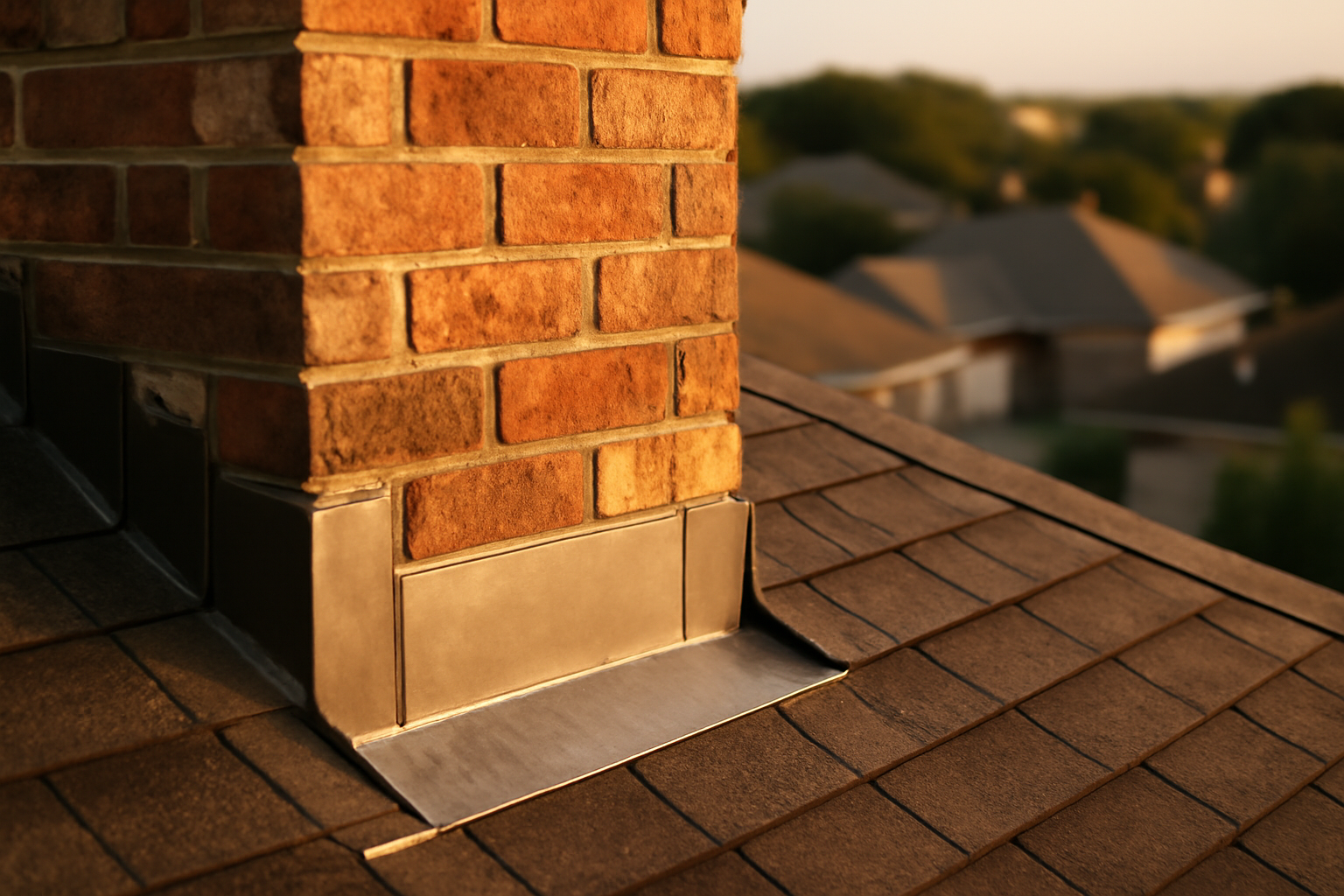
If your San Antonio home has a chimney — whether it's a masonry fireplace or a metal flue pipe — there's a seam where that chimney penetrates the roof. That seam is protected by flashing: thin metal pieces that redirect water away from the joint and down to the shingles. When flashing works, you never think about it. When it fails, water finds a direct path into your attic, walls, and ceilings. Chimney flashing failures are one of the top three causes of non-storm-related roof leaks we see across San Antonio, and they're almost always preventable with early detection.
What Chimney Flashing Actually Does
Flashing is a system, not a single piece of metal. On a typical masonry chimney, you'll find three distinct components working together:
- Step flashing. L-shaped metal pieces woven into each course of shingles along the sides of the chimney. Each piece overlaps the one below it, creating a stair-step barrier.
- Counter flashing. Metal embedded or sealed into the mortar joints of the chimney itself. It folds down over the top edge of the step flashing, creating a second line of defense.
- Base (apron) flashing. A continuous piece at the front (downhill side) of the chimney that tucks under the shingles above and wraps up the chimney face.
- Saddle or cricket. On wider chimneys (typically 30 inches or more), a small peaked diverter sits behind the chimney on the uphill side to prevent water and debris from pooling.
Every one of these components can fail independently. When even one does, water enters the gap between chimney and roof — and gravity does the rest.
Why Chimney Flashing Fails in San Antonio
Our climate is particularly hard on chimney flashing. Here's why:
- Thermal cycling. San Antonio regularly swings 30–40°F between daytime highs and overnight lows, especially in spring and fall. Metal expands and contracts. Sealant cracks. Mortar loosens. Over years, those micro-movements create gaps that weren't there when the roof was installed.
- UV degradation. Roofing caulk and sealant used around flashing breaks down fast under South Texas sun. Cheap sealants may last only 3–5 years before they crack and pull away.
- Hail impact. A direct hail hit can dent or dislodge counter flashing, especially if it's aluminum. We've seen flashing pulled completely out of mortar joints after severe storms in areas like Stone Oak, Helotes, and Boerne.
- Settling and movement. Older homes on expansive clay soils (common throughout Bexar County) shift over time. Even a small amount of structural movement can separate flashing from the chimney face.
- Poor original installation. This is the big one. We see a surprising number of roofs — even relatively new ones — where the installer used roofing cement as a substitute for proper step and counter flashing. Roofing cement is not flashing. It's a temporary patch that degrades within a few years.
How to Spot Chimney Flashing Problems From the Ground
You don't need to climb on your roof to catch early warning signs. Here's what to look for:
From Outside
- Visible gaps. Use binoculars and look at where the flashing meets the chimney. If you see daylight between the metal and the brick, or if counter flashing is visibly pulling away, that's an active leak path.
- Rust streaks. Orange or brown staining running down the chimney or shingles near the chimney usually means galvanized flashing has corroded through its zinc coating.
- Tar or caulk blobs. If you can see thick smears of black roofing cement around the chimney base from the ground, someone has already tried to patch a failing flashing system. That patch has a limited lifespan.
- Missing cricket. Stand at a distance and look at the uphill side of the chimney. If your chimney is wider than about 30 inches and there's no small peaked structure behind it, debris and water are likely pooling there.
From Inside
- Water stains near the chimney. Brown or yellowish rings on the ceiling or walls adjacent to the chimney — especially after rain — are the classic sign. But here's the tricky part: water can travel along rafters and sheathing before dripping, so the stain may appear several feet from the actual entry point.
- Musty smell in the attic. If you can safely access your attic, check the area around the chimney chase. Look for darkened wood, mold, or dampness on the sheathing. Even without visible dripping, moisture may be wicking into the decking.
- Peeling paint or bubbling drywall. Moisture migrating through walls near the chimney can cause paint to peel or drywall to soften — sometimes before a visible water stain appears.
Can Chimney Flashing Be Repaired, or Does It Need Full Replacement?
It depends on what's actually failed. If the step flashing and base flashing are intact and properly installed, but the counter flashing has pulled out of the mortar joint, a skilled roofer can re-embed and re-seal the counter flashing without tearing into the surrounding shingles. That's a roof repair that typically takes a few hours.
However, if the original flashing was never properly installed — if someone just smeared roofing cement over raw shingles butted against brick — the fix requires stripping back the shingles around the chimney, installing proper step and counter flashing, and re-shingling the area. That's more involved, but it's the only way to get a lasting result.
If your roof is already near the end of its life (15+ years on a standard asphalt shingle roof in our climate), it may make more sense to address flashing as part of a full roof replacement rather than paying for a standalone repair that you'll pay for again in a few years.
When Hail Damage Is Involved
If you suspect your flashing was damaged during a storm, the repair may be covered under your homeowner's insurance. Dented, displaced, or cracked flashing is a legitimate storm damage claim item. Insurance adjusters look for it, but they don't always catch every piece — especially counter flashing damage that isn't visible from the ground. Having your own roof inspection documented before the adjuster arrives gives you leverage to make sure nothing is missed.
Prevention: What a Proper Installation Looks Like
When we install or replace chimney flashing, here's what the job should include — and what you should ask any roofer about:
- Individual step flashing pieces — not a single bent strip running the length of the chimney.
- Counter flashing cut into mortar joints (called reglet-mounted), not just surface-sealed to the brick face.
- A cricket or saddle behind any chimney wider than 30 inches.
- High-quality sealant rated for UV and thermal movement — not standard roofing cement.
- Ice and water shield membrane underneath the flashing as a secondary barrier.
If a contractor quotes you a chimney flashing job and doesn't mention most of these items, ask why. Cutting corners here means you'll be dealing with the same leak in a few years.
Concerned About Your Chimney Flashing?
If you've noticed water stains near your chimney, visible gaps in the flashing, or you just want peace of mind after a recent hailstorm, schedule a free roof inspection with Wannamaker Roofing. We'll document the condition of your flashing, identify any active leak paths, and give you honest options — repair or replace — with no pressure. Serving San Antonio, Stone Oak, Helotes, Boerne, and surrounding communities.
The Bottom Line
Chimney flashing isn't glamorous, and it's easy to ignore until water is dripping through your ceiling. But catching a flashing failure early — before it rots your decking, grows mold in your attic, or damages your interior walls — can save you thousands of dollars and a lot of headaches. Take five minutes with a pair of binoculars after the next rainstorm. Look at the joints. Look for gaps, rust, and tar patches. And if anything looks off, get a professional up there to confirm what you're seeing. Early intervention is always cheaper than water damage remediation.