Ceiling Stain Location vs Actual Leak Sou… | Wannamaker
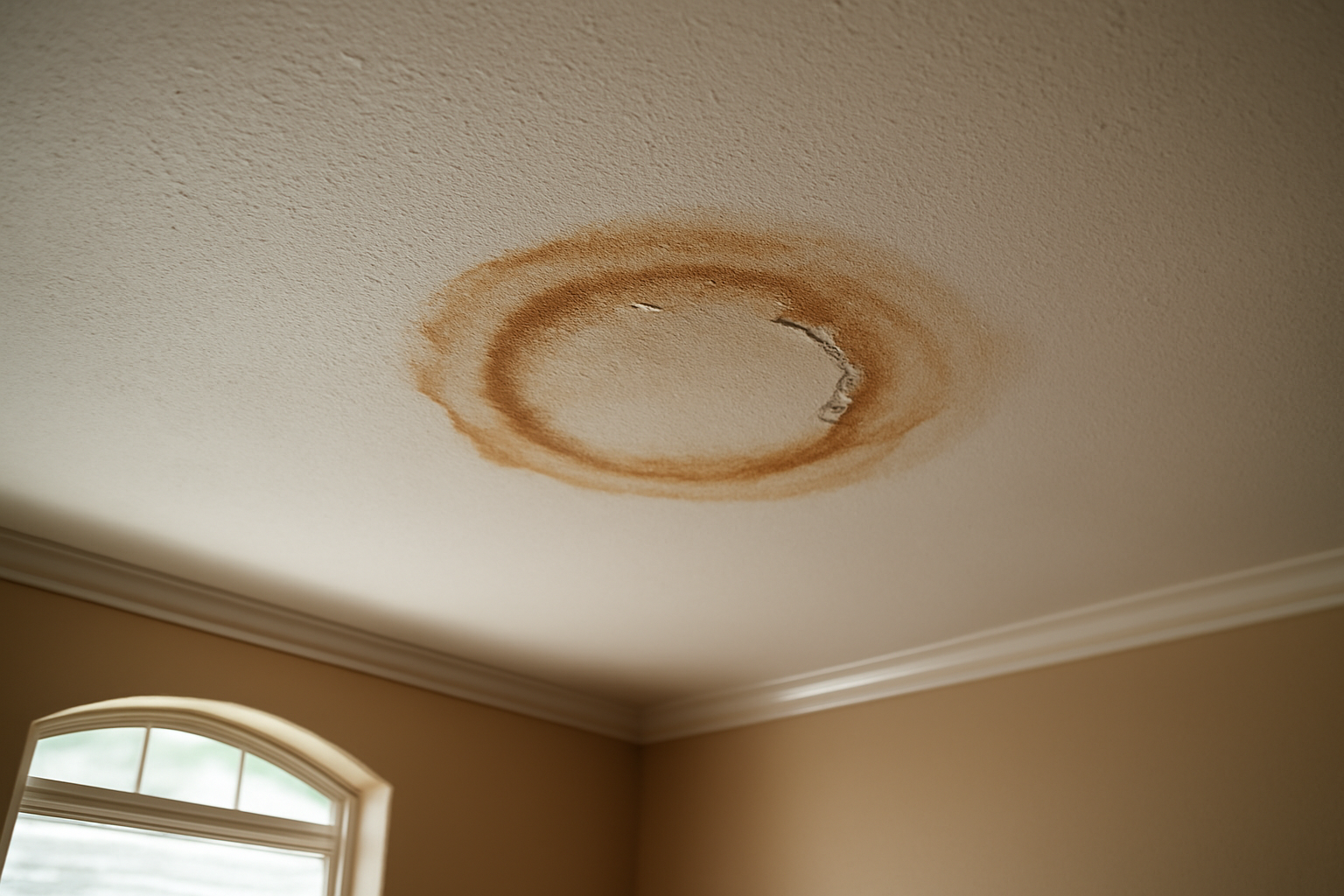
You spot a brown ring on your bedroom ceiling after a heavy rain. Your first instinct is to climb into the attic, look directly above the stain, and expect to find daylight poking through a hole. Nine times out of ten, you won't find anything there. Water is frustratingly good at traveling — sometimes many feet — before it finally shows itself inside your home. Understanding how this works is the difference between a targeted repair and an expensive guessing game.
Why the Stain and the Leak Don't Line Up
Roof systems aren't flat surfaces. Between your shingles and your ceiling, there's decking (usually OSB or plywood), underlayment, rafters or trusses, possibly a radiant barrier, insulation, and drywall. Water entering at the roofline follows the path of least resistance through all of those layers — and gravity isn't its only guide.
Here's what actually happens after water breaches your roof:
- It runs along the underside of the decking. Water clings to the bottom of plywood or OSB and flows downhill toward the eave. A leak at the ridge can produce a stain near an exterior wall.
- It follows rafters and trusses. Wood members act like channels. A single drip at one rafter can ride the lumber several feet before dropping off at a joint, nail, or knot.
- Insulation absorbs and redirects it. Blown-in or batt insulation soaks up water like a sponge. It can hold moisture for days and release it laterally, making the stain appear far from the entry point.
- Electrical and HVAC penetrations create new paths. Water can follow wiring, ductwork, or plumbing stacks down through interior walls — sometimes showing up on a first-floor ceiling when the leak is on a second-story roof.
In San Antonio homes — especially the single-story ranch-style builds common in neighborhoods from Converse to Helotes — low-slope roof sections and long rafter runs make this travel distance even greater. We've traced stains that were six or seven feet from their source.
Common Leak Sources That Fool Homeowners
If the stain isn't a reliable map, where should you actually look? Most residential leaks in our area come from a short list of usual suspects:
Flashing Failures
Step flashing where the roof meets a wall, counter flashing at chimneys, and pipe boot flashing around plumbing vents — these transition points are the most leak-prone areas on any roof. The stain from a failed chimney flashing often shows up on a ceiling several feet away from the chimney itself because water enters behind the flashing and runs along the decking before finding a seam.
Ridge and Hip Cap Damage
After the high winds we've been seeing this spring — including the recent wind warnings across the region — ridge caps are particularly vulnerable. A lifted or cracked ridge cap lets water in at the highest point of your roof, and that water has the longest possible path to travel before reaching your ceiling.
Nail Pops and Overdriven Nails
A nail that backs out of the decking creates a tiny puncture that's almost invisible from the ground. These leaks are slow and intermittent — they may only drip during wind-driven rain from a specific direction — making them especially hard to correlate with the stain below.
Valley Leaks
Roof valleys channel a huge volume of water. If the valley metal is corroded or the shingles were improperly woven, water can wick underneath and travel along the valley rafter. The ceiling stain may appear in a room that's not even directly under the valley.
How Professionals Trace a Leak
When we do a roof inspection for a suspected leak, we don't just look at the stain. Here's the process:
- Attic inspection first. We get into the attic with a flashlight and trace water trails on rafters, decking, and insulation. Wet wood, mineral deposit trails, and dark staining on lumber tell us the water's path — and following it uphill leads to the entry point.
- Exterior evaluation from the stain uphill. Once we have a direction from the attic, we examine the roof surface above and upslope of the suspected entry, focusing on flashing, penetrations, and damaged shingles.
- Controlled water testing when needed. For stubborn leaks, we isolate sections of the roof with a garden hose, starting low and working uphill, while someone watches inside the attic. When water appears, we've found the breach.
This systematic approach is why a proper free roof inspection catches things that a homeowner staring at a stain will miss.
What You Can Do Before Calling
You don't need to get on the roof. But you can gather useful information that helps your roofer work faster:
- Photograph the stain with a reference object (a coin or your hand) so we can gauge the size.
- Note when it appeared or grew. Did it show up after a specific storm? Does it grow only during heavy rain or also with light drizzle? Wind-driven rain leaks behave differently than gravity leaks.
- Check if the stain is warm or cold. A warm, damp stain near a bathroom could be a condensation issue or a plumbing leak — not a roof problem at all. This is more common than people think.
- Look in the attic if you can safely access it. Even a quick phone flashlight photo of the area above the stain gives us a head start.
When a Stain Means More Than a Simple Repair
A single stain from a failed pipe boot is a straightforward roof repair — typically under a couple hundred dollars. But if you're seeing multiple stains, stains that keep returning after patches, or widespread attic moisture, the underlying issue may be systemic. Aging underlayment, improper ventilation causing condensation, or storm damage across a large section of the roof can all masquerade as simple leaks.
If your roof is 15-plus years old and you're chasing multiple leaks, it's worth getting an honest assessment of whether continued repairs make financial sense versus a roof replacement. We'd rather tell you the truth up front than sell you a repair that buys six months.
Got a ceiling stain you can't figure out?
Don't tear into your ceiling or start patching shingles at random. Wannamaker Roofing offers a free roof inspection where we trace the actual leak source — not just look at the stain. We serve San Antonio, Stone Oak, New Braunfels, and surrounding communities. Call us or book online — we'll find it.
The Bottom Line
A ceiling stain is a symptom, not a diagnosis. Treating the stain's location as the leak location leads to unnecessary drywall cuts, wasted money on wrong-spot repairs, and frustration when the stain comes back after the next rain. The actual breach is almost always upslope and offset — sometimes by inches, sometimes by feet. A methodical inspection that traces the water path from the inside out is the only reliable way to fix the right problem the first time.