Attic Ventilation & Summer Cooling Bills | Wannamaker
San Antonio summers aren't a suggestion — they're an endurance test. When ambient temps hit 100°F in July and August, attic temperatures in poorly ventilated homes can soar past 150°F. That superheated air doesn't just sit up there minding its own business. It radiates downward through your ceiling, turning your second floor into a sauna and forcing your HVAC system to run nearly nonstop. The result? Electric bills that spike $80–$200 above what they should be, month after month, from May through October.
Why Attic Ventilation Matters More Here Than Almost Anywhere
Most roofing content about ventilation is written for moderate climates. San Antonio and the surrounding Hill Country — Boerne, New Braunfels, Helotes — sit in a subtropical climate with intense solar radiation for roughly six months of the year. That changes the math significantly.
A properly ventilated attic should stay within about 10–15°F of the outside temperature. When ventilation is blocked, insufficient, or poorly designed, that gap balloons to 40–50°F above outdoor temps. Your ceiling insulation can only do so much against 155°F air pressing down on it constantly.
The damage isn't just financial. Excessive attic heat also:
- Shortens shingle lifespan. Asphalt shingles bake from both sides — sun above, trapped heat below. This accelerates granule loss and curl, potentially cutting 3–5 years off your roof's service life.
- Warps decking. Plywood and OSB decking exposed to sustained extreme heat can delaminate, sag, or warp. We see this regularly during roof replacement tear-offs in Stone Oak and Alamo Heights homes built in the early 2000s.
- Degrades insulation. Fiberglass batt insulation compressed by heat and moisture loses its R-value over time, creating a vicious cycle of worsening performance.
- Creates moisture problems in shoulder seasons. When hot, humid attic air meets cooler surfaces during spring cold fronts, condensation can form on rafters and sheathing, promoting mold and rot.
The San Antonio Homeowner's Ventilation Calendar
Timing matters. Here's when to do what, calibrated for our climate:
February – March: Inspect and Plan
This is your window. Before the heat arrives, get into your attic (or have someone do it for you) and check for obvious problems: blocked soffit vents, disconnected bathroom exhaust fans venting into the attic instead of outside, damaged or missing ridge vent material, and insulation pushed up against soffit baffles. A free roof inspection from a qualified contractor should include a basic attic ventilation assessment.
April: Make Repairs
If your inspection reveals issues, April is the ideal month for repairs. Roofers aren't yet buried in storm season work, temperatures are manageable for attic work, and you'll have the system dialed in before the first 95°F day (which, in San Antonio, can arrive as early as late April).
May – September: Monitor
Once summer hits, major ventilation modifications become impractical (and unsafe — attic work in a 140°F space is genuinely dangerous). But you can still monitor. A cheap wireless thermometer placed in the attic gives you real data. If your attic is consistently 50°F+ above outdoor temps, you have a ventilation problem worth addressing next spring — or sooner if you're planning a roof repair or replacement anyway.
October – November: Post-Storm Assessment
San Antonio's hail season and heavy storms can damage ridge vents, knock off turbine vents, and clog soffit openings with debris. After storm season winds down, it's worth a second look. Storm damage to ventilation components often goes unnoticed because homeowners are focused on visible shingle damage.
Types of Ventilation — And What Actually Works
There's no single "best" ventilation system. The right approach depends on your roof geometry, existing infrastructure, and budget. Here's a quick honest breakdown:
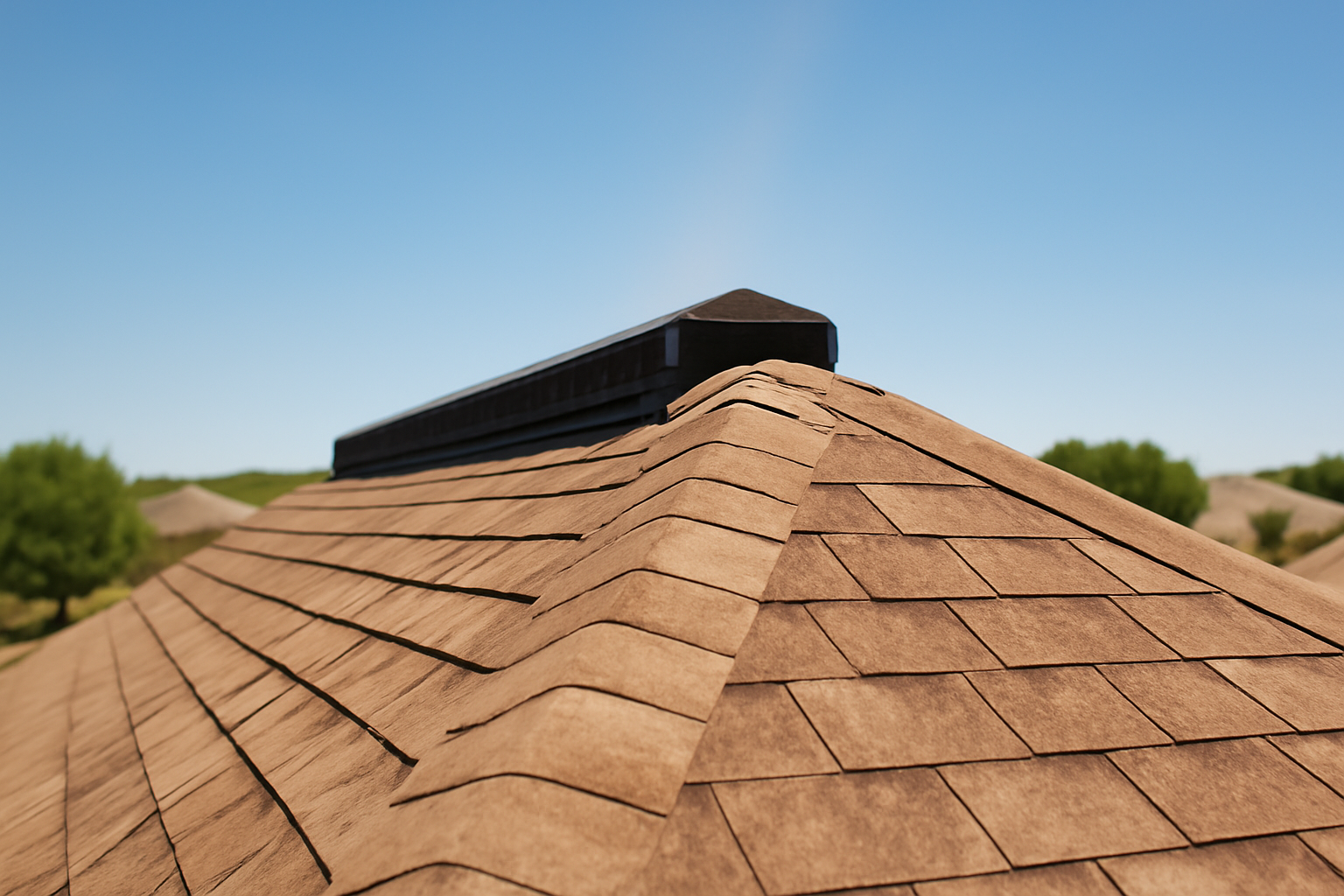
- Ridge vents with soffit intake. The gold standard for most residential roofs. Passive, no moving parts, balanced airflow. Works best on gable or hip roofs with continuous soffit venting. If you're getting a full roof replacement, adding a proper ridge vent system is one of the highest-value upgrades you can make.
- Turbine vents (whirlybirds). Common on older San Antonio homes. They work — when the wind blows. On still, 100°F days when you need them most, they just sit there. Better than nothing, but not a complete solution on their own.
- Powered attic fans. Controversial. They can create negative pressure that pulls conditioned air from your living space up through ceiling penetrations (recessed lights, attic hatches), actually increasing your cooling costs. We generally don't recommend them unless the home has excellent air sealing between the living space and attic.
- Solar-powered attic fans. Same concerns as powered fans, but they at least don't add to your electric bill directly. Still, address the cause (insufficient passive ventilation) before adding a powered bandage.
- Gable vents. Fine as supplemental exhaust, but they can actually short-circuit a ridge-and-soffit system by creating cross-drafts that bypass the lower portion of the roof deck. If you add a ridge vent, your roofer should evaluate whether existing gable vents need to be sealed.
The Balance Rule Most Roofers Skip
Proper ventilation requires roughly equal intake (soffit) and exhaust (ridge or roof-mounted) area. The building code minimum is 1 square foot of net free area for every 150 square feet of attic floor space (or 1:300 if you have a vapor barrier and balanced intake/exhaust). Most homes we inspect in the San Antonio area are intake-starved — they have ridge vents or roof vents, but the soffits are blocked by insulation, painted shut, or were never cut open in the first place.
Adding more exhaust without adequate intake doesn't help. It can make things worse by depressurizing the attic and pulling humid air through ceiling cracks. If a roofer proposes adding roof vents without checking your soffit intake, that's a red flag.
What About Radiant Barriers?
Radiant barriers — reflective foil applied to the underside of roof decking — are popular in Texas. The Department of Energy estimates they can reduce cooling costs by 5–10% in hot climates. They work best in combination with proper ventilation, not as a substitute. If your ventilation is already solid, a radiant barrier is a reasonable next step. If your ventilation is broken, fix that first — it's cheaper and more impactful.
When Ventilation Problems Mean Bigger Problems
Sometimes a ventilation assessment reveals issues that go beyond adding a few vents. Sagging decking, mold on sheathing, or heavily deteriorated shingles may mean the roof needs more than a tune-up. If your roof is already 15+ years old and showing heat-related wear, it may make more sense to address ventilation as part of a full roof replacement rather than piecemeal repairs.
Not Sure How Your Attic Ventilation Stacks Up?
We include a ventilation assessment with every free roof inspection. We'll measure your intake and exhaust, check your insulation placement, and tell you honestly whether you need work — or whether your system is already doing its job. No sales pitch required. Schedule yours before the summer heat arrives.
Your AC can only fight so hard against physics. Getting your attic ventilation right is one of the most cost-effective things you can do to lower summer bills, extend your roof's life, and make your home genuinely more comfortable from May through October. The time to act is now — not in August when you're staring at a $350 CPS Energy bill wondering what went wrong.