Algae Streaks on Your Roof: Cosmetic or R… | Wannamaker
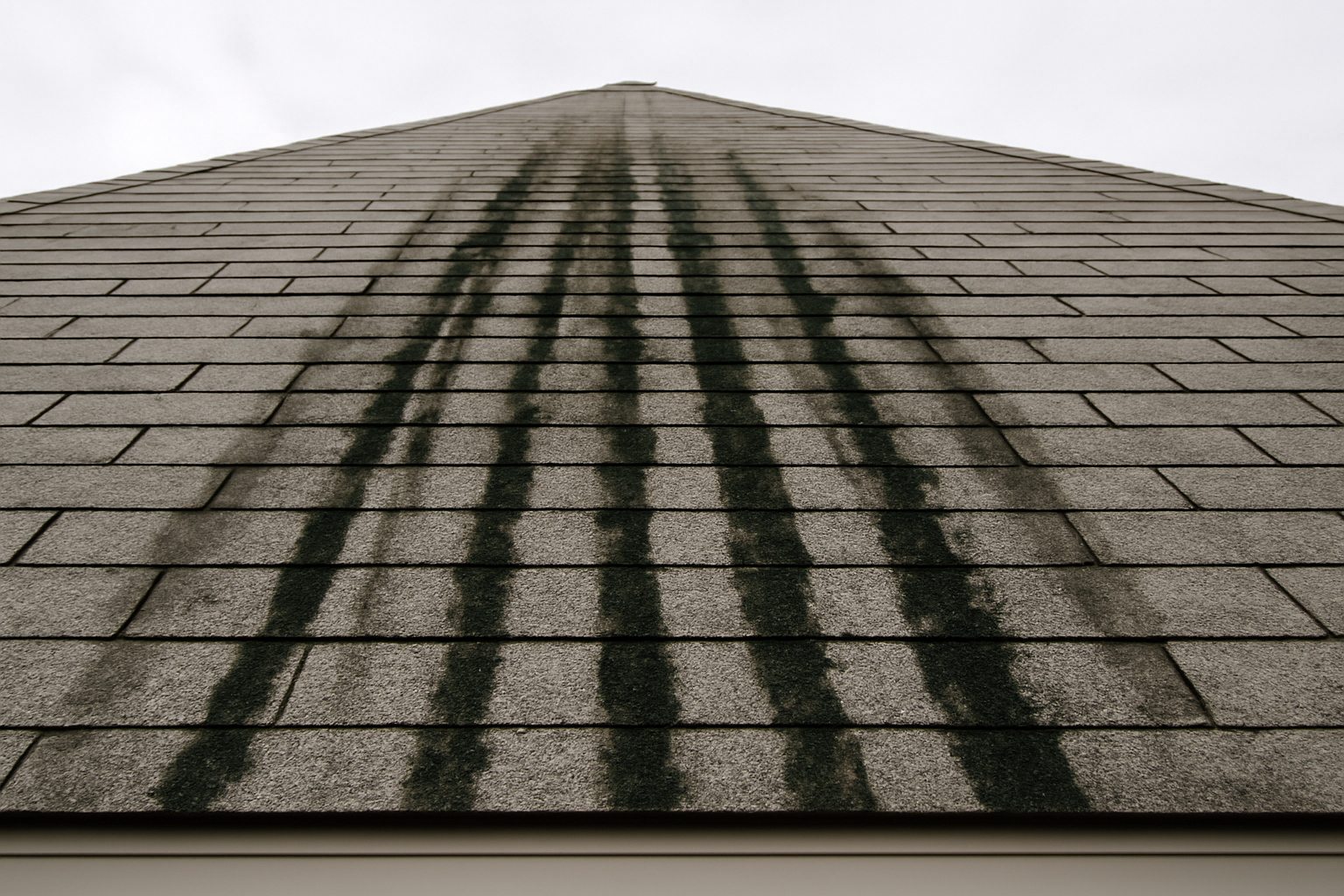
You're pulling into your driveway and you notice them — dark, streaky stains running down your roof like someone poured coffee over the ridge line. Your neighbor's roof has them too. So does half the block. In San Antonio's humid subtropical climate, these streaks are incredibly common. But common doesn't mean harmless. The real question is whether those dark stains are just an eyesore or a sign that your roof is losing years off its life.
What Those Dark Streaks Actually Are
The black streaks on your roof aren't dirt, mold, or tree sap. They're caused by a cyanobacterium called Gloeocapsa magma. Despite being commonly called "roof algae," it's technically a photosynthetic bacterium. It feeds on the limestone filler (calcium carbonate) embedded in asphalt shingles. The dark color comes from a protective pigmented sheath the organism produces to shield itself from UV radiation.
In other words, the organism is literally eating a component of your shingles and building a dark sunscreen over itself. That's the streak you see.
Why San Antonio Roofs Are Especially Vulnerable
Gloeocapsa magma thrives in warm, humid environments with plenty of moisture. San Antonio checks every box:
- High humidity. Even during stretches without rain, San Antonio's humidity regularly sits above 60-70%, especially overnight. That's plenty of moisture for algae colonies to grow.
- Warm temperatures year-round. We rarely get cold enough, long enough, to kill off established colonies. Winter barely slows them down.
- North-facing slopes get hit hardest. The side of your roof that gets the least direct sun retains moisture longer. That's usually where you'll see the heaviest streaking first.
- Tree canopy coverage. Neighborhoods like Alamo Heights, Helotes, and parts of Stone Oak with mature live oaks create shade that holds moisture on shingles well into the afternoon.
Is It Just Cosmetic? Not Exactly.
Here's where the roofing industry sends mixed signals. Some contractors will tell you algae is purely cosmetic to avoid scaring you. Others will tell you your roof is ruined so they can sell you a replacement. The truth sits in the middle — and the details matter.
The Cosmetic Side
Light to moderate algae streaking — the kind that's been there a year or two — is mostly a curb appeal problem. It won't cause leaks. It won't void your warranty in most cases. Your roof is still functional.
When It Crosses the Line
Left unchecked for years, algae growth creates real problems:
- Granule degradation. The organism feeds on limestone filler in the granules. Over time, this weakens the granule bond and accelerates granule loss — the single biggest factor in shingle aging.
- Heat absorption. Dark algae stains absorb more solar radiation than clean shingles. On a San Antonio roof in July, that can mean surface temperatures 10-15°F higher than they should be. That extra heat degrades the asphalt mat faster and drives up cooling costs.
- Moisture retention. Heavy algae growth holds moisture against the shingle surface longer after rain. Prolonged moisture exposure accelerates the breakdown of the asphalt binder.
- Moss and lichen follow. Algae creates a foundation layer for moss and lichen to establish. Those organisms are far more destructive — moss roots can physically lift shingle edges, and lichen etches into the granule surface.
So the honest answer: algae won't destroy your roof this year or next. But a roof with heavy, long-term algae growth will almost certainly have a shorter service life than a clean one. We're talking potentially 3-5 years of lost lifespan on a 25-30 year shingle.
What You Should (and Shouldn't) Do About It
Don't Pressure Wash Your Roof
This is the most common mistake we see. Pressure washing blasts granules off shingles and can force water under shingle laps. It causes more damage than the algae itself. Every major shingle manufacturer — GAF, Owens Corning, CertainTeed — explicitly warns against pressure washing.
Soft Washing Works (With Caveats)
The approved method is a low-pressure application of a bleach-based solution (typically sodium hypochlorite diluted to around 3-6%). This kills the algae without mechanical damage. The Asphalt Roofing Manufacturers Association (ARMA) endorses this approach. However, it needs to be done carefully — overspray kills landscaping, and the solution can corrode metal flashing if not properly rinsed. If you hire someone, make sure they're using low pressure and protecting your plants.
Zinc or Copper Strips
Metal strips installed along the ridge line release trace amounts of zinc or copper ions when it rains, which inhibit algae growth on the shingle surface below. This is a preventive measure, not a cure for existing growth. It works best on new or freshly cleaned roofs. If you're getting a roof replacement, ask about AR (algae-resistant) shingles — they have copper granules baked in and are standard on most mid-tier and premium shingle lines now.
Trim Your Trees
Reducing shade and improving airflow across the roof surface is one of the simplest ways to slow algae growth. Cut back branches that hang within 6-10 feet of the roof. This also reduces debris buildup and the risk of storm damage from falling limbs.
When Algae Masks a Bigger Problem
Here's the thing that concerns us more than the algae itself: heavy algae growth makes it nearly impossible to see what's happening underneath. Cracked shingles, missing granules, lifted edges, deteriorated flashing — all of it gets hidden under a dark biofilm. We've inspected roofs where the homeowner thought they just had cosmetic staining, and underneath the algae, the shingles were already at end-of-life.
If your roof has significant algae coverage and your shingles are more than 12-15 years old, it's worth having someone take a close look. A free roof inspection will tell you whether you're dealing with a cleaning project or something that needs more attention.
The Bottom Line
Algae streaks on your San Antonio roof are common and not an emergency. But they're not nothing, either. They shorten shingle life, increase energy costs, and can hide real damage underneath. The right move is to clean it properly (soft wash, not pressure wash), take preventive steps, and get a professional set of eyes on the shingles if they're older. Don't let anyone tell you a streaky roof needs immediate replacement — but don't ignore it for a decade, either.
Not Sure What's Under Those Streaks?
Algae can hide cracked shingles, granule loss, and flashing problems. If your roof is 10+ years old and heavily stained, a visual inspection from the ground won't cut it. Wannamaker Roofing offers a free, no-obligation roof inspection — we'll get on the roof, document what we find, and give you honest options. No pressure, no scare tactics.