6-Nail vs 4-Nail Pattern: Wind Warranty T… | Wannamaker
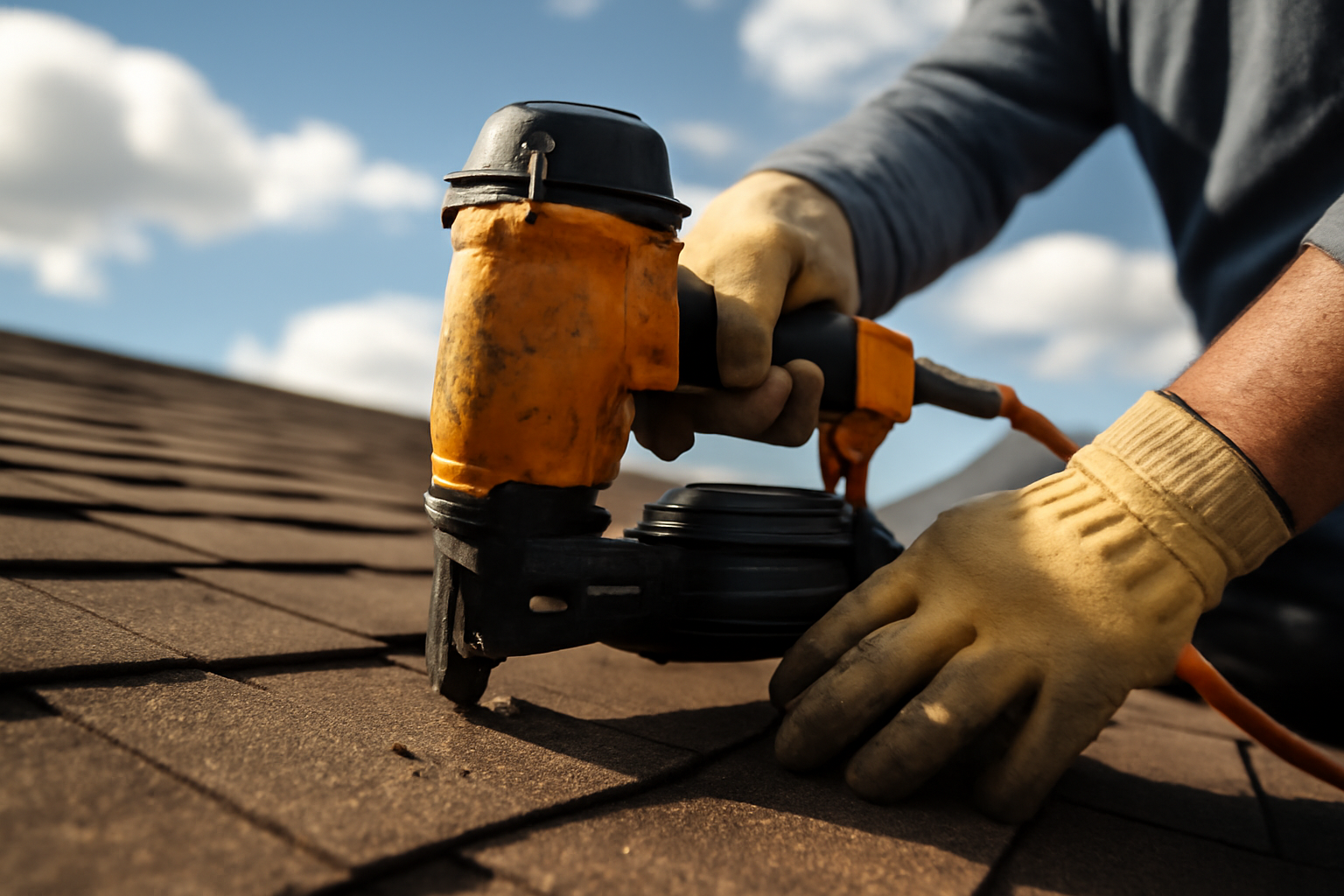
Every asphalt shingle on your roof is held down by nails—but the number of nails per shingle is one of the most consequential and least discussed details in residential roofing. In San Antonio's wind environment, where straight-line winds regularly hit 60-70 mph during spring and summer storms, the difference between a 4-nail and 6-nail installation pattern can determine whether your roof survives intact or sends shingles scattering across your neighbor's yard. More importantly, it determines whether the manufacturer will honor your warranty when something goes wrong.
What the Nail Pattern Actually Means
When roofers talk about a "4-nail" or "6-nail" pattern, they're referring to how many fasteners are driven through each individual three-tab or architectural shingle. The manufacturer specifies a "nail line"—a narrow zone across the shingle where nails must land—and the pattern determines how many nails go into that zone per shingle.
A standard 4-nail pattern places nails roughly evenly across the shingle, usually about 1 inch from each end and then spaced in the middle. A 6-nail pattern adds two more fasteners, reducing the unsupported span between nails and dramatically increasing the shingle's resistance to wind uplift.
Here's the math that matters: a typical residential roof has around 60-80 squares of asphalt shingle coverage (one square = 100 square feet). Each square requires roughly 320 nails at a 4-nail pattern. At 6 nails, that jumps to about 480 nails per square. On a 30-square roof, that's the difference between roughly 9,600 nails and 14,400 nails. Nearly 5,000 extra fasteners.
Why Manufacturers Care So Much About Nail Count
Every major shingle manufacturer—GAF, Owens Corning, CertainTeed, Atlas—publishes specific installation instructions that tie directly to warranty coverage. And here's where it gets real: the wind warranty changes based on the nail pattern.
Take GAF's Timberline HDZ, one of the most popular architectural shingles installed in the San Antonio market. With a standard 4-nail application, GAF warrants the shingle against wind damage up to 130 mph because of their proprietary StrikeZone nailing area. But most other architectural shingles? A 4-nail pattern typically gets you a 60-70 mph wind warranty. Upgrade to a 6-nail pattern on those same shingles, and the warranty often jumps to 110-130 mph.
That's not a minor difference. San Antonio sits in a region where severe thunderstorm winds can exceed 80 mph. If your shingles were installed with a 4-nail pattern that only warrants to 60 mph, and a storm delivers 75 mph gusts, the manufacturer has every right—and every incentive—to deny your claim.
The Fine Print Most Homeowners Miss
Warranty claims aren't just about whether your shingles blew off. Manufacturers send inspectors. Those inspectors count nails on the shingles that are still attached. If they find a 4-nail pattern where the enhanced warranty required 6 nails, the claim gets denied—even if the shingles themselves performed fine in some areas. We've seen this happen to homeowners in Stone Oak and Boerne after hail and wind events. It's painful to watch.
The Real Cost Difference
So why doesn't every roofer just use 6 nails? Because it costs more—in materials and labor time. Let's break it down for a typical San Antonio roof replacement:
- Material cost. An extra box or two of coil nails per job. We're talking $30-$80 in additional nail cost on a standard home. Trivial.
- Labor time. Two extra nails per shingle slows the crew down slightly. On a 30-square roof, this might add 1-2 hours of labor. At crew rates, that's roughly $150-$400 in added labor cost.
- Total premium. The realistic upcharge for a 6-nail pattern is typically $200-$500 on a full reroof. On a job that costs $8,000-$15,000, that's a rounding error.
Compare that to the cost of a denied warranty claim—easily $5,000-$15,000 out of pocket for a partial or full roof replacement. The math isn't complicated.
When Is 6-Nail Required vs. Optional?
Building codes play a role here too. The International Building Code (IBC), which San Antonio follows, requires enhanced fastening in high-wind zones. While San Antonio isn't classified as a hurricane-prone region, local code amendments and manufacturer requirements can overlap in ways that matter:
- Steep slopes. Roofs with pitches above 60 degrees (essentially mansard-style sections) require additional fastening under most codes.
- Hip and ridge shingles. These are always more vulnerable to wind and should be nailed per manufacturer specs—which almost universally call for enhanced fastening.
- Perimeter and corner zones. Wind loads are highest at roof edges, eaves, and corners. Some manufacturers require 6-nail patterns in these zones even if the field of the roof allows 4 nails.
- Enhanced warranty enrollment. If you're paying for a GAF Golden Pledge, Owens Corning Platinum, or CertainTeed SureStart PLUS warranty, the 6-nail pattern is almost always required to activate the enhanced wind coverage.
How to Know What's on Your Roof Right Now
If your roof was installed by a crew that cut corners—or by a storm chaser who blew through town after a hail damage event—you may have a 4-nail installation with paperwork that says 6. The only way to verify is a physical inspection. A qualified inspector can lift a shingle tab in an inconspicuous area and count the nail heads on the course below.
This is one reason we always recommend homeowners request a nail pattern specification in writing before the job starts—and verify it during installation if possible. If your roofer won't commit to a nail count in the contract, that should tell you something.
What About Nail Placement?
Nail count is only half the equation. Nails driven too high (above the manufacturer's nail line) dramatically reduce wind resistance even in a 6-nail pattern. High nailing is the most common installation defect we see on roofs across San Antonio—and it's an automatic warranty voider for every major manufacturer. The nail must penetrate the overlapping portion of the shingle below, creating a double-layer fastening point. When a nail misses that zone, it's essentially holding one layer of shingle with no mechanical advantage.
Our Recommendation for San Antonio Homeowners
Given our wind exposure, the minimal cost difference, and the massive warranty implications, we install a 6-nail pattern on every residential reroof unless the manufacturer's product specifically achieves enhanced wind ratings at 4 nails (like the GAF HDZ with its StrikeZone technology). Even then, we discuss the option with the homeowner.
This isn't about being overly cautious. It's about doing the math. Two extra nails per shingle cost you almost nothing upfront and protect you against a catastrophic out-of-pocket expense later. For a region that gets hammered by storm damage every spring, it's the single cheapest form of roof insurance you can buy.
Not Sure What's Holding Your Shingles Down?
If your roof was installed by another contractor—especially after a storm—and you're unsure about the nail pattern or warranty status, we'll check it for you. Schedule a free roof inspection and we'll document the nail count, placement, and whether your manufacturer warranty is actually valid. No pressure, no obligation—just honest information you can use.